
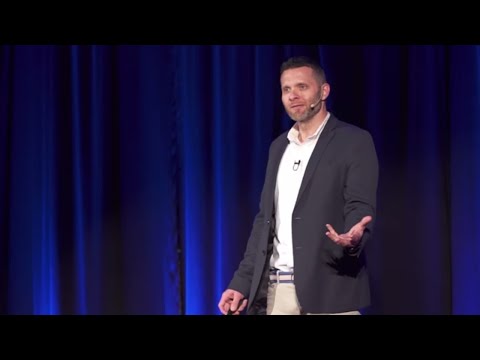
here to invite you to do some philosophy
with me and usually when I say I’m a
philosopher to people on planes that
leads to the magazine goes up and
headphones goes on kind of response so
we’ll see if I can do little better with
you all
so philosophy can be understood as a
bunch of different things I’m gonna give
you two options one philosophy is a
professional discourse it’s the thing
that other people do you know people
like me who have PhDs in philosophy who
write books with titles that no one then
wants to buy or we can understand
philosophy as a way of life this is the
way the ancient Greeks understood it and
philosophy is something then that we all
can do but instead of having to choose
today I don’t want to cause you any
stress you’re both right so philosophy
the way I understand it is basically
just people who put question marks where
everybody else puts periods now that
could be something we do as
professionals like me so I put
professional question marks behind all
kinds of very wordy questions that have
a lot of ontological and
phenomenological sorts of phrases but
what really matters about philosophy is
that we all recognize what happens in
life if we start putting squiggly lines
instead of just dots and so let’s ask
some questions together and see what
happens now not all questions are
equally valuable so if you say what kind
of coffee do I like to drink I find that
a stupid question because I don’t like
coffee so let’s find a little bit better
question how about what’s the meaning of
life good question
not yet no response none at all why
because this question is the kind of
thing that Monty Python makes a lot of
money joking about right so let’s try to
avoid things like that and instead ask a
question that has a little bit more
focused relevance to us so how about
let’s tighten things up what makes life
worth living a little better well still
kind of abstract not sure what life
means whose life the life of my dog what
what life we’re talking about
so I think we make things practical we
make them personal so let’s make
something personal what do you desire
most in life here I’m trying to switch
the question and make it more like a st.
Agustin question our identity is
constituted by the object of our desire
so let’s think about what we desire in
order to think about who we are so that
we can hopefully put some question marks
in really important places let’s see how
it happened there are two common answers
to this question what do you desire most
in life at least as given by my students
in intro to philosophy
I have asked hundreds of them this
question I only ever get variations of
two answers the first and by far most
prominent is they desire success not a
bad answer who doesn’t want to be
successful right well second answer
happiness happiness also seems like a
really smart thing a little bit more
introspective and reflective people who
write happiness always feel
self-righteous that they wrote happiness
and not success when they hear sort of
how this breaks out but here’s the thing
both of these have some problems when we
seek success it turns out that we fear
failure when we seek happiness it turns
out that we fear a kind of loneliness
but what’s interesting about this is
success though a noble thing my talk is
not hey don’t seek success but don’t
seek success as your ultimate end why
not because if you succeed success as
your ultimate end you’re always ever
making sense of your life relative to
some external that you achieve rather
than reflecting on who it is and why you
live it in the first place
happiness again a lot better maybe but
happiness today tends to look an awful
lot like how can I just be in a
particular state of mind that you may
not be in so I think the problem with
happiness is we confuse it with a
psychological state rather than a
general orientation towards well-being
so I’m gonna suggest that we seek
something else as our ultimate end I’m
gonna throw out faithfulness as an idea
maybe we should seek faithfulness now
look by faithfulness I am NOT talking
about any religious disposition I’m
talking about living into what you
throwing yourself into something on
purpose and this definition of faith
then is simply the idea that we risk our
lives in a direction that we do things
on purpose for reasons and we recognize
that none of it is ultimately safe so
what direction is worth the risk it’s
not going to involve skydiving for me
nor is it going to involve law school
right we all make decisions about what
direction is worth of the risk so here’s
a really cool truth when you seek to be
faithful you’re likely to get success
thrown in because you care about
excellence relative to what you think
matters but when you seek success you’re
likely not even to be successful at what
you thought mattered because you aren’t
actively reflecting and living into that
decision so here’s another cool truth
there’s a distinction between jealousy
and admiration if we seek success as our
ultimate end we’re likely to understand
our lives relative to jealousy I want
what they have I want that car that job
that 401k that portfolio right that
recognition I’m jealous of them so I’m
not striving to be like someone I’m
striving to have what they have
they are irrelevant there’s no character
emulation if we seek faithfulness my
hunch is that we will cultivate and
invite admiration whereby people matter
not just for what they’ve done but for
being the kind of person who would do it
think about mother Teresa in Martin
Luther K Martin Luther King so mother
Teresa was actually the inspiration for
this talk she actually says were called
upon not to be successful but to be
faithful and Martin Luther King imagine
this if you said oh well he was sought
out to be successful at instantiating
racial justice but he didn’t quite pull
it off so we would say his life was a
failure what a really bad assessments of
him right instead and this is on the
Martin Luther King memorial and says
look I was a drum major for justice
peace and righteousness in other words I
lived my life striving for this yes we
want to be successful but success and
failure are not defining why I get out
of bed and
I do what I do so here’s the big idea
we’re sharing
right Ted’s about ideas we’re sharing
here’s an idea I think each shared more
often in our culture that says success
success success seeking success actually
makes you more likely to fail at doing
what matters this is true not only for
individuals but for institutions for
groups for communities I am a specialist
in philosophy of religion so I’m going
to talk a little bit about
Christianity’s what I work on I’m a
specialist in political philosophy so
let’s talk about democracy and I also
happen to teach at a university so let’s
talk about college education these three
instances where if we seek success as
our ultimate aim we’re likely not even
to be good at being Christians being
Democrats and being University educators
how about Christianity first so three
people that I have been influenced by
Soren Kierkegaard Dietrich Bonhoeffer
and Ann Lamont they all wrote in
different time periods they all have
different stories but three ideas they
give us is that Christianity is
fundamentally about modeling ourselves
on a narrative of the divine as humbled
as self emptied so character Gard says
that when Christianity gets power and
becomes a political might becomes
Christendom what does it need it needs
somebody to bring Christianity back to
it because now it’s become triumphant
Dietrich Bonhoeffer loses his life he
gets murdered by the National Socialists
or the end of World War two he
differentiates between costly grace and
cheap grace and he says cheap grace is
the kind of thing that can become
commodified and sold costly grace is the
kind of thing that invites us ever
forward recognizing it’s not about what
we do but about that for which we do
what we do and and Lamont says there’s
three prayers she likes I pray these a
bunch help thanked and Wow notice we
start recognizing our insufficiency then
we move to a mode of gratitude as a way
of life and we end in wonder philosophy
began in wonder and part of what I’m
suggesting is religious existence ends
in that same sense of wonder this is a
far stretch from those conceptions of
Christianity that model themselves on
corporate success
audience numbers material wealth and
priding themselves on the ability to be
better than others rather than loving
God we love our own churches rather than
loving the costly grace we love the fact
that it can be mass-produced when we
seek success we fail to be what we
should have been what about democracy
now here I’m not talking about
conservative Democrat the mops I’m
talking about democracy as a mode of
human existence in social life that says
at the end of the day all of us are
engaged with each other relative to a
commitment to the Equality of critique
every voice is equally able to offer
critique and offer praise that’s what
democracy is about it’s about equality
and Liberty to say your voice matters
just as much as my own so when we think
about faithfulness to democracy
here’s two good models Jacques Derrida
says that democracy is only ever just
when it’s not Democratic enough yet
notice we’re striving toward it’s not
about pulling it off we have done it we
are the greatest nation you end up
saying we are great because we recognize
there is a long way left to go we are
most democratic when we recognize we are
not yet democracy instantiated we’re on
the way
similarly Jean Tom wolf says democracy
works best when we recognize it as
agonistic conflictual we need those with
whom we disagree to disagree with us and
do it well
but when we vilify when we demonize
those with whom we disagree as being
irrational or immoral what have we done
we’ve sought to win the election while
losing the democratic society that we
claimed to care about hmm finally
college education a bunch of in this
room have gone to college others of you
are in college some of you like my son
in the back row or hopefully going to go
to college at some point here’s the
thing college at its most basic is the
idea that we can transmit human knowing
and also that we can create new
knowledge College is not merely a
transmission device it is an invitation
to put question
marks where others have put periods and
figured new things out in that since I’m
actually worried about a new trend
towards college success which ends up
being we will give you real-world
experience and a good return on
investment
now notice both are good things we
should care about returns on investments
because money is finite we should care
about having experience in the kinds of
careers we might want to go into because
we might decide that wasn’t for us all
good
but if that becomes the final end then
notice we care about giving real-world
experience in the sense that we want
experiences of the world that someone
else has dictated as real for us but the
university its identity is to invite our
students to figure out what world should
be made real similarly if we want the
return on investment we’ve got to
recognize that college is more than just
dollars and cents and employment
statistics it’s not just about what
majors lead to high employment
what kind of salaries they average but
it’s instead about inviting us all to
recognize what is worth our investment
of time and energy and emotion and
passion and our own sense of value let’s
go back to our first question what do
you desire most in life my hunch is you
all will have different kinds of answers
for this and it will be different at
different times in our life thank
goodness I don’t desire what I desire
220 very bad but when we recognize that
we might want to start thinking about
desiring faithfulness some really
interesting things follow first when we
desire faithfulness we take ownership of
the risk and direction of our lives not
just our careers in other words we
become the kind of people for whom jobs
matter not the kind of people who are
determined by the mattering of our job
second we desire faithfulness we may
find success but we’re not defined by it
which means we are also not destroyed by
failure but remember it’s not just what
does one desire it’s what do you desire
when we desire faithfulness when you
desire faithfulness you are more likely
to find question-marks themselves as an
invitation
rather than as an obstacle and this is
really amazing because ultimately our
lives will not be defined by where we
put the question marks but where we
decided to put the periods if all we do
is live lives where others have handed
us periods we’ve never actually lived a
life that others might want to consider
so at the end of the day if we
understand philosophy as a way of life
we understand faithfulness then as a
task for a lifetime we don’t then get
that partnership buy that house achieve
that goal succeed in our retirement
plans and then get up the next day and
wonder now what we instead recognize
that every day is an invitation to
continue moving forward my wife and I we
got married said something to each other
in our wedding vows it was a very simple
line but for me it encapsulates
everything I do as a philosopher come
let’s walk together and talk along the
way it’s the way that matters not just
where we end up thank you all so much
[Applause] [Music]