
[Music]
[Applause]
welcome to the revolution so before I
begin I’d like to take a little survey I
do with some of the students that I work
with I’d like you to raise your hands if
you think you’ll have the opportunity to
go into space in sixty years go ahead
and keep your hands up
those of you with your hands down now
you need to read more science fiction so
go ahead and keep your hands up if you
think you’ll have the opportunity to
visit or travel into space in 30 years
it may it be a pilgrimage to Mars or a
trip to lower Earth orbit going to space
in 30 years not too bad how about 20
years how optimistic is my audience
tonight all right not too bad so I’m
going to talk to you a little bit today
about an industry that I’m very excited
about it’s an industry I’ve been working
in for about 10 years now I did my first
internship at the NASA Ames Research
Center in 2008 and since that time I’ve
realized that most people don’t know
very much about the space industry which
is one of the reasons why I created my
company intergalactic education I want
to show people that we have a future
living in space and so to do that my
team of developers and I have created a
stem focused educational product called
space world last year we started working
with our first School District in
Maryland and more recently with some
schools down in Florida and in Texas and
if you’re an educator or a space company
and you like what you hear tonight be
sure to check us out at space rural us
I’m looking at you Elon so every once in
a while I get the chance to go out and
watch the students use space world in
the classroom and I
I do that little survey that I had you
guys do at the beginning and it it said
a lot of the kids these days they don’t
think they’re going to have the
opportunity to go into space 50 years
ago NASA put the first man on the moon
and inspired an entire generation of
kids into thinking that to be able to go
into space now unfortunately that bar
was too high for all practical purposes
the Apollo program was two decades ahead
of its time we didn’t have 3d printers
we didn’t have GPS we didn’t have the
World Wide Web and so I’m going to try
and inspire you with a speech that came
out in 1961 I’ve condensed this speech
and I’ve altered it slightly and seeing
as how we’re in Boston I’m going to do
my best to give you a a New Englander
accent and so here it goes
we choose to go to the moon we choose to
put the first woman on the moon by the
end of this decade and do the other
things to not because they’re easy but
because they are hard because that goal
will serve to organize and measure the
best of our energies and skills because
that goal is one we are willing to
accept one we are unwilling to postpone
and one in which we intend to make
affordable for all mankind for we meet
in an hour of great change and challenge
in a decade of hope and fear and an age
of both knowledge and ignorance despite
the striking fact that our scientific
manpower is doubling every four years
despite the striking fact that the most
of the scientists the world has ever
known are alive and working today
no man can fully grasp and how far and
how fast we have come surely the opening
frontier space promises both high cost
and hardship as well as high reward so
I’m delighted to be here today and I’m
particularly delighted to be here for
this TED talk because we meet in the
university noted for knowledge
and a state noted for progress and a
country noted for capitalism and we
stand in need of all three those who
came before us made certain that this
society rode the first waves of rocketry
during the 1960s and my generation does
not intend to founder in the backwash of
the coming age of space we mean to be a
part of it and we mean to lead it we’ve
sworn that we shall not see space filled
with weapons of mass destruction but by
instruments of knowledge and
understanding and most importantly
entertainment and manufacturing yet the
prophecies of this great nation of the
United States of America cannot be
fulfilled by being first but by being
the best the largest and the most
efficient in short our leadership in
Science and Industry our obligations to
ourselves as well as others require us
to make these efforts to solve these
mysteries for the good of all mankind
and to become the world’s market leader
in space the growth of our industry will
lead to new knowledge of mapping and
observations to new tools medicines and
materials that were unable to
manufacture here on earth I believe a
trillion-dollar industry will come out
of thin air very thin air and so what is
space good for space is good for a lot
of things actually it’s good for urban
planning it’s good for agricultural
planning we can use it during disaster
management efforts it’s very useful
after a natural disaster we can use it
for illegal whale tracking and illegal
deforestation tracking but not only that
it amazes me how some people take for
granted how the cell phone in your
pocket
guides you to where you’re going it
gives you the weather it allows you to
watch direct television it allows you to
communicate with your family and friends
over large distances all of these
capabilities are because of space and
that’s why the satellite services
industry is a three hundred and
thirty-five billion dollar industry now
three hundred and thirty five billion
dollars that sounds like a lot and it is
but that’s just the tip of the iceberg
folks tonight I’m going to
talk to you about an emerging economy
that within two decades is going to be
worth a trillion dollars so the asteroid
that you see up on the screen here is
worth an estimated four point eight
trillion dollars in platinum group
metals like titanium and palladium there
are companies right now and governments
that are out they have space telescopes
that are prospecting these types of
celestial objects and I should also note
that these objects are quite dangerous
just ask our friends the dinosaurs oh
wait you can’t the asteroid one that one
but before we go out and start mining
these asteroids two things need to
happen first we need the right robots to
go out and excavate these rocks and
secondly we need cheaper rockets and in
order to do that we need to start
thinking about reusability and not Space
Shuttle era throw away the main booster
and have to replace hundreds of
expensive heat shield tiles type of
reusable but actual turn around and
launch the rocket next week
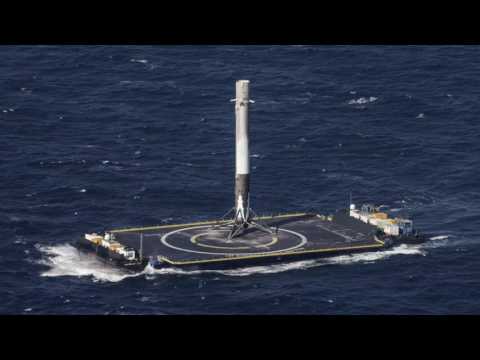
type of reusability and luckily we are
so the rocket you see on your screen
here this has rocket has carried out not
one but two missions into space which is
a big deal a lot of people think that
the fuel is expensive it’s not it costs
maybe a hundred and fifty thousand
dollars which when you compare that to
the cost of the actual rocket which is
typically about a hundred million
dollars it’s nothing
you pay more in taxes but if we can
start launching these rockets dozens of
times it’s going to take the price of
that rocket down to single millions of
dollars and lower and in the future much
lower which brings me to my next market
segment space tourism so there are
several companies right now that have
hundreds of paying passengers that
they’re going to send into space before
the end of the decade all of the
vehicles you see on the screen now have
flown experimental payloads to the edge
of space this one down here in the lower
left-hand corner
that’s attached to the International
Space Station NASA and Bigelow Aerospace
have been a partnership agreement to
start testing that module over the next
couple of years
what else is space good for space is
good for a lot of things it provides an
environment that’s unlike anything here
on earth proteins fold in very different
ways because there’s no convection I
believe a renaissance in manufacturing
is going to happen that’s equivalent to
the importance of the original
Industrial Revolution nano structures
which normally break in a regular earth
environment can be stretched to very
extreme lengths in a microgravity
environment we’re going to find new
chemicals we’re going to find new drugs
we’re going to find new plants we’ve
already found seeds that when taken up
to the International Space Station and
germinated unlocked new genes that have
been dormant for millions of years we
can then take those seeds bring them
back down to earth plant them in the
middle of the desert and miraculously
they produce berries that contain
high-octane jet fuel which is pretty
cool there’s other less interesting
things that would be built around space
as well the insurance companies the
advertisers the lawyers but what I want
to talk about is the things that get me
excited
using lunar regolith and producing
oxygen we need to clean up all of the
dust that’s on the moon and we can
produce bricks that are made of iron for
real-estate things like entertainment
and sports can you imagine
turning on your television watching a
game of football on the moon where the
players can take one another and throw
them 10 or 15 feet into the air that is
something that people will pay for if
you look at all of the things on earth
they’re in near infinite supply in space
and that’s what we’re trying to teach
intergalactic education we’ve built a
platform that gets kids excited about
STEM education we need to show them why
science and math are important because
they can grow up and they can work in
the technology field that utilizes those
skills where
inspiring the next generation of space
leaders and so as I close out today I
like one to use one more snippet from
the man that took us to the moon and so
many years ago the Great British
explorer George Mallory who was to die
on Mount Everest was asked why did he
want to climb it he said because it is
there well space is there and we’re
going to climb it and new opportunities
for peace of there and therefore as we
set sail we ask God’s blessing on this
greatest adventure on which mankind has
ever embarked thank you
[Music]
[Applause]
Please follow and like us: