
love what why how have you ever wondered
why you obsess over crush we’re holding
hands with your boyfriend or girlfriend
feels so great will you feel empty after
a breakup the questions of these
questions aren’t as simple as because
you like them no the answer goes much
deeper than that deep into the neural
cognitive functions of the brain and the
cocktail of different hormones
responsible for our emotions all the way
from an initial state of attraction to
marriage so let’s explore the chemistry
of chemistry I was really proud of that
name to start let’s try to answer the
following question why why do we feel
attraction in other words why is finding
the one or using a more animalistic term
Suomi important why not just mate with
anyone now this all relates to the
concept of sexual selection the subset
of the Darwinist theory of natural
selection the human population varies
enormously we all have different hair
colors body shapes metabolisms and many
of these characteristics are heritable
meaning they get passed down from
generation to generation and given that
we have finite access to think to
resources like water or food and shelter
and we must compete for such resources
and when we have overpopulation we have
things like famine and war it’s
desirable to produce offspring that with
characteristics that best able them to
survive
hence the 10th is saying survival of the
fittest
now sexual selection comes into play
when one when one gender prefers members
of the opposite sex with certain
desirable characteristics hence allowing
these characteristics we passed down the
future to future generations so what do
we look for and why now for an example
of sexual selection we can look to
giraffes female drafts prefer mates with
longer necks which are more able to find
food in those with short with shorter
necks and as a result of this we see a
general population of giraffes with
really long necks and able to eat eat
leaves in the highest boughs of trees
and more able to survive than those are
shorter necks
well what about with humans in 1995 the
Swiss biological researcher Klaus where
I can’t conduct an experiment to
investigate human pheromone for human
pheromones in their role and made
preference in this study women were
asked to smell t-shirts one by different
men and the results showed that women
preferred men whose MHC molecules
molecules that are used to fight disease
different from theirs now this makes
sense genes that result in a greater
variety of immunities will give
offspring a major survival advantage and
in both these examples we see a general
population is created that is more able
to survive now from an evolutionary
perspective this is why we humans are
enslaved by our brains our senses our
hormones so generally gravitate towards
certain people that we find attractive
it allows us to continue the human race
so how does this work how we programmed
to respond in certain ways in response
to feeling attraction how we even feel
this attraction in the first place now
the answer this question lies with
hormones now I won’t go chew and death
here but hormones are essentially
chemical messengers biological
substances that are all regulated in an
endocrine system I set collection of
glands that produce hormones that have
to affect bonnet bodily functions
ranging from things like reproduction to
metabolism to growth and these aren’t
the only functions of hormones every day
we can physically see hormones carrying
out their functions has anyone here ever
felt happy sad hungry now these are all
these are all caused by the by the
release of a certain cocktail of
different hormones that give us the
symptoms inhaled with feeling that
emotion
well I’m American we have a 36 percent
obesity rate I consider hunger an
emotion but back to actual emotions when
our heart beats faster our muscles tense
up when we feel a burst of energy or an
increased breathing rate our blood
pressure rises we know that there are
increased levels of epinephrine and
norepinephrine in our bloodstream and we
know that we feel a
but what about attraction every single
thing you feel throughout love and
attraction is controlled by hormones and
too often there are a lot of hormones
that are rushing on our body so emotions
can get very complicated
during Ovation shin so let’s start
walking through all the different stages
of relationship maybe you feel that as
soon as you see someone maybe it comes
along significantly after but the vast
majority of relationships start with at
least some level attraction between two
people referred to as lust now there are
two different main hormones responsible
for sexual attraction ones that are it
was that everyone’s heard of before
testosterone and estrogen one for men
and both for women and each causing
attract him towards towards the other
well usually I don’t discriminate but
now the creation of these hormones
initiates from puberty which is why
teenagers are well you know teenagers
now in one study conducted in 2010 a
group of women at different points my
ovulation cycles were the same t-shirt
for three nights male volunteers are
then asked to smell a series of t-shirts
some wore and some unworn and
interestingly after smelling a shirt
worn by by women undergoing ovulation
male saliva sample is sort of increase
into in testosterone concentrations so
what does that mean this means that the
same hormone that might cause an
increase in the female libido during
ovulation may also give men the
testosterone boost that would encourage
him to pursue a woman that he may not
have otherwise now this is linked back
to the nature of attraction how we are
supposed to find mates and continue the
human race being attracted to one person
may inherently increase the likelihood
of them being attracted back to you if
only it worked like that all the time
now before now before I go any further I
want to emphasize the importance to
differentiate between a desire for sex
also known as lust in the deeper
personal attraction this is sorry t-bo
deeper personal attraction associated
with romance and love things done in
healthy long-term relationships people
can enjoy purely physical sexual
encounters with others that they have no
real fondness for other than like an
appreciation for their appearance and
even that isn’t really essential but the
bottom line here is is that lust says
thing about the the bond of love in a
relationship but that’s okay because
relationships start there then progress
to something for something more but how
do we get to then something something
more how do we get to an actual
relationship now a major player in this
is flirting but how does that work in
animals we see flirting acts as nature’s
solution to a problem that every
creature faces in a world full of
potential mates how to choose the right
one now an article published in
Psychology Today explained this where
explains us very eloquently and I quote
our animal and human ancestors needed a
means of quickly and safely judging the
value of potential mates without going
all the way and it was doing pregnancy
with every possible candidate they
encountered flip now floating achieve
that end offer a relatively risk-free
set of signals which was just able to
field try out sexual wares and exchange
vital information about candidates
reproductive fitness and general help
so essentially flirting serves as the
human equivalent of an animal’s mating
dance when we lean towards a person when
we smile at them when we make eye
contact we as humans are conveying our
feelings sending a message to other
people to tell them we’re interested in
them now another major player in
flirting is touch in 2009 a psychologist
named Matthew hurt enstein demonstrated
that we have an innate ability to decode
emotions by a touch alone now in a
series of studies hurt and son had
volunteer had volunteers attempt to
decode emotions to list to a list of
blindfolded individuals solely who touch
and participants communicated eight
distinct emotions with accuracy rates as
high as 78% significantly higher than
the chance value of about 25 percent and
not only this touching allow you to
spend emotional messages but also
triggers oxytocin release enhancing
trust in attachment essential aspects of
a relationship touch also lowers stress
hormones which not only make you feel
better but also it reduces that initial
sense of nervousness or fear that you
may encounter when meeting stuff meeting
someone attractive and that same sense
of fear is the excuse I give my friends
when they ask me what women talk to me
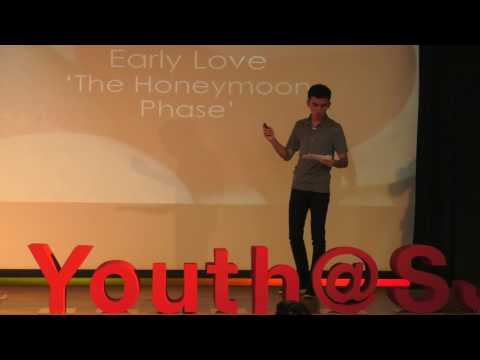
so let’s say it works out you just
started a relationship and you enter
what’s colloquially termed as the
honeymoon phase that’s the initial
period of a relationship with high
levels of passionate love characterized
by intense feelings of attraction and
ecstasy and as well as in the
idealization of one’s partner now these
feelings have physical manifestations –
like heart palpitations and butterflies
in the stomach and if during this time
when two people may share a first kiss a
highly memorable occurrence in any
relationship assuming you’re sober now
scientists have investigated this
phenomenon and found that emotionally
charged events whether it be anger or
fear or character or joy are
characterized by spike in the hormone or
norepinephrine which primes nerve cells
to remember events by increasing their
chemical sensitivity and sites or nerves
rewire to form new memory circuits so
basically it readies our receptors tell
our brains to quickly adjust and lock
that memory in place something that I
find I’m kind of interesting but back to
the honeymoon phase using fMRI scanner
scientists have actually identified
brain regions associated with that
feeling of love individuals who
experience passionate loves show greater
activation in areas in areas like the
caudate nucleus important in learning
and memory as well as the ventral
tegmental area central emotional
processing now both these brain areas
tend to be rich in dopamine a
neurotransmitter associated with reward
and motivation one study also revealed
that the recent lovers had higher level
levels of nerve nerve growth factor ng x
and protein that it aids in the
development and function of neurons and
the author has been speculated that
these enhanced ngf levels might increase
a person’s feelings of euphoria a
connection and actually when measuring
these ngf levels 12 to 24 months later
they actually found that the differences
between this passionate love group and
others had actually faded so what does
this mean
this suggests that romantic love is an
arousing yet less stressful experience
but that these physiological changes are
short-lived perhaps because we become
acclimated with a partner over time but
that’s not necessarily a bad thing
according to one study at NYU
researchers found that in that this
phase wears off after about 30 months
but and I quote many married couples
reported entering a different type of
love something just as deep not deeper
than the initial fire so what happens
after the honeymoon phase what happens
when you know your partner in our and
love now the drug cocaine lowers the
threshold of pleasure centers in the
brain meaning we feel really really good
a lot easier in this same phenomena is
seen in the brains of those in love
essentially it’s not just taking cocaine
or being in love that we enjoy but it’s
that these things make everything else
feel even better pain centers in the
brain also begin to fire less so we
aren’t bothered by things as much
essentially we as humans love love but
what is love now the answer to this lies
not in the heart but in the brain during
sexual activity or even by simply
looking at photos of a loved one
our brains experience surges in the
hormones dopamine in onf norepinephrine
treating arousal and causing the heart
rate to rise as well as motivating us to
be with that person more and more
oxytocin levels also rise nourishing
bonding and attachment however we also
experience abnormally low levels of
serotonin similar levels to those to the
brains of those diagnosed with
obsessive-compulsive disorder a likely
cause of our obsessions during early
love what about marital or long-term
love a study published in 2011 in the
Journal of a social cognitive and
affective neuroscience investigated the
brain activity of individuals
experiencing long-term intense romantic
love using fMRI scanners a total of 17
men and women married an average of just
over 21 years under one fMRI scanning
while viewing facial images of their
partner along with control images of of
friends of varying degrees of closeness
affect specific to their own antic
partner were found in areas that are
dopamine rich in the dopamine reward
systems consistent with the results from
early stage romantic love however
individuals experiencing long-term love
had increased activities in regions of
the brain associated with maternal
attachment especially regions dense with
the hormones vasopressin and oxytocin
which are known to play critical roles
in monogamous pair bonding overall these
results show that the reward value
associated with a partner made me a
sustained throughout love but in
long-term partners brain systems
implicated in attachment bonding play
greater roles and they would in a newer
relationship but what happens when these
are wood systems unsatisfied what
happens when we experience a breakup I
was crushed it was a knife to the chest
she ripped my heart out now metaphors
like these aren’t just a mode of
language scientifically speaking we
actually feel as though our heart is
being ripped out of our chest kind of
essentially the pain of heartbreak
activates the same exact neurological
regions as those in physical pain
notably the anterior cingulate cortex
our brain essentially doesn’t
distinguish between physical and
emotional pain would rather hurt all the
same in fact a study published in
Psychological Science had participants
describe the levels of painless that
were living both a physical and socially
painful experience afterwards each
participant was then task to work on a
series of cognitive problems in the
progress is monitor not only did
participants who would live the
emotionally painful experience report a
greater level of pain but they also
perform perform poorly on the following
linkit asks something about emotions
just seems to make that pain more
long-lasting and affects our bure
ability to think which is why we should
never deal with such issues alone and
not only this but a study published in
the Journal of neurophysiology examined
the brain activity of an individualís
item from a breakup with fMRI scans
showing large similarities between in
the brain activity of individuals of
these individuals in those are covering
from drug addictions
the study examined the brains of 15
college-age men and women who had
recently broken up with their partner if
still reported feelings of love and in
this experiment they were asked to look
at great look at photos of the loved one
among other photographs of course and
while fMRI machines examine examine
their brain activity now results
revealed that activated areas of brain
unique to the photo of their loved one
with those that were dopamine rich in
the same areas of which activate will
under the pecs of cocaine now this was
consistent with their hypothesis that
romantic rejection is a special form of
addiction explaining what the beloved is
can be so difficult to give up our
brains literally get hooked on love so
when we go through a breakup it can look
a lot like withdrawal this could also
explain why behaviors are relating to
romantic rejection can be so difficult
to control hence even though we know
it’s bad for us might stalker ekiz in so
our exes and social media anyway just
because their brains are seeking that
dopamine award that we associate with
our ex like an addict seeking to relapse
fortunately however briquette pain isn’t
permanent eventually the brain will
accept that it will no it will no longer
get the love that it deserves and levels
of dopamine or normalize and the stress
call that high level high levels of
cortisol and norepinephrine will recede
and we get over someone and this
phenomena is eloquently explained in the
book the idiot brain by Dean Burnett a
neuroscientist at Cardiff University
essentially during a relationship our
brain adapts to expect the reward
associated with our romantic partner
think about everything the brain
associates the brain invests into
sustaining a relationship all that value
placed on one person if this ceases all
that expected positive sensations
removed the brain is going to be
seriously negatively affected and to the
pain of a breakup
however our brain chemistry will
eventually revert to normal even if it
is a slow process and in this case
science and cliches really do match up
things will get better with time now
before I finish off I would like to
emphasize that love is something that
transcends science you could spend hours
upon hours analyzing the why behind our
emotion
but never truly understand what they are
what they mean I can tell you from
personal experience that I’m just as
emotionally incompetent now is when I
started preparing for this presentation
and a good love song will always
straight the bond of love more
effectively than any kind of scientific
explanation but because there probably
an act of war for me to subject you all
to my singing voice I’m going to end
this presentation with a poem that I
feel truly depicts the varying nature of
the journey to love and I promise I
didn’t find out in Pinterest hurt and
pain is much to gain peace and love it’s
all the same confusion and doubt we’re
not without we weep we smile we laugh we
cry only to be hurt by one last trial
life is a lesson so learn it well maybe
one day you can tell the tale
thank you
[Applause]
Please follow and like us: