
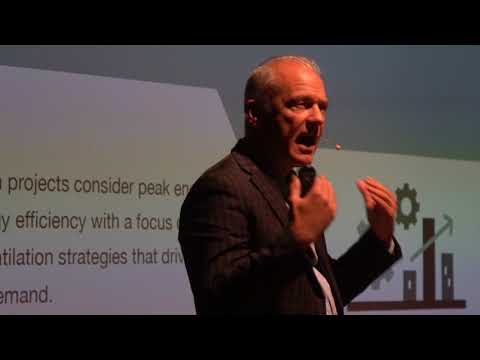
it is bright up you so how’s everybody
doing this was a very powerful
presentation right you can see no
important sustainability and climate
change and all the other things that
when we talk about sustainability really
affect us I wanted to talk to you about
and kind of closing the session today I
wanted to talk to you about one of the
biggest challenge that humankind is
facing over the next few generations is
climate change in the role our buildings
now community is actually playing in
helping us we refashion in redesign our
cities our buildings and then also
Medicaid and how communities that are
more resilient for climate change this
is working yes what I want to talk to
you particularly about is the role of
zero carbon buildings of buildings they
will not emit greenhouse gas emissions
and why is that important so this is a
chart from environmental climate change
and that shows the carbon emissions of
greenhouse gas emissions in Canada so we
see their species in areas that can
depict on how our greenhouse gas
emissions will but we look like five 10
15 years from a leading up to 2030 in
none of those curves the climate change
emissions
that the continued go up and then he see
two dots you see one dot it’s mainly 20
in his he wanted a twenty thirty that’s
where we need to go
but if certainly not the direction
you’re going into right now and so the
question is what would it take to bend
this curve down because we do a lot of
talking we do a lot of planning but this
curve like the curve in so many other
countries along across the world is my
twenty dollars continue to go up and an
individual called s Madrid Masseria some
time ago I create what’s called the DA
the twenty thirty challenge as an
architect and he basically I’m still
working on a approach and shows how we
need to design buildings to step down
but he causes carbon neutral buildings I
call it zero killings a place that only
Mehta
commit any emissions but carbon neutral
buildings how what we need to do in
terms of improving energy efficiency
renewable energy and how we gonna get
rid of fossil fuels over time well you
see a red says today that was in 2015
and today’s 2017 I can start not saying
that we’re designing our buildings to be
seventy percent more efficient than when
we were in 2005 or before so we’re
clearly not keeping up with the things
that we need to do which means that you
have to start being more radical you
need to be way more radical about and
more destructive about that what’s what
is it what is it is gonna get us to this
kind of low carbon zero carbon future
we actually need to change our language
and our language right now is when me
we actually respond to energy when the
extra should be talking about carbon we
think that automatically if we just turn
our thermostat down in our homes we are
meaningless carbon unfortunately
unfortunately that’s not necessarily the
case so one example to illustrate that
is if you have two buildings that are
identical you have the same level of
energy efficiency exactly the same one
is it is of natural gas which is a
fossil fuel and the other one is heated
with electricity so the entire building
is wrong as electricity LED lighted
everything in the oven with natural gas
and I explicitly comes here in Quebec we
have very clean hydropower it’s 95%
carbon free the building with the
National calcium is 36 times as much
carbon emissions than the one that you
power the clean energy source so that
really plays a big role and how we now
moving forward designing or building a
retrofit about building energy
efficiency is not enough we need to
speak the language of carbon and we feel
that this is very disruptive or maybe is
not as destructive as we think because a
10 up countries 10 other councils in the
world are working on the same thing as
we speak actually Australia just
launched this carbon standard with them
in concert with its federal government
as a standard that Australia spires to
so this is happening all over the world
in Canada is a
innovator in this space and moving this
initiative forward zero carbon buildings
so what is your
so again it is a mixture between energy
efficiency you need energy efficiency
because you cannot supply a sufficient
amount of local energy if your building
is very inefficient renewable energy is
not like fossil fuel when you need more
you burn more it’s not like that so we
need a balance between energy efficiency
and then you need to find a way to use
renewable energy other renewable energy
in hydro solar wind sometimes you can
take energy and heat from from the
ground and you need to use that energy
then you replace any of the fossil fuels
that are using in that program and there
are really four strategies here they’ll
be looking at one is zero carbon balance
the next one is efficiency the third one
is renewable energy and the fourth one
is no carbon materials so what I quickly
talk to you about those four areas to
really frame your thinking now has to be
collectively what’s your carbon billing
is actually going to look like so a zero
carbon balances we really need to have a
zero carbon balance in terms of
operating ability over the course of
entire year so you cannot just stop to
take one month or one week because you
like a heater balance depending on the
seasons on the winter you have the
lights on more often in the summer you
put your cooling on particular Montreal
and so on so you really need to look
over the course of the year there might
be times during the year when you
actually rely on fossil fuel the heat
you’re building yourself just so much
demand well you need to make sure that
it
the year you have zero so it’s a it’s an
annual process that you need to look at
so you need something balanced across
the year the second one is efficiency
and efficiency really focuses in several
companies from two things is you need
what we call the building envelope the
building envelope is the walls the
windows the roofs they need to be highly
highly efficient do you need to be super
efficient super insulated what that does
is it keeps the heat in or it keeps the
cold out depending again on time of the
year but you need a very efficient
envelope and then you need to have very
efficient ventilation so you really need
to control like how much air comes in
and how much air goes out initially here
that goes out the warm air that was out
I want the cool air coming in so you
have systems and technologies that are
really starting to play it’s not just
you know the envelope but also the
equipment that you use in a building to
really get to very high levels of energy
efficiency and that’s really the basis
because what I said before you need
these high levels of energy efficiency
then to make up and replace the
remaining amount of fossil fuels using
to power your house or your home or your
community in your city so the third one
which is really the one when we talk
about renewable energy and you really
these three forms as I mentioned the
solar there is wind there’s grants was
heat that is being used but renewable
energies that it’s a tricky business
than you think because people say well
you know what’s the big deal so I have a
house I put some solar on my roof maybe
enough solar than good but not
necessarily because what happens is if
the solar is being produced during the
day when you’re not home and but you
come home then anyone attend
that’s on you hey Don do all kinds of
things but then the soul of us makes you
actually work anymore because the Sun
has come down so we actually still need
to work on a many people working will be
called energy storage so you can
actually match match your generation
during a time you need that energy in
home and at work
and also for example if you use solar
lessons and office buildings and what an
office building it would work because
I’m there too the day the Sun is up
during the days I’m good
well not necessarily because of office
buildings are actually very small
footprint in a very tall and they
consume a lot of energy but you would
only have a small roof space to put your
soul on to power their building general
lighting maybe heat during the day so
renewable energy is the solution we need
to look beyond just the building side
into purchases of clean energy renewable
energy that’s generated across the
country so it will take some time to
generate electricity in our energy
on-site there certain technologies
available but it’s also need to be
economical in the mean time just like a
hybrid car you still need a little bit
of gas to get off the fossil fuel
sustainment buildings finally low carbon
materials particularly comes to the
structure of the building use of the
envelope of the building as well the use
would use concrete um you still look out
the windows it’s all materials that
build these buildings these cities and
so in terms of the materials you need to
look at materials to reduce the carbon
footprint of the
materials we seeing now buildings being
built called tall wood buildings he’s a
master mobility doctor 20 30 stories the
dog would move I would cuz would if you
all paid attention in biology class you
know that in a tree grows they take
carbon out of the atmosphere and you
bite this carbon in the wood fiber so
when you use wood we actually have a
carbon positive material because it
takes carbon out of the atmosphere
you see innovations now in cement will
be do the same thing in cement making
you take carbon out of the atmosphere
and have actually cement products that
are moving towards carbon positivity so
there are all these types of innovation
is going to see it’s the operating
energy dignity but also how you building
buildings in various materials are
coming from so it’s trying to have a
whole you drive open like environmental
sustainability when you’re driving whole
trend of what innovation in our economy
in terms of products in terms of
services and in terms of technologies
now in this program that we have we have
16 crews across the countries in
different sizes from 60-story office
towers to waste water treatment office
buildings retrofits to university
buildings and I wanted to show you a
couple so you really see when a
practical application what
zero zero carbon buildings what that
actually means so this is one is a fire
hall in the in the City of Vancouver
this curly under designed and again dead
building 11 we super insulated and then
and you use this clean hydropower and BC
it’s just like your back great clean
energy source and then it uses a solar
on the rooftop to make up any remaining
fossil fuels and the city megawatts to
use this project as a demonstration
project then to revise its policy for
its own beliefs because every building
to that standard and that really nice
think about it that’s the challenge it’s
not just one building or two variances
we need scale we do big scale of these
buildings across the country across the
world the other building is this
building yet it’s Mohawk College it’s a
little bit different because revised a
little bit more on renewable energy
generation
it also has also meant a very efficient
envelope you know this efficient as the
first one but if you looks to a large
component renewable energy so for
example uses ground what we call ground
source heat pumps what she knows they’re
mostly basically pump liquid into the
ground because the ground has constant
temperature and he used it back to heat
or cool the building over over the
course of the year you have a lot of
solar it’s very easy to the center to
look a lot of soul on that roof to help
power the building between the day and
supply energy to the building so these
are that gets the targeting similar
outcomes but the approaches as you can
see a great difference and this is a
building how did you receive there was
many years ago that attempted to achieve
to be carbon positive it’s called and
you can see the name I don’t have to
repeat it a carbon positive building and
what did they do is robbing an operation
for five years now
it’s a Research Institute into
sustainability and you can see one of
the thing is see in this picture here
was one of the first buildings was
filled with wood so it’s massive wood
again the wood sequester’s carbon they
were attending a carbon positive
building and you also seen that picture
then really steal it and it’s up to our
standards it’s a hundred percent deal it
it means you reduce
use of electricity enough for lighting
and make use of the dealer in was
deciding Moses in shape then it has in
the window surfaces and so on to be deal
it the building also uses various forms
of energy so use this way Steve we’re
going to chase the bottom of the pipe
I’m simplifying a little bit but the
users waste other building which is bent
use it like to heat the building it
again has achieve a thermal or ground
source heat pump system and it also has
solar see as solar cells embedded in the
winners of the building and the other
roof we can see it also has solar to
breathe water so it attempted to use a
lot of technology to get to a low carbon
zero carbon kind of performance I will
certainly say they achieved in terms of
materials but in terms of the operations
that ended up being there may be videos
above 60 kilowatt hours per meter per
year which is excellent for building
there is not zero carbon so you can see
doing these things is definitely
possible in Canada if if we now just to
finish off if which mean now in 2013 we
build every building every thought
you’re building so everybody move about
25,000 square feet if we build it to
zero carbon will eliminate 7.5 million
tons of carbon and from those from that
size of it is about the 70% is not all
the billions we have in terms of
reduction but the 7
percent represents a a reduction from
the slothfulness
these larger buildings several over
25,000 square feet so their potential to
eliminate carbon to canisteo combos is
significant the question is is it
possible is it possible because it’s
almost 2018 and of 12 years left
is it possible and I think this possible
from the technology point of view but I
think the timing is definitely against
us there’s no doubt it’s against us we
are finding a bit of an uphill battle
there and I just want to eat you with
that final solid is that we need to do a
little bit more of oh it took not even a
slight but anyway we need to be a little
more drastic in how we think about
getting their man have a have a slight
idea of Mohammed Ali Mohammed Ali hey
well I’m surprised actually because he
is a he was very famous when I was when
I was a child and he was not just the
best box that ever existed but was also
social activists he refused to find in
the Vietnam War he he did not he convert
to Muslim to Islam he he wasn’t
supported civil rights movement in the
United States he had a big mouth in
other way he was non-conforming the same
on her phone and but he said he saw
something that’s not possible as my
opportunity and he said you know in
Rabbid it impossible is opportunity
impossible is temporary no pass we never
saw is gonna send a man to the moon and
we did it’s temporary
and you said impossible is nothing and I
would say that meeting of climate change
goals is also nothing we
you do this
[Applause]
Please follow and like us: