
[Applause]
hi everyone my name is Freya and I’m in
grade 10 and I’m really interested in
history activism and fiction writing and
today I’m here to share my passion for
my favorite ancient civilization ever it
was the first civilization in history to
make education mandatory for all its
citizens had the most accurate calendar
system of its time and also created a
beautiful city that was so magnificent
that it led Spanish explorers to call it
the Venice of the Americas I’ve been
obsessed with this civilization for so
long now that my friends think it’s
getting out of hand and it’s just that
people think I’m really obsessive and
nobody gets me so today I’m here to
explain why I’m also here today because
I’ve noticed that we’re very fortunate
to live in a really culturally diverse
society and I want to celebrate this
diversity by talking about a culture
that you may not know much about and I
think this fits our diverse theme
extremely well today so for the duration
of this presentation I want you to try
it letting go of any misconceptions and
stereotypes you may have about
indigenous people and try to think about
their accomplishments and all that we
have to learn for them instead for
example think of this when you picture
democracy in the ancient world what do
you think of most people would say they
imagined the white robed senators of
ancient Greece and Rome and that’s
really great but what you should be
thinking about is the Arabic Confederacy
as it was as it was one of the first
democracies in North America and it was
the basis for the Canadian and American
ideas of democracy that many people hold
very dearly today also Professor Michael
Smith from the University of Arizona has
pointed out that democracy may have
sprung up in other parts of the Americas
as well he points to the ruins of an
ancient city called Teotihuacan in
Mexico and he
basically says that there’s very
similar-looking buildings throughout for
housing and because of that miss fosters
a sense of equality among the people and
there aren’t any like huge palaces for
rulers or nobles or anything like that
so archeologists have speculated that a
government assembly could also have met
here this idea of equality existed in a
lot of indigenous societies not only in
the ones that were democratic for
example in the book encyclopedia of
American Indian contributions to the
world it has been suggested that the
Inka Empire had some of the first laws
ever protecting people with disabilities
and for example if you were blind you’d
be given employment in the form of
removing husks from corn or maybe
cleaning cotton or something like that
and whatever you still couldn’t afford
would be provided to you by the
government the indigenous people also
had a lot of cool inventions and some
examples include snowshoes chocolate and
artificial hives for beekeeping and
sunglasses so to get an accurate idea of
where these people lived here’s a map
showing some major civilizations in the
Americas and the particular civilization
I’ll be focusing on today can be defined
in time and space to be in the valley of
Mexico from the 1300s to the 1500s so
without further ado I present to you the
machine of civilization so the word
Machiko was the word that the Aztecs
used to refer to themselves but they’re
more commonly known as the Aztecs now
and because the terms are referring to
the same group of people I’ll be
alternating between them and I’ll be
talking about the origins
accomplishments and the downfall of the
mashita civilization so when it comes to
their origins the Machine Co were
originally a nomadic group but
eventually they settled in the valley of
Mexico and they were known to have a
really fierce and warlike
nature as they also did human sacrifices
and so the neighboring states of the
area didn’t really trust them in Chico
at first and no one want to ally
themselves with the Mucca so the Machine
who were driven to a swampy wasteland
near Lake Texcoco where they were forced
to eat snakes and insects to survive
despite these harsh conditions the
mishima decided to settle in the area
and this is because there’s basically
this old story that goes that one day
the machinist saw an eagle landing on a
cactus and the priest interpreted this
as a sign that we should start a
civilization there and they interpreted
it as a sign from the gods
the Moschino were also very inspired by
the ruins of Teotihuacan the city which
I mentioned earlier and what’s really
cool is that this civilization was
actually in ruins even in Aztec times
and to this day archaeologists still do
not know who built Teotihuacan but the
Aztecs were so in awe of it that they
imagined that it had once been inhabited
by gods and they based a lot of their
architecture off of Teotihuacan
eventually the machine began to gain
more respect in the area as people
figured out that they made really good
warriors so they were hired as
mercenaries by many States and as they
grew richer they lost they launched a
series of ambitious building projects
and the first thing they did was they
brought up mud from the lake bed and
they used this to create Islands this
was also one of the highly most highly
productive agricultural systems of the
ancient world they also drove millions
of wooden stakes into the lake bed to be
used as foundations for very large
building such as pyramids and what’s
interesting to note is that the city of
Venice and Italy was actually
constructed in a very similar way to
this so eventually the island city began
to expand and they connected it using
cosway’s to the mainland and they also
had aqueducts to bring in fresh water
this city B became known as Tenochtitlan
which not surprisingly means
place of the prickly pear cactus because
it refers to the cactus in that legend
about the Eagle ending on a cactus so
now I’ll be talking about the
accomplishments of the Messiah and I’ve
divided this into two categories so
there’s things that have to do with
their society and things that have to do
with more like science and technology so
first of all I’ll be talking about their
society so the first thing you should
know about Machiko society was that it
was extremely authoritarian and this is
why it is often criticized as the
government had a huge intervention in
people’s lives so this meant that you
would have to pay a huge amount of taxes
and also the punishments were very harsh
for example if you were drunk in public
or you committed adultery you would be
executed usually in the form of
strangulation however there are also
many positive things that emerged from
this society for example universal
education and health care the Machine
room are actually the first civilization
in history to have mandatory education
for all their citizens so it didn’t
matter if you’re a male or female richer
poorer free or enslaved you’d still have
an access to education and if you think
about it this was actually huge for
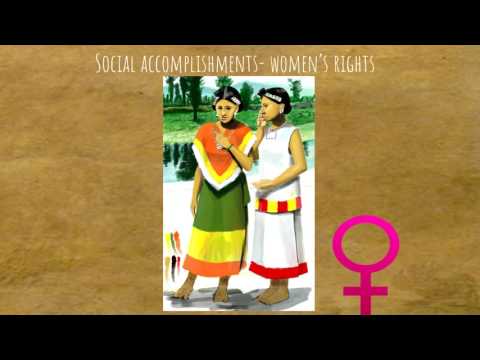
women’s rights because it meant that
woman would be educated and this is huge
because there’s many women in our world
today who still do not have access to
education another thing which I find
really interesting about the Moschino
civilization are their views on slavery
so you may be thinking if the Aztecs
were so cool then why didn’t they just
get rid of slavery altogether so allow
me to elaborate on this topic a bit more
so back then being a slave was more like
you were an indentured servant so
usually it was because you were paying
off a debt or you had committed some
kind of crime and after you served your
time you would be allowed to go free and
if you’re a slave your owner was not
allowed to mistreat you and you still
had an access to education because that
was something that everyone had access
to you in the Aztec empire so what we
can get out of this is basically that if
you are a slave in the Moschino
civilization it’s a lot better than
being a slave
and other ancient civilizations one last
thing I’d like to mention about the
society is that they is that the noble
positions weren’t inherited and also the
nobles were punished a lot more harshly
than the commoners and so for example if
you were drunk in public you would be
let off the hook the first time if you
were a commoner and then executed the
second time but if you are Noble you’d
be executed right away and so this
prevented corruption and government
officials to think of how we can use
things like this in our society today
now I’ll be talking about
accomplishments that relate to the
Science and Technology side of things so
the Machine who were very influenced by
another civilization in the South which
was called the Mayans and they yeah
their civilizations started much earlier
than the Aztecs and also after the Aztec
empire fell the mines were still around
for a really long time and the Mayans
are known to be super advanced in
astronomy and they had this type of like
tool which was basically like
intersecting bars that could give the
coordinates of something in the sky and
with these surprisingly basic tools they
were able to actually have the most
accurate calendar system of the ancient
world and so the Aztecs copied this
calendar system and it had 18 months of
20 days each and they added five extra
days at the end of the year
that were considered unlucky to make
that a total of 365 days another area
that the musci Co were really advanced
in was medicine and they had many herbal
remedies and they also used steam baths
for many common ailments such as fevers
and it’s important to note that the
Machine cot society had very had a very
good standard of Hygiene especially
compared to Europe at the time which is
important because in the machine Empire
you would have a much lower risk of
diseases and also the engineering of the
Aztec empire was very impressive as they
had aqueducts to provide Tenochtitlan
with fresh water and this consisted of a
twin pipe system so that if one of the
pipes got dirty the water could be
diverted into the other pipe WA while
the dirty pipe was cleaned and this
an amazing accomplishment because they
were able to provide water for all of
their citizens and if you think about
there’s some people in our world that
still have to walk for miles just to get
water and there’s people who have like
no access to clean water at all
also the mushy grab as I’ve mentioned
earlier there they also had a very
impressive agricultural system which was
made with artifact artificially
constructed islands which they could
plant crops on and this was known as the
chinampa system and was one of the most
highly productive agricultural systems
of the pre-industrial world the asacs
also had really advanced weapons which
were made with obsidian blades and this
was due to the fact that they were
located very close to sources of
volcanic rock and the Spaniards wrote
that the weapons were so sharp that they
could cut off a horse’s head in one blow
so speaking of weapons and Spanish
conquistadors is now time to talk about
the downfall of the mashita Empire so
I’m sure you’ll find that this part
interesting as it was one of the most
influential events in history some of
the key players in it were Hernan Cortes
who was the leader of a group of 500
Spaniards and he his prior experience
included that he had lived for many
years in a Spanish colony in the
Caribbean and he had also heard tales of
Christopher Columbus’s voyages which
inspired him to try conquering the New
World so he was able to teach Spanish to
an indigenous slave girl named Malinche
and today her name is actually used as
an insult in Mexico to mean traitor and
she and also she was very helpful in
communicating with native rulers such as
Montezuma of the Aztecs
so Cortes and his men basically they
tried capturing to no Sweetland but the
first time they failed so they had to
get more reinforcements from Spain and
they also had many African slaves
helping them and also thousands of
indigenous allies that were tired of
paying taxes to their Aztec overlords so
the Spaniards also had guns and cannons
however these were
very useful at the time because firearms
back back then were a lot less were a
lot less reliable than today but they
did have a weapon of mass destruction
the the Aztecs to no chance against and
this was the foreign diseases that they
brought in so the Spanish conquest was
very unexpected for the Aztecs today the
Aztec empire is no more but a lot of its
legacy still lives on today and it’s a
really key factor in shaping the Mexican
identity today also the Nahuatl language
of the Aztecs is still spoken in Mexico
today in some parts and it’s quite hard
the pronunciation but you could learn it
off the internet if you want to and so
basically the musci code today and
indigenous people in general are very
underrepresented in the media and school
curricula and we we don’t really learn
about their accomplishments and history
that much and we also constantly label
them with terms that say more about
colonizer than the people who are
colonized so if there is one thing I
want you to get out of this presentation
it’s basically that you should try to be
open to understanding other people’s
cultures and their accomplishments to
the world and also think about all we
have to learn from indigenous people and
they had equality for women they were
able to provide their entire society
with clean water and they were very
advanced in some ways which we still
haven’t accomplished today thank you for
listening
you
Please follow and like us: