
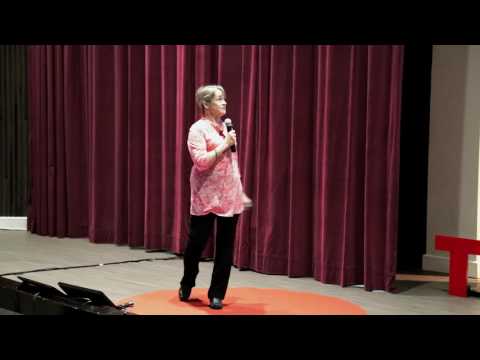
I’ve got a quite important message today
it’s about what’s happening in the world
I’m going to talk to you about the sixth
mass extinction the one that’s happening
right now as we talk here in this room
extinction is normal it’s a normal part
of evolution but what’s happening right
now is faster than anything that’s been
seen before
in the geological history mass
extinction is extinction of a large
number of species plants and animals
from many different habitats all over
the world in a short period of time so
I’m pleased to see lots of geologists in
the room geologists have a unique
perspective they have a chance to look
back in time and to see what happened
before so what do we find we find if we
look back at the last five hundred
million years we find five big mass
extinctions the big five the causes for
these now well known you’ve probably
heard about the extinction of the
dinosaurs caused by an asteroid impact
some of the mass extinctions were due to
climate change massive volcanism where
lava spews out – fissures and changes
the Earth’s geochemistry over thousands
of years climate change which can have a
knock-on effect on things like sea level
but what’s happening right now is of a
different order some a predator is on
earth and usually the apex predator is
not the most abundant but in the case of
humans yes right now
we are experiencing the sixth mass
extinction bigger question mark it’s
still ongoing we can’t quantify fully
faster no doubt the numbers prove it and
the cause is single
it is us humans here on earth and our
impact so what does the science tell us
there is a lot of science there are
biologists conservationists all over the
world studying different species from
microorganisms to polar bears in all
different countries different habitats
they’re coming up with the same sad
story the International Union of
conservation for Nature has set up what
they call the Red List this has been
going on for about 40 years every couple
of years the Red List is updated the
numbers seem to be increasing we study
more organisms and we find the same
story there’s a sliding scale vulnerable
endangered critically endangered and
finally extinct it seems that many
species follow this scale there’s a sort
of slippery slope it’s extremely
difficult although not impossible
thankfully for species to go backwards
along the scale there are some examples
where a species that was extinct in the
wild have been successfully reintroduced
there are also examples where a
population in decline has been safe from
extinction unfortunately it’s not the
majority let’s look at the trends this
is just a chart showing some groups
corals are particularly badly affected
30% decline birds mammals amphibians and
this is across different ecosystems in
different climate zones all over the
world should we be alarmed yes the
current trends are alarming I’ve just
chosen two quotations
from prominent biologists probably the
world’s best-known conservationists the
present extinction rates a thousand to
ten thousand times the natural rate we
are in a mass extinction Yeoh wilson i
hope you’ve heard of him probably the
world’s best known biologist if the
current rates continue half of all
animal and plant species will be extinct
by 2100 that is in about three or four
human generations think of your
grandchildren
everybody likes a picture of an animal
so I’ve chosen the dodo I’m going to go
through some of the causes we said
humans are the primary cause of
extinction let’s go through some of the
secondary causes how have humans
affected species numbers that they’re
always extinct we have this expression
as dead as a dodo the dodo is a
flightless bird about the size of a
turkey hint turkeys are good to eat when
humans arrived on the island of
Mauritius they thought that the dodo was
quite good to eat too and has been
hunted to extinction for food humans
also brought with them alien species
that didn’t live on this island before
dogs pigs goats etc those animals
harvested at the dodo eggs okay it only
took a hundred years to eradicate the
species extinct forever the symbol of
extinction and I’m going to show you now
some other animals and plants I’ve
chosen quite a diverse selection it’s a
bit like an identity lineup I could have
chosen others and I could go on for
about a month before running out of
extinct or threatened species
the silky sifaka this is a primate on
the island of Madagascar which split
from Africa about a hundred million
years ago primates evolved totally
differently from other parts of the
world so the silky sifaka is one of
about 30 lemurs that live in the forest
they’re critically endangered hunted for
bush meat loss of habitat slash-and-burn
agriculture logging and cutting of trees
for few Elkhorn coral corals are very
important because the coral ecosystem is
the basis of the food chain in the
oceans corals also provide protection
for coastal areas breeding grounds for
fish the Elkhorn coral is in decline
this is a species that lives in tropical
waters white band disease increasing
ocean acidity ocean warming physical
damage anchors tourism human pollution
sedimentation and also invasive species
that humans may bring around with them
when they travel still in the seas and
closer to home a bit closer to Iraq the
Hawksbill turtle also critically
endangered this is a species that once
had a very large population thriving in
tropical waters all around the globe
now critically endangered the numbers
are dwindling hunted for its beautiful
tortoise shell trapped in abandoned fish
nets and other marine litter lost of the
nesting habitat and the foraging habitat
marine pollution and tourism
I believe that hard to find any
Hawksbill turtle in waters around here
anymore
staying in the Southeast Asian
aegeon Nepenthes a picture plant this
plant is incredible it’s evolved to
capture insects it captures lemonade
digests them in the in the juices that
that sit at the bottom of the pitcher
plant unfortunately it has a narrow
habitat tolerance it only lives on
certain areas in Sumatra the habitat
being restricted
if this habitat is damaged the species
looks to be declining probably will not
make it I couldn’t give a talk and show
animals without including a cave or at
least a cave creature and to also show
that human impact has even reached
underground the Indiana bat a bat
species that’s found in Indiana Illinois
Kentucky the cave regions of the United
States used to be vast populations in
winter they hibernate underground in
caves in the summer they go into the
forest to forage so it’s tricky to
conserve we must maintain there both
habitats human disturbance in the caves
commercialization of the caves too many
visitors disturbing them urbanization
and development around the caves changed
the chemistry and the temperature loss
of the summer forest habitats where they
used to to forage endangered maybe we’ve
still got time ok
little cute creature the axolotl
salamander how many of you have heard
about it maybe one or two good this is a
very unusual animal that’s why I chose
to to use it in my talk today
it’s a salamander that seems to have
never matured to an adult so the adult
axolotl looks a bit like a tadpole it’s
got its gills on the outside of the body
you see that furry thing oh by the way
the photo is a lab specimen it’s very
difficult to
find Wikimedia Commons photo with actual
in the wild they’re so rare critically
endangered they live in the canals and
lakes around Mexico City
one of the world’s busiest and biggest
developing cities they’re very curious
when you cut off their limb it can
regenerate so there’s a high interest in
medical research using these animals
unfortunately they also make convenient
cute little pets they’ve been hunted for
pets for consumption for medical
research I forgot to mention that the
axolotl
is also an important character in the
Aztec mythology in their culture the
urbanisation desiccation of the canals
in Mexico City pollution particularly
bacterial pollution and invasive fish
that were introduced by humans thought
it’s time to show a little plot okay
miniature cactus that grows in New
Mexico unfortunately once again very
restricted habitat
apparently only several square
kilometers cute little cactus often
people would like to have one in the
little terrarium in their home so
illegal collection has dropped the
numbers urban development off-road
vehicle use droughts there have been
some attempts to reintroduce my talk is
not entirely negative I hope there is
ways of changing the situation they’ve
been in reintroduce but it’s a big
effort and must be sustained for it to
be successful I’ll finish off with
probably quite a well known animal that
has suffered the golden toad okay
this animal lives in in protected
forests in Costa Rica
protected forests it’s important and yet
it is extinct this is the first victim
of global climate change not illegal
logging of slash-and-burn agriculture
this animal lived in a protected forest
unfortunately the pools where it spawned
have dried out and that caused the
population to plummet last seen alive in
the 1980s also suffered maybe disease
and air pollution made them more
vulnerable so that’s the end of my
little lineup of victims why should we
care why should we care about this
situation well you probably know that
plants and animals provide us with
what’s called nicely ecosystem services
our rainforests provide oxygen our
forests also retain the soils and
prevent soil erosion corals as I said
earlier mangroves corals protect our
coasts from erosion also the oceans are
very valuable as a food source okay if
we deplete that we’ll end up in a
terrible situation we only have one
planet these animals and plants are our
life-support system we have no choice
but I also think it’s very important to
recognize we’re all in this together
we’re all connected some of our previous
speakers have mentioned this and to go
with the emotive impact I think it’s
worth it just for the sake of it
diversity is what makes the world such
an interesting place and it resonates
with humans we need nature on an
emotional basis so what can we do we
need to come up with some solutions we
can classify their solutions into two
categories
two schools of thought and conveniently
they’re both symbolized on your bookmark
today the arrow can symbolize reduce
reduce growth reduce the human
population I’m not talking for
exterminating us that might happen
without us wanting to but we have to
stop rampant growth reduce our footprint
reduce our impact on the environment
especially that well the negative impact
with juice consumption recycle reduced
waste marine litter – greenhouse gases
Oh linked to waste so this is the first
school of thought maybe a little bit you
could see this as going back in time a
little bit to when things were not so
bad the second school of thought let’s
find some technological fixes okay
let’s use alternative energies let’s
make our cars cleaner let’s use
resources in a different more sensible
manner can we fix the damage done are
there ways genetically modified
organisms maybe nuclear energy I’m just
throwing ideas ok can we fix climate
change there are some ideas there – I’m
not saying they’re going to work I think
personally and I’m more of the first
school of thought but I think it’s time
for action the time for measuring
counting populations is over we need to
start doing something and it will be you
our young students and your children who
are going to have to take on this
challenge I will finish by this saying
which I borrow from Marco lambertini who
is the director of general of WWF it is
time for us to close the destructive
chapter in our history if we don’t we
might find it’s not only the end of the
chapter but it’s the end full-stop so I
hope that’s not too pessimistic but
thank you for your time and attention
[Applause]
Please follow and like us: