
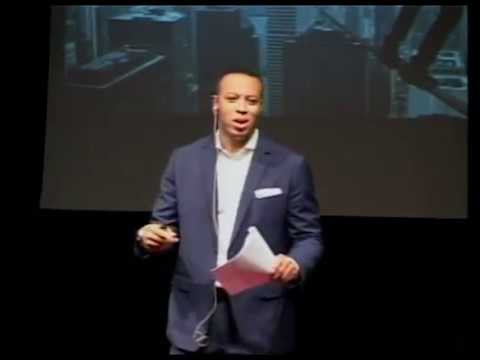
good afternoon my name is Terence
Patterson and before I start it it
dawned on me that it it’s quite ironic
that I’m talking about my story but I
have it written down and I’ll super key
off of notes but I want to make sure I
don’t forget anything but my story
starts in Memphis and just like many of
you I came from a humble modest
beginning didn’t start poor but I
certainly wasn’t rich by any means but
the common thread in my story is a blend
of acquired talent and hard work I love
the zoo always had a smile I never
turned down an opportunity to do fun
stuff in fact I was always incredibly
organized and I am to this day I can
remember always making my bed as a
toddler and organizing my blocks before
going to bed my parents instilled
Southern values they made sure that I
was always in environments that were
conducive to success but as I grew from
childhood to adolescence to even the
ultimate independence of adulthood there
were three themes that emerged to define
my story following to lead continuous
mapping and taking well thought taking
well thought risks so first this notion
of following to lead I’m the oldest of
three boys and we’re all four years
apart and so there were inherent
opportunities for leadership along the
way eating my kid brother’s leftovers
taking their toys or even letting them
think they were playing Nintendo when
the controllers were really unplugged
but the true learnings that I had
really when I was in the eighth grade
and I had the opportunity to be named to
the varsity baseball team in the eighth
grade
and just watching older guys perform
watching them practice I learned that a
lot of leadership and growth is osmosis
if you’re close to leaders you’ll just
pick up their good habits and their
traits but it wasn’t until I got to high
school that I realized I was starting to
have opportunities to truly lead in my
own right so the but by the time I was a
sophomore at the end of my sophomore
year I was named the starting
quarterback of my football team and I’m
actually in a leadership position but to
be very candid I was younger than
everyone that I was leading a group of
juniors and seniors and I didn’t know
how to lead and so I was actually
watching and mimicking other older
players looking at them at their
position understanding their behaviors
and emulating them because all I knew
how to do was work hard and learn my
craft and so it was really an exercise
and following by example as my preferred
method of leadership and it wound up
ultimately being successful we went on
to go to the state championship and the
largest division in the state of
Tennessee and we finished with the 14 in
one record but this same path continued
on my way to college and it was the same
story it was a different position a
different uniform higher stakes the same
formula and even success at another
level both on an individual level but
also on a team level it was a different
position because I had never learned how
to play or I’d never played wide
receiver before before I set foot on
Harvard’s campus I had always been a
quarterback but I was fortunate to be a
part of a team that brought my coach his
first Ivy League title and by the time I
was a senior I learned how to play the
receiver position
and I was named Harvard’s all-time
leading receiver and the only player in
Harvard history to run catch throw and
return a touchdown in the same season
but the point is not the success but
rather the fact that following to lead
is replicable and if you can learn to be
a great follower you will inevitably
learn to be a great leader and I want to
make a point about leading because it’s
important because you’ll sometimes have
a bad leader and just because you have a
bad leader does not mean you have to be
a bad follower in fact you learn your
greatest lessons from your bad leaders
and it’s not always all bad and you
actually can reverse their traits so I
want to move to the next theme and it’s
this notion of continuous napping
mapping but before I do there’s a
snapshot of a younger me the notion of
continuous mapping is complicated and
you know it’s not as complicated as the
life of Homer Simpson or even the map
that he’s looking at but this was the
concept that didn’t emerge for me until
after I graduated from college and the
basics are this you need a plan and it’s
more complicated than just needing a
plan but you actually need your map to
be a living document you’ve got to
create it it’s ok if it changes in fact
I can remember going off to college and
going backwards a bit and thinking I
wanted to be a doctor a pediatrician and
be specific but it wasn’t until after
four semesters chemistry five economics
ten psychology one sociology three and
then government 10 that I didn’t realize
that I wasn’t gonna be anyone’s doctor
and I wasn’t going to anyone’s medical
school and that’s okay because new
fields emerged I was exposed to new
things and I was open to the change and
some of this was attributable even to my
mentor that helped me develop the
frameworks for my future Maps
and I can remember my coach at Harvard
he was often quoted in the Boston Globe
and he would say in practice you know TP
one day you’re gonna be governor at
Tennessee you just wait because I
believe in you and it was words of
inspiration and also guidance and
direction that helped think about what
these maps would ultimately look like
for me but I want to get back to the map
for a minute because it is real and the
map should necessarily be done in pin
but in fact it should be done in paper
and this is what one of my maps looked
like this is a replica from 15 years ago
and it’s got twists and turns it’s got
different occupations and all of the
things in between the key is you start
with your dream job at the end and then
you backwards map to determine how you
get there and every year or so you take
your pencil out or your pen and you
scribble things off and you make
adaptations to your map because life
changes you’ll get new opportunities and
ultimately this map will help you make
educated decisions that will guide your
longer-term future and so that also
connects directly to this notion of
taking risks but well-thought risks and
this is a tough one because I don’t want
to be the guy that shows up and tells
you it’s okay to take risk and then you
fail and it costs you a lot but I
believe it’s okay to take risk and it’s
okay to fail and you have to prepare
yourself you have to have a map you have
to understand pros and cons and for me
there are three instances in my career
and in my story that stand out the first
is being a sports agent I graduated from
law school and I was representing three
players three clients that were
teammates of my younger brothers at the
University of Memphis and northwestern
at the time and I had an opportunity to
go work at a big law firm right out of
law school and I decided not to and I
decided to go work for my mentor at a
big agency and represent the likes of
Donovan
and Dwayne Wade and Brian Westbrook and
Brandon Marshall and it didn’t work out
well kind of because I had the
opportunity to do my dream job I was in
the green room and I was Jerry Maguire
and I was having the time of my life but
I realized it wasn’t for me and as a
result of that I actually had to go
backwards and I found myself at a big
law firm two years behind my class
learning things that they had already
learned because I had taken a chance but
I would never do it again differently
because that chance afforded me a
lifetime opportunity the second chance
or risk that I took was related to
moving back to Memphis and this one was
a tough decision because while I loved
Memphis and I wanted to always be back
in my hometown I didn’t want to be back
in my 20s or 30s but instead I wanted to
be here in the twilight of my career and
so here I am I find myself at Chicago
Public Schools the third largest school
system in the country I’m one of the
youngest members of the cabinet I have
responsibilities to transform k-12
education in one of the largest urban
systems in the world and I get a call
from my hometown saying come home and
it’s one thing to be a small fish in a
big pond but it’s another thing and a
whole nother thing to be a growing fish
in that big pond but I went back to my
map I thought about what the future
looked like and I determined that there
was a pathway through Memphis to reach
all of my goals and I took it and that
risk led me to where I am today
at the downtown Memphis Commission and
so once I got settled into Memphis I
began committing to civic duties I got
to understand what was important about
downtown I was serving on the downtown
Commission’s sister and affiliate boards
and it was important to me to understand
why economic development was important
like education but an opportunity
presented itself and I got to know the
president at the time
he suggested that he was going to be
leaving soon and he thought I may be a
good fit in the future to be the
president
this was a total stretch to even
consider because I have a government
degree I have very little experience in
economic development I’ve been working
in education I was relatively young
these are jobs that are typically
reserved for economic development
professionals and folks that have much
longer years of experience it’s my
research they have conversations with
mentors I went back to my mat I thought
about my experiences and I ultimately
decided to put my name in the ring and
when people tell you that intelligence
preparation and passion don’t matter I
think you should call them a liar
because they do matter because that’s
how I found myself in my position today
and so going through that realizing that
these types of things are possible for
our downtown thinking about the future
bringing major corporations like
ServiceMaster understanding what it
takes to bring the next really important
and it actually is the culmination of my
story it’s a simple story it’s one like
I said of hard work and acquired talent
I didn’t know how to play receiver but I
figured it out I’m becoming my first
president and CEO and I’m understanding
what this means I’ve had to work I had
to work at the craft I’ve also had to
acquire knowledge and surround myself
with really smart people but those three
thing themes continue to guide my
decision-making and what I believe is
most important
is my impact you remember my my story
started in Memphis and I believe just
like you if your story starts in Memphis
it should end with an impact on Memphis
and so whether it’s in the middle of
your career at the end of your careers
you should think about how you how we
can help impact the future of Memphis
and to me the future of Memphis is now
and we need all of you to help make the
now better thank you
[Applause]
Please follow and like us: