
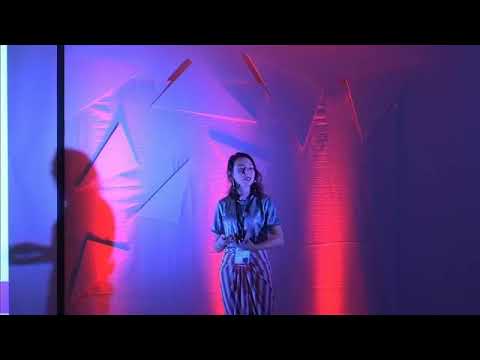
Good morning, everyone, thank you
all team ted mac x the invitation
to share this little
contribution to you
one is in 2007
the united nations established the day
democracy is within the
resolution in which the United Nations
establishes this international celebration
is the word democracy appears 19 times
within these 19 times not once
a definition of the
what is democracy to our
constitution of 88 our charter
governed by the word democracy does not
never appears again in all these
two documents
there are numerous references to what would be
democratic values such as the
idea that power emanates from the people
or that there is a citizen is that
participating fully in all
activities that can
if we think about 88 here or
even from 2007 to here technology
It has evolved in a way that we do not even
Can you keep up, huh?
I’m sure you all of the time.
that they have awakened until the hour that they shall sit
here to watch all these conversations
today they have used your cell phone already
used technology in a multiple way
I’ve been using it myself from the morning until now
technology to train my own
Speak here at Ted’s with my team.
cell phone
I already used my cell phone to come to
here using an application I already used my
to communicate with others
people
this means that all these tasks
that we can do using the
technology
they empower us to do
something
and I really like a speech that
including a person who has another
I recommend that you guys watch
that helping of giving antares is he is
person an activist who walked to the
favela of antares whole because it
did this he did it because he has a
very simple speech that says
information is power from the moment
in which he walked to the favela he can
show to those people who live
in that territory he can offer
incredible opportunities
they were able to look for a job
they were able to open businesses that they
could not before they might have
access to public services that it
never before would technology
In this sense it means that it can
offer several opportunities
this first one I mentioned that
information means having access to more
power of which we can have access to
countless tasks that we do while
citizens more easily that
people can act politically as well.
through technology
then thinking about this key of citizenship
are we going to have some examples of
how can we use the
technology to make us citizens
is one of the ideas for example the
own digital mobilization
if we think that the mobilizations of
June 2013
despite having happened in the streets they
were organized in large part
digitally through social networks
we have an example of a great
transformation that took place in
democracy from technology
we also see various movements
which are organized for example through
hash tags to mobilize people to
around any certain cause in the case of
moves my first harassment my
occult friend
or even the campaign admitted that it started
in the United States and became global
with digital mobilization it is a
example of these great examples
in addition we can also exercise the
our citizenship is thinking that we can
do this social control activity
of sectors of organs of power
public using technology like this
For example, people can access a portal
transparency and know all the
important data for that body
example uses to define policies
public or even people can
develop with artificial intelligence
a robot that does this
conference of parliamentary expenses
to help us understand if the
corruption or not
there are many examples that can
bring these elements to us
in addition we may also think
that we can participate in politics
that way it’s harder to say
through technology and again are
numerous examples for this some of
Have you already signed an online petition?
almost all hands up
these petitions online many times they
serve only to mobilize people
around some cause but also they
They can be turned into projects
law
nowadays it is possible to subscribe
bills of popular initiative
through technology using a
application on your phone
but besides that there are other things
You can do we can
maintaining lasting relationships with our
once candidates and then elected
deputies or councilors through the
cell are also countless
applications that exist for us
connect with these candidates once
that their mandates are elected and
monitor what is happening
on here
What are they actually doing?
when they reach the power of technology it
presents to us a series of
opportunities for how we can be
a more complete citizen but has a
problem when we talk is who
access technology or specifically
who accesses the internet
we will see many gaps brought
some data here for you to have idea
how access works or not access to
internet in brazil are more than 27
millions of households that do not have any type
access either mobile or fixed
people in an entire household who
does not have any cell phones to access
Internet
there is also a disparity one
very large divergence in terms of
regional
the north and northeast are the
affected by this disparity.
there are some states in the north in the
that not even 50% of the population has
internet access
if we look again at this
number of people who do not have access to
Internet
we will see a racial disparity
very significant 60% of these people
are black and if we look at the
class
clearly we will understand that if
people do not have access to buy a
phone or buy a
computer but can not access the
internet are the classes of and are the
less favored in that sense all good
so we looked at those who have access
effectively the technology but there is a
Another problem would be that
Fini technology that manages the
technology companies in the world have
some interesting data here but
within the areas of science and technology
only 27% of positions are occupied by
women
worldwide speaking
besides, if we look
all silicon valley statuses have
interesting research on the
project is already that counts that only 4%
of these companies are managed by
black women
and if we look again at a
regional issue
the disparity between the global north and south
it is amazing
So, how can we understand?
that technology can enhance the
democracy if so many people are out
access and so many people do not have
how to do this so I wanted to bring
for you a proposal for a lens one
glasses that I wanted you
from now on together
The one you’re looking at with me is one
theoretical North American feminist
what is the name of the oakland shopping center here?
It ‘s a shock for me, she writes.
88 is an extremely interesting article
called mapping the margins
In this article, Bahiana tells us people
about some cases that she herself had
to defend legally and these cases
were black women workers
who were being harassed in their
places of work and here to see
when she had to write these
defenses
she was unsure she would be that by
a line saying what those
women were suffering is sexism
or did she follow a line saying
that what that woman were
suffering was racism and she said it is
impossible to separate these identities
that characterize that person
that person she is a woman she suffers
sexism for being a woman she is black and she
suffers racism for being black
So how can I decouple?
these two things then that’s when she
coined that term called
intersexuality that this ability of
people look
multiple lenses the layers of oppression
that affect a person
those women they did not suffer alone.
hours sexism not only suffered more racism
I did not suffer one because they were
disadvantaged classes
they suffered from these multiple layers of
oppression
So you guys are not seeing but I’m
seeing you saw before were roads and
cross streets and the idea is that it is
exactly in this intercession this option
You saw the data I showed you.
you people who do not have access
the Internet or who do not have access to
technology which does not draw the
technology are largely people
which are affected by these layers
multiple oppression
are people who are often black
and low-income people are people who are
living the banks are not in the south
global
so I wanted to bring some of this
invitation for you to have this look
inter-sectional for when people
think that technology can activate the
democracy can empower the
democracy it can yes but it depends how
We are looking at this depends on
who is behind the big
companies that design technology that
create technology
so I wanted to end this conversation
small contribution telling you
put on this glasses neither
intersexuality think that it is not
possible to highlight a layer of
identity of one person from another and
when we are faced with barriers
in relation to access to technology is not
possible to transpose these
barriers without an inter-sectional look
thanks
[Applause]
Please follow and like us: