
I am happier with you tonight at the
fast laureus world sports award sport
it has the power to inspire it has the
power to unite people in a way that
little as does it speak to youth in a
number to the understood spot can create
hope where once there was only to spoil
it is more powerful than governments in
breaking down racial barriers it loves
in the face of all types of
discrimination so Nelson Mandela
happened to say a whole lot in just five
sentences so I want to take just a few
minutes to talk through his message and
the ripple effect its had on youth all
across the world as many of you know
Nelson Mandela was in prison for 27
years for leading an effort to fight
apartheid which was a system of very
oppressive racial segregation that
existed for several decades in South
Africa after he was released from prison
soon thereafter he was released in the
early 90s in 1994 he was elected
president of South Africa and he looked
out you know among the people of South
Africa that had for many many decades
been separated by black and brown and
white and wondered how the world am I
going to bring all of these people
together and he thought maybe sport is
the answer when he was in prison they
wouldn’t let him you know read most of
the newspapers or see television
anything but they would let him read the
sports pages so he was very much a fan
of sport he used to keep track of all
the the top athletes in the country and
one of them was Francois Pienaar he was
the captain of the national rugby team
called the Springboks and ironically
just a year after nelson mandela was
elected president they were
be hosting the rugby world cup at in
South Africa and he thought you know
what I’m going to enlist françoise’s
help in kind of bringing the country to
rally behind our national rugby team the
Springboks and so this is what happened
I mean they’re hosting the the world cup
they really weren’t supposed to do all
that well but they won the first round
and the second round and the third round
and they find themselves in the final in
this humongous stadium played playing
the new zealand all blacks one of the
top rugby teams in the world still and
they’d never run a world cup before but
guess what they want and the stadium
erupted nelson mandela comes down onto
the field wearing a springbok jersey he
shakes the hand of francois pienaar
gives us rousing speech and the whole
entire country had been cheering for the
national team and here too for the
whites would would vote for the root for
the Springboks with the blacks in the
country actually voted for the British
team because they didn’t see themselves
reflected in the Springboks and so this
was unprecedented to have the whole
country supporting their national rugby
team as you may recall there was a movie
called Invictus that Chronicle of this
wonderful story and it really did Sport
really did change the world or at least
it changed South Africa and what
happened was that so many organizations
have now come about that have caused
sport to change the world which kind of
gets me to my next point or at least
Mandela’s next point which is that sport
has the power to inspire sport inspired
again a plethora of new organizations
and a new nonprofit sector called sport
for development sport for development is
the intentional use of sport to achieve
particular outcomes like education or
health and wellness or employability or
social cohesion or community cohesion
and sport also inspired
South African businessman named johann
rupert he is the CEO of organization
called reach line which is a holding
company for a bunch of luxury brands and
he was a friend of Nelson Mandela and he
was inspired by this Invictus story too
he said gosh you know I I want to do
something I want to celebrate the power
of sport and so he said I’m going to
create an award show that celebrates the
top sports men and women in the world
and so he launched this laureus world
sports awards when Della gave that
speech and while they’re not Mandela
gates a speech there are dozens of the
top or the world’s top athletes at this
event and they were all inspired by
hearing they all wanted to do something
and so Johann Rupert paired up with the
folks at Daimler the parent company of
mercedes-benz and they together they
launched the laureus sport for good
foundation now it’s a network of nine
foundations across the world serving a
million and a half youth in 40 different
countries funding a hundred different
projects and so you know it’s happening
support inspired this new movement sport
also inspired the United Nations to
several years ago to declare april six
which happens to be today as the
international day of sport for
development in peace and so there are
organizations and people all over the
world today the International Olympic
Committee laureus sport for good
obviously who are celebrating the use of
sport to tackle many of the world’s most
pressing social ills and and so we have
you know organizations now like glorious
I have the very distinct pleasure of
being the CEO of laureus USA we have had
such success in the past five years
we’re reaching half a million kids
across the u.s. we placed 3,300 coaches
trained as mentors in projects all over
the over the country at eighty two
different cities and so you know
collectively we’re seeing that’s
it has inspired organizations and people
to engineer a new form of social impact
and again that gets me to my next point
is that sport has the power to unite
people in a way that little else does a
few years ago actually a little over two
years ago lori s USA began to unite
people in the city of new orleans by
using sport we launched laureus sport
for good New Orleans which is our model
city initiative it is an initiative
which is a long-term initiative to bring
you sport to first identify which
challenges our youth facing in this
particular city and then harness the
power of sport to address those
challenges we are now funding six
organizations in New Orleans they are
doing amazing work and we’ve also built
a coalition cross-sector coalition of
organizations around them so they are
government to corporate education
nonprofits and they’re all you know the
Parks and Rec edema in the city and
they’ve come together with these six
organizations leading them to have some
shared goals some shared metrics and
laureus provides a backbone for this
collective impact strategy in New
Orleans and as a result of the the
infusion of funding in their being able
to increase staff the professional
development that we provided to them
those six organizations who were two
years ago serving 10,000 kids are now
serving over 50,000 kids and so we’re
seeing that this is having a ripple
effect in New Orleans one of those
projects is called elevate there’s a
young man by the name of sky hyacinth he
was born in the Bronx lived in a
two-room house and his parents you know
struggled to make ends meet he pictured
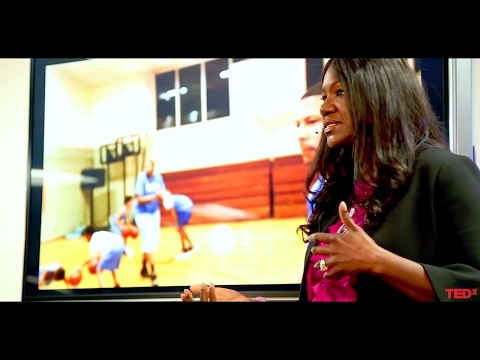
there coaching his athletes
he you know his family lived in often in
drug infested communities and he used
sport the sport of basketball as an
escape and he worked hard at basketball
he worked hard at school he ended up
getting a full basketball scholarship to
UConn yeah and he graduated and he went
on to have a career marketing you work
for ESPN for a while for on me come for
a while marketing communications and he
was friends with one of his former UConn
classmates and they went down in New
Orleans for some event and so while he
was there wherever he goes he would go
seek out a basketball court to blow off
some steam and he went to this
basketball court a bunch of kids running
around and they were excited to have
somebody there they kind of tutor them
and coach them and teach them some tips
and he went back day after day day after
day and one more point this young boy
comes up to Skye and he says you know I
I’m so excited to have you back I really
didn’t think he’d come back he said yeah
why would you think I’d come back he
said well nobody really my life I don’t
think anybody really loves me you know
and it really struck a chord with with
sky and he thought to myself oh my gosh
I need to do something and so he dropped
his wonderful six-figure job and his
nice life in New York and he moved to
New Orleans and he started a program
called elevate and elevate is really a
educational enrichment and basketball
skills enrichment program and they have
to maintain a 3.0 grade-point average
they have to do their tutoring they have
all kinds of wonderful academic
enrichment for the kids they can’t get
on the court until they’ve until they’ve
done their homework and unless they have
maintained this grade point average and
when they get on the court they get
top-notch basketball training so much so
that the 18 athletes student athletes
who have graduated through his program
all 18 of them have gotten college
basketball scholarships
amazing right so sport is definitely
uniting the city of New Orleans and
really helping to elevate the youth in
that program in the process the next
point in mandela speech was that sport
speaks to youth and a language they
understand you know sports fun and it’s
a hook to get the kids into a program if
you told them oh let’s go to a youth
development program or let’s go seek
some counseling or I have some tutoring
for you or something like that you know
the kids probably dead that’s all right
you know but if you say let’s go play
some basketball some soccer I mean it’s
a hook it gets them in and then they
learn all the life skills along the way
that you have to teach them and champion
athletes also speak in a language that
kids understand excellence hard work
perseverance the thrill of victory the
agony of defeat the joy of reaching your
personal best and we have very good
fortunate laureus of having a network of
200 plus of the most iconic athletes in
the world supporting our cause people
like skateboarder Tony Hawk or NFL Hall
of Famer Marcus Allen NBA star Chris
Paul swimmer I can leave her name of a
sudden Missy Franklin gymnastics legend
Nadia common each she’s on my board like
so cool these athletes have devoted
their time they go visit projects they
lend their name in their platform to
help promote our mission and they can
relate to how the language of sport has
transformed their lives and I to as an
Olympic gold medalist
can can relate to that as well I call my
gold medal the gift that keeps on giving
I feel like certainly a great awesome
opportunity to to stand on the victory
stand in LA but the lessons that I
learned around the the self-confidence I
got the lessons about how to be a leader
how to be part of a team how to set
goals how to power through obstacles or
hurdles that got in my way i was born i
might as well just say it 1961 it was
before the Civil Rights Act was passed
or the Voting Rights Act was passed I
mean I became of age in the 60s and 70s
with the backdrop of the civil rights
movement the women’s movement title 9
was past fall was in middle school my
mom helped to desegregate the public
school system right here in Prince
William County in Northern Virginia I
was the first black student to go to my
elementary school in the first grade so
I integrated my elementary school I did
a lot of trial and error my parents are
both educators and they really instilled
and my sister and me that yes we got to
get good grades we gotta you know do be
strong students but they also introduced
a lot of extracurricular activities
because they wanted us to be
well-rounded so I tried softball
majorettes I tried gymnastics believe it
or not violin I wasn’t good at any of
that stuff really but I enjoyed the
process of learning the friendships I
made I even got to be most improved in
but at the same time it’s an
eleven-year-old girl I found myself you
know victim in some cases of some
bullying both it in my classroom and in
my neighborhood the black neighborhood I
grew up until I was eight the all-white
neighborhood I lived in after that I had
low self-esteem low self-confidence
I hadn’t really found my place you know
the thing that I was that brought me joy
that I was excited about until my
gymnastics coach in middle school Gwen
Washington said hey Bonita I see that
you beat all the girls and even the boys
in PE class you need to come out for the
track team you know it’s kind of one of
those things where you have a toddler
and they’re getting something they
shouldn’t but you just kind of redirect
them and she kind of redirected me away
from the sport that I wasn’t so good at
but i loved i thought i was going to be
you know over corporate or not even
coming each at 5 10 and yeah not very
and she redirected me over to track and
field and i got on that track and i won
every event I tried the first time out I
found my joy that was the language that
I understood right and I ended up that
was 7th grade I ended up first chair
flute in the in the band I was student
of the year when I finished eighth grade
I went on to high school become a state
champion first chair flute and piccolo
played but you know solos and the band
in Orchestra made my first national team
at 16 I came from this kind of you know
tall lanky skinny girl I used that tall
lanky skinniness to be a great champion
and it transformed my life in the
process and so yes sport does have the
power to speak to youth in a language
that they understand another is that
sport can create hope where once there
was only despair so every child is born
with limitless possibilities and
potential but all too often people are
born into circumstances that you know
really ugly and the good news is that
athletes and kids who participate in
these sports-based youth development
programs really find themselves you know
in programs that take away that despair
and give them hope fight for peace is a
wonderful program that uses boxing to
help kids get out of the horrible slums
in Jamaica and Brazil there’s another
one called Magic Bus there in India they
bring hope to kids in this vicious cycle
of poverty in India they use physical
education based learning to do that
there’s another organization called
peace players international they use
basketball in conflict zones to bring
kids together and help them understand
how to communicate and get along with
people of a different ethnicity worrying
ethnic groups in some cases I had the
great pleasure a few years ago a few
months ago of meeting two young women
that one is an arab girl from palestine
and another is a Jewish girl from from
Israel the two of them participated in
peace players international you know the
two of them price should never have met
but they met through peace players they
played on the same basketball team
together they learned how to communicate
and you know she’s not a monster nor see
a monster right i mean they’re just a
girl just like me and they became best
friends and this is you know the the
power of sport to bring people together
who otherwise wouldn’t in private you
know generally hate each other right
and now the two girls work for peace
players international their coordinator
and a coach and that’s how I met them we
had a hundred projects a couple 300
people in Germany all together to share
best practices and they are just a
delight they’re just the best of friends
and love each other and now they’re
bringing hope to the kids in Israel and
Palestine who have faced the same kind
of challenges they had so sport is
something we all enjoy as athletes as
coaches fans and maybe administrators or
spectators but it really does have this
ability to change people’s lives and so
what I would encourage us to do is
really harness the power of sport to
help young people particularly in
underprivileged communities to reach
their full potential and have a build of
a successful life and in the process we
can help fulfill Mandela’s mission that
sport has the power to change the world
one child at a time thank [Applause]
Please follow and like us: