
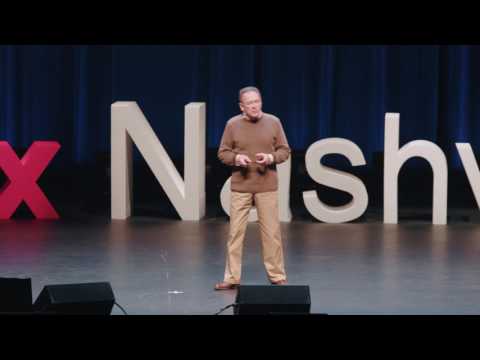
well ladies and gentlemen and by the way
I always say hello to any space cadets
throughout here we have a few space
cadets hey we have some good that’s
great my topic today is space our world
above and I’ll tell you why we came to
the topic in just a few minutes I’d have
had the fortune and the honor to have
spent over three decades working with
the space shuttle program out of the
Kennedy Space Center and now as a member
of thank you now as a member of NASA’s
docent program I spend a lot of time
talking to the visitors the tourists
that come out to the Space Center and
it’s remarkable how many things they
come from all over the world which helps
the fact that we’re right next to order
a cruise terminal but we do get a lot of
people from all over the world and they
have a lot of interest in space they
come and they want to know what NASA is
doing you know what’s going on what’s in
the future but a question we hear
recently is they want to know why NASA
stopped and it’s a leisure to wonder you
know so I thought today we better take a
look at that world of space above us and
I think you’ll see that not only is NASA
not stopped it’s certainly out there
very active and probably if anything
it’s expanding so to cover this
territory I thought we’d do three topics
let’s talk about what is complete what
is changed and there is one major factor
there as well as what is coming so let’s
start with what’s complete okay yes the
space shuttle program is complete and
after the five shuttles together total
these are all reusable vehicles by the
way Ness has been using him for 30 years
total launches as I think we just
mentioned yes 135 launches most people
stopped paying attention after 50 and
we’ve asked and they have we along with
those launches we carried aloft three
hundred and fifty five different
astronauts and scientists and those guys
were able to do phenomenal different
projects and scientific feats up there
in space that were never part of any
previous program that we could handle so
one of the things that made this happen
and that is the fact that the shuttle
cargo bay is so large we’re going to get
to good use of that in a few minutes and
the fact that it’s a return reusable
vehicle but before we get into that and
I’m going to introduce you to a couple
of projects they’re current we look
forward to do that I thought we’d talk a
little bit about what we did with the
space shuttles now that the program is
over that’s a shuttle on its transporter
we’ve sent these shuttles all over the
United States there is endeavour is in
the California Science Museum out in Los
Angeles we have of course Atlantis down
to Kennedy Space Center in Florida
and we have Columbia in Washington DC in
the Smithsonian Institute now we do have
one called the enterprise it was a test
article
it never really flew in space it’s in
the New York Harbor on board the
aircraft carrier intrepid so it’s on
display as well and by the way yes if
anybody asks it was named after the USS
Starship Enterprise of Star Trek Fame
they petition for it and they got it now
let’s go back and talk about these two
to really
projects the wave come up with the first
one is the Hubble Space Telescope
now these projects both these two are
talking about are complete they are
finished but they’re still active and in
use so right now the hub will fly
overhead about 340 miles up and it’s
moving along that is zipping along at
about 17,500 miles an hour its purpose
up there is to study light waves coming
in from deep space it also has the
ability to look down into the deep
realms of space and a little bit past
time it goes to a time adjust just after
it also has looked at well I should say
this you can’t look back into time and
the way we do that is that light coming
to us from an object that’s really deep
in space may take light-years to get
here
so the subject that it came from may not
be there anymore when you see it so what
you’re seeing is the way it was you’re
looking back into time now the Hubble
has also looked at about 30,000
different celestial objects for our s
draw over our astronomers and they also
have collected over 500,000 pictures gel
in our archives I think it’s only fair
to say that the Hubble Space Telescope
now this other big project that is still
in works and is also above our heads was
our first attempt of putting a science
lab into space at about 240 miles
altitude now you know what today as the
International Space Station it’s a
collaborative effort between the United
States with Russia with Europe with
to Japan and with Canada now five
countries together and we used our space
shuttle to take up 95% of the pieces and
parts to build a space station in
addition the shuttle supported 160
different spacewalks that was for our
astronauts all suited up and out there
and had to build this thing it puts us
best of a station together and it is
officially now complete inside the space
station we have a lot of experiments
going on on any given day there is about
a hundred and fifty different different
science experiments and work so much so
that NASA actually puts out a
publication it’s called the spin-offs
put to that once a year and this last
this last one was 235 pages long there’s
a spin off some space research some of
the other facts that are kind of fun
about the space station and that is that
it weighs 100 million pounds it’s a lot
to be floating around up there it has a
volume inside of about the same as a 747
aircraft it supports four separate
laboratories and its overall size is the
size of a football field and it and that
includes the end zones so it’s a pretty
large craft one of the most unique
features that I like to talk about about
the space station is that for the we
have had people living on the space
station for over 16 years continuously
most people don’t know that so we in
effect probably have taken some of the
planet’s population often moving it on
to outer space already so we’ve had so
we have six people up there right now
six astronauts are stationed up there
all the time by the way you can see the
space station it’s sort of a bright star
and it’s identified easier because it’s
moving and you could very noticeably
moving across the sky what you can do is
go to this internet site spot the
station nasa.gov and that will give you
the schedule of when the space station
flies over your area by a zip code true
that’s kind of cool I think so next
subject what has changed I did want to
put this in because there is one major
change that we want to try to be aware
of when the space shuttle program ended
NASA lost its ability to go to low-earth
orbit
now low-earth orbit is a area that we’ve
used for years for us it’s a space about
400 miles up above us we actually call
it Leo low-earth orbit and you’ll see
that in the papers from sometimes refer
to Leo it’s where we’ve been for the
last thirty years but with nasods by the
way it’s also referred to as the
backyard Earth’s backyard we’ve been up
there with all kinds of experiments and
which were the Space Shuttle settings
for the space stations in and the Hubble
Space Telescope nASA has been there for
so long
it being a government agency and it also
uses taxpayers dollars so there is a
requirement that it passes on the
knowledge the technology of how to go to
Leo well certainly it has done that and
now that NASA has moved on to newer
newer challenges the private world of
business has moved in very quickly we
have companies that have picked up on
that knowledge that passed down by NASA
and they do this by the way they pass it
to the universities science research
centers for NASA colleges sometimes
special programs so the private business
has picked up on that and they are now
in low-earth orbit and they are running
a very profitable business of hauling
unmanned payloads up to Leo they
actually do it for the military they do
it for other schools and businesses and
they actually do it for NASA nASA has a
contract
companies to haul supplies after the
space station that’s in low Earth orbit
leo
also a couple of companies are building
a manned craft so very soon the private
world will be taking our astronauts up
to the International Space Station so
what has changed well what used to be an
area that we refer to as science and
space and NASA is now a private business
zone around the circle’s the earth so
what’s coming always a good question we
have 30 launches scheduled at the
Kennedy Space Center this year that’s
private and government that’s a record
and I understand that there’s probably
40 maybe 45 scheduled for next year we
also have two or three new companies
showing up going on one is called the
moon Express now its intent is to land a
vehicle on the moon and that will be a
first for a private business we have
another company called the Bigelow
Corporation and the Big O Corporation is
working with NASA there they’re
developing or building expandable living
quarters this will be used in the future
for deep space flights and probably for
habitats on maybe some far-off planet
right now there actually is one attached
to the International Space Station
except for testing purposes we also have
a little company called Blue Origin you
become a spin-off of some other company
called Amazon or whatever they have just
built a factory right outside Kennedy
Space Center gates and they are building
their second and large rocket is called
the new Glen rocket and it is going to
be big and it’s going to be probably I
would say direct competition
with that SpaceX company that’s doing so
well there is one other big project
coming along it’s I think it’s scheduled
to be launched next year in October it’s
the James Webb Space Telescope now first
of all the James Webb telescope is not a
replacement for the Hubble’s telescope
it’s we’re going to have to but with the
technology on this new telescope with
the computers and with a a mirror three
times the size of what’s on Hubble it’s
going to be able to look into the even
deeper realm of the universe and we
expect it to maybe even be able to see
the formation of galaxies and maybe even
the edge of the universe
what makes all this possible well the
one thing with the web is its location
the Hubble Space Telescope is about 340
miles up the Webb Space Telescope will
be located 932 thousand miles out into
space or another way to say it seven
hundred thousand miles past the moon now
it is going to have a crystal-clear view
out there we don’t really know what all
it’s going to see but I do think that
will have to be rewriting the astronomy
textbooks again so what about NASA
what’s coming from NASA what are they
doing nASA has a vision the reach for
new heights to reveal the unknown for
the benefit of humankind this vision and
the challenge of it itself was what in
the 1960s took us to the moon well okay
and Russia pushed a little bit with that
too
but this vision is still with us and is
now come full circle nASA has a new
challenge deep space nASA has a new goal
and next year we hope to test launch our
the SLS the Space Launch System this
will be the biggest most powerful rocket
ever built it along with it will be a
new capsule of form an capsule this time
it’s called the Orion but we’re not
ready to just jump into the deep end of
the universe we have a lot to do back in
the 60s early 60s you didn’t just go to
the moon and that’s the same today we
have a lot to to learn a lot to develop
and a lot to test before we can ever
think about that so think what NASA’s
going to do is take that big rocket and
in the 2020s just three years down the
road we’re going to take this SLS rocket
and we’re going to start a series of
flights around the moon that’s good
we’re concerned with the space between
the Earth and the moon it’s referred to
as cislunar and if cislunar space will
be a testing and proving ground for us
now we’ve got years of development to go
so we’re going to be looking at
developing things that deal with
radiation protection we knew we knew
powerful new propulsion systems we’d
like to have better communication
systems we certainly like to know more
about how to store food and grow food in
space and for long term flights you
really want to have a really good water
and air recycling system and most
important we need to be ready for the
human physical and mental challenges
that are going to come along with years
long flight
in space our goal I didn’t mention that
a minute ago
maybe I should mention it now probably
our goal is would be the biggest
international achievement in the history
NASA’s pushed this toward a a flight out
there that would take take us into the
deepest parts of space what we’re really
looking at in the 2030s after we’ve done
the technology work in the 2020s right
around 2030 NASA’s going to have to
change its view from that backyard of
our planet and from the moon and start
looking at the only planet in our solar
system that’s accessible to us Mars this
is the world next-door this is a place
we can go and explore we can expand over
there and we can also give this planet a
better perspective so there really is a
big and fast-moving world of space above
us right now it’s with all the different
new companies new rockets new
destinations there’s a lot of activity
going on around and we’re going to be
seeing more and more development of it
it’s really it’s really good to to take
a look at your achievements but we all
should always be pushing on toward our
next future you know when I think’s
happened fast in space when I sit down
to write this little TED talk yeah fan
death it was a couple to do things had
already come about since in the last few
weeks our astronomers have already found
seven new Earth’s out there that go
around a single star and the last I
heard I think they were in favor of
number
six that’s a one most likely to be us
also SpaceX announced the other day that
it’s going to send two tourists around
the moon and back next year now that’s
about a seven a figure that’s had a
seven-day trip so I can only guess the
tourists only had a week’s vacation time
available but if you’d like to learn
more come down the sense that the
Kennedy Space Center down in Florida
it’s not that far away and by the way
don’t forget to wave to the space
station when it flies overhead because
those astronauts up there they just love
the attention so thank you very much nice talking to you