
I’m going to ask you to imagine
something please close your eyes and
picture a person who lives and works in
space 15 years from now what do they
look like where do they come from what
did they study in school what is their
job in space have you got it
okay open your eyes when I asked you to
imagine a person who lives and works in
space 15 years from now did you picture
yourself I hope so because space needs
you
and I think the question that each of us
may get to answer sooner rather than
later is do we need space my name is
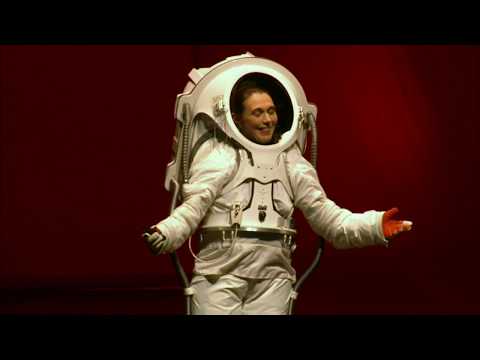
Shanna Gifford and as you can tell by
the way I’m dressed I’m a doctor
I’m also a journalist a photographer and
a simulated astronaut a simulated
astronaut is somebody who practices
living and working in space so that when
we finally go to space we can succeed
there Olympians spend years swimming
laps and regulation polls before they go
for the gold and physicians train and
train and train for the better part of a
decade before we’re allowed to treat
patients on our own but the principle of
practice makes better pretty much
applies to all skills and if you have
ever enjoyed a team or taken a CPR class
gone on a date or participated in a fire
drill you to have taken part in a kind
of simulation and when you finally went
to run that race or save that life that
simulation prepared you for success
simulations have been a critical part of
NASA’s missions since forever
since we began human spaceflight the
first Apollo simulation was in 1966
during that simulation the power failed
it basically rained inside the command
module and the crew discovered that
their underwear was venting toxic fumes
they were forced to eject it out of the
airlock so much broke during that first
simulation that it had to be ended early
that’s not to say that it wasn’t a
success in fact after that simulation
life-saving changes were implemented
dehumidification systems were redesigned
and spaced underwear was very engineered
and by 1969 we were able to land on the
moon and come home without having to
eject any clothing out the airlock for
safety reasons my crew learned a lot too
by spending a year on simulated Mars one
of the things we learned is that not
everyone could fit well inside our
simulated spacesuits but like so many
things about our mission what was a
challenge was also an opportunity and by
halfway through the mission we were
working with designers back on earth to
build a new simulated spacesuits
the result you see before you the
marsuit one the world’s first fully
adjustable analog spacesuit for analog
Mars
this spacesuit would fit anyone on my
crew and with a little adjustment
probably any future Mars simulated
astronaut even better this spacesuit
mimics in shape and weight NASA’s own
design for a Mars space suit the z2 so
by wearing the MS one on simulated Mars
we can begin to understand what doing an
extra vehicular activity on real Mars
might be like in a suit of this type
what tasks we can do how far we can
explore and how long we can wear the
suit before our explorers get tired this
is just one example of how space
simulations are taking us really far in
space but also how much further we have
to go which is why as we all speak
tonight for simulated astronauts at
Johnson Space Center are getting ready
to isolate themselves inside a module
for 45 days and practice the journey to
an asteroid now they won’t be practicing
the zero-gravity and no pressure part
we’ll get to that someday right now
we’re just working on the basics growing
food conserving water and power
maintaining the dome and dwelling inside
of it peacefully with a very small
number of people for a very long time my
crew and I practice this on the hillside
of a barren volcano called mount Aloha
and Hawaii for 366 days straight
making our simulation and our experiment
the longest one in NASA’s history
and for all that time we spoke to no
other humans in real time we never went
more than a kilometer or two from the
dome and like real astronauts I never
stepped outside without a spacesuit on
when I came back to earth I started
talking to people about what a year in
space is like how we ate mostly
dehydrated food and occasionally I had
to purify water by hand and had to clean
composting toilets always by hand and I
rapidly learned that what people think
of as astronaut material could use just
a bit of adjustment yes yes between us
we had a lot of academic degrees but at
the end of the day the PhDs and MD and
engineering degree from MIT took a
backseat to our primary jobs over the
380 days I’ve spent in simulated space
I’ve learned that the practical aspects
of life in space are the most critical
ones to success hands down the cooking
the cleaning the communicating back to
earth culturing food repairing
electronics the longer and longer we go
the further and further out the more and
more important these basic essential
skills become and the more and more
valuable people with expertise in these
skills are to the space efforts that is
a radical change from the way we started
in space think about it in the 1960s if
you ask someone what does an astronaut
look like they would show you a picture
of a Caucasian male member of the US or
Russian military if you ask someone in
the 1990s what a person who lives and
works in space looks like I hope they
would show you a picture of a scientist
physician or engineer of any race color
or orientation from one of two dozen
countries when I asked all of you to
imagine the near future space person did
you come up with something like this
these are the realities of our near
future in space it’s been an amazing
adventure it started as a military
operation
once upon a time now it’s a scientific
one
and I hope some part of it stays that
way but pretty soon more and more people
from more and more diverse walks of life
are going to be staying longer and
longer in space to support our life here
on earth
they’ll be occupying near-earth orbit
and maybe the moon and maybe even Mars
an attempt to support the way we live on
earth today this is not a dream it’s not
just a wish it’s not even an option
there is not enough room on the planet
the amount of information we want to
move at the speeds we want to move it
the growth of telecommunications alone
is going to require that we move
large-scale operations into near Earth
orbit permanently fortunately for the
last 17 years a few hundred people have
been practicing how to live and
improving how we work in space as a
result we’ve gotten pretty good at
surviving in near Earth orbit
I predict that 17 years from now several
hundred people will be living
simultaneously in near Earth orbit
supporting our telecommunications and
space rigs building our satellites and
spacecraft better cheaper and faster in
orbits and those people I don’t think
we’ll have three years to spend space
the way that astronauts do now I don’t
think they’ll have years and years to
Train to dedicate their entire lives to
it I think they’re going to resemble
less the astronauts of today and
definitely not the astronauts of the
1960s I think they’re gonna look a lot
like you I think they’re gonna look like
a lot like the people who work in
Antarctica today there’s scientists in
Antarctica sure but there are more
people there who are not they are
builders and welders and firemen working
in one of the most adverse environments
on the planet we’re going to need all
those people if we’re going to make it
in the most adverse
environment in the universe we’re gonna
need IT engineers and butchers and
bakers and barbers we’re gonna need
nurses and plumbers and yes sanitation
engineers we’re going to need artists
and musicians to entertain the people up
there and also bring the people down
here the experience of living in space
because let’s face it space is cool it’s
also complicated and messy and
surprising and very much in need of all
the skills that we have here and now on
earth especially the skills of the
people who don’t quite have careers yet
fortunately when you ask seventh graders
who wants to go to Mars you get a room
full of raised hands and one kid going
no no no no no no no no to this young
man and everyone who feels the same way
I say how about a nice seat at Mission
Control because for every one of us who
goes up there thousands remain on the
ground you communicate with us you build
the Rockets that bring us supplies you
design and redesign the desks and the
lights and the decorations that make it
safe and comfortable for us to remain up
there so what I’m saying is even if you
don’t want to physically go up if you
are down for helping us grow food and
zero-g if you want to invent
microgravity surgery if you have an idea
for a better space toilet we’ll take it
even if we can’t take you all of these
things are being worked on on earth
right now and we can use all the help we
can get and last if you would like to
make a small donation to our drive to
become an interplanetary space
please consider volunteering for space
simulation
if you are an astronaut type person the
way we define them today you can apply
we’re all volunteers or if you don’t
have months to spare you can become our
Mission Control or you can take a moment
out of your day and reach out to one of
us living what feels like very far away
you can find our blog and send us a note
just say hi when you see nothing outside
of your portal except for red rocks and
black space earth feels very far away
and those words of kindness that came to
me from people I’d never met
meant the world to me literally
lastly speaking of kindness if your
loved one child or spouse it’s accepted
to this space mission or to a simulated
mission for a year on Mars be supportive
the requirements for life in space have
changed and so the rules have changed
and for the first time in history those
of us who need space stand a real chance
at going there because for the first
time ever space needs us thank you so
much
[Applause]
thank you bye honey bye mom
[Applause]
Please follow and like us: