
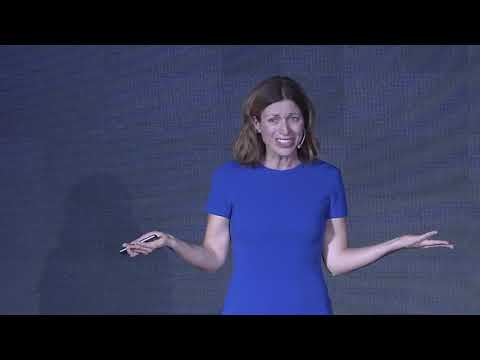
a couple of years ago a student at
Stanford University approached me about
an idea she had for a nonprofit she said
she wanted to help people in the slums
of Cape Town I said great how often do
you go to South Africa she said oh I’ve
never been but I hope to go one day here
you have a student who is no doubt
well-intentioned she’s smart she’s
motivated but how can you solve a
problem you’ve never seen how can you
create programs for people that you’ve
never met this student had designed a
solution without doing the work to
understand the problem and she’s not
alone in 2008 when the Chinese
earthquake hits which one province tens
of thousands of people died and millions
were left homeless the generosity of the
Chinese people was overwhelming they
donated billions of dollars to relief
efforts they weeded in long lines to
donate blood
they sent relief supplies to the region
but sometimes their efforts to help
weren’t that helpful so many people got
into their cars to go volunteer that
they clogged the tiny mountain roads
with traffic and the streets were lined
with piles of useless clothing that
people had donated that would never get
used these people meant well but they
didn’t take the time to educate
themselves about what the earthquake
victims really needed from increasing
inequality to climate change there’s no
shortage of problems that we must solve
in this world and the good news is
there’s no shortage of people who want
to help solve them but here’s the thing
good intentions aren’t enough I am here
today because the strategies for scaling
social change are teachable
the problem is we aren’t teaching them I
know about this from my own story this
is me when I was 25 just a couple of
years ago I haven’t changed right I was
a young lawyer in San Francisco and I
wanted to do something to help my own
community so I spent my days working at
the law firm and I spent my nights
co-founding SPARC with these amazing
ladies we were fighting for women’s
rights and we were a network of young
professionals SPARC was amazing we had
lines around the blocks for our events
we were doubling our revenue every few
months and we quickly became the largest
network of millennial donors in the
world but just when we hit our stride we
hit a wall we couldn’t get the capital
that we needed to scale past five
hundred thousand dollars in revenue so a
few years later when I began teaching
social entrepreneurship at Stanford I
became really curious who was scaling
past that wall what were they doing that
we weren’t doing at SPARC
my research showed that the wall is real
that 2/3 of nonprofits in the United
States are less than $500,000 in revenue
so I went out on a five-year mission to
try to understand one question why is it
that some social startups succeed and
scale while others don’t I cared so much
about this question that I literally
gave birth to three children in three
years and still did the work to try and
answer it I traveled the country and I
surveyed hundreds of organizations i sat
down with 100 top social entrepreneurs
with their leaders with their teams
their beneficiaries their staff and
boards and in those interviews I kept
waiting for someone to say well it’s
just charisma or a brilliant idea that
gets people ahead but no one said that
now that’s not to say that charisma and
grit and
brilliant idea aren’t all important of
course they are but what I heard again
and again is that the strategies for
breakthrough success are a set of five
essential practices that anyone can
learn first testing ideas before you go
out and raise money or get media
attention no business would launch its
product before first testing it and no
nonprofit should either second measuring
impact right from the start and using
those metrics not just to prove that
what you’re doing is working but to
improve as you grow third fundraising
experimentation if you’re going to get
involved in social change work let me
tell you you’re going to be doing a lot
of fundraising the best organizations
figure out how to raise money from both
earned income and philanthropic sources
force leading collectively and tapping
into the Italians of your entire team no
one can do this work alone it’s got to
be a team effort and finally
storytelling in compelling ways that
draws people into your movement creates
storytelling is really hard just ask any
of the speakers who have been up on this
stage today I’ve been practicing my
speech for weeks these five essential
strategies make up the PlayBook that I
wish I had when we co-founded spark
it’s the PlayBook that may students have
been asking me for for years and if we
want to get better at scaling social
change we need to do a better job of
sharing these lessons with our students
with our donors and with nonprofit
leaders themselves first we need to
educate students this is Rob kitten Rob
was so passionate about the homeless
kids that he volunteered with as an
undergraduate he got together with one
of his classmates and started an
organization in San Francisco called at
the crossroads rob was doing the work
that he loved helping homeless kids one
by one by one when he realized that
there were thousands of kids who needed
have helped rob needed to build a
movement but he was only 22 he needed an
army of people to help him but he had
never hired or managed before he didn’t
have contacts to help him raise millions
of dollars and he hated the thought of
turning his clients into data points but
he knew that he had to measure the
impact of his work today at the
crossroads is a two million dollar
organization serving hundreds of
homeless youth annually but it took Rob
20 years of learning these lessons on
the job to get there and a few gray
hairs along the way as you can see
Rob’s story is the story of so many
young people I’ve met who get into
nonprofit work and realize they have
very few tools in their toolkit to solve
the challenges that nonprofits bring
meanwhile our sector which is already so
starved for resources is wasting money
while young people learn these lessons
on the job now education is changing for
the better
today there are over 300 social
entrepreneurship programs globally in
universities that means that students
are getting on-the-job training in the
classroom at the program on social
entrepreneurship at Stanford where I
teach I co teach my class with seasoned
social entrepreneurs these entrepreneurs
give my students firsthand lessons about
the challenges of nonprofit work one of
our nonprofit leaders took a group of my
students to juvenile hall to visit with
a group of girls there when my students
sat down with these girls they realized
how little they understood about their
lives originally my students had wanted
to develop a program to help them apply
for college but when they met them they
realized that the application process
was the least of their worries these
young girls needed jobs they needed
housing they needed better academic
preparation by actually sitting down
with the people that my students were
trying to help analyst
to them my students realized you cannot
design a solution without first deeply
understanding the problem this is a
lesson that will serve my students for
life well we shouldn’t be waiting until
college to teach these lessons 26% of
teens say that they’re already
volunteering and 60% of teens say they
want their jobs to impact the world we
need to prepare to turn that passion
into impact last year a school shooting
killed 17 people at Stoneman Douglas
high school and the students of parkland
Florida quickly captured the hearts and
minds of people all over the world they
were advocating on national TV for gun
control they were in the halls of the US
Congress lobbying they sat down in the
White House with President Trump and
these students were successful in
getting huge companies like Walmart to
stop selling guns
what people don’t realize about these
students is they were successful because
they were prepared Broward County
Florida has one of the largest debate
programs in the country
teaching students skills like how to
research how to defend an argument how
to win a mock trial starting as early as
elementary school when tragedy struck it
wasn’t just their passion but their
training that allowed these students to
spark one of the greatest youth
movements of their time well schools are
in a great position to educate the next
generation of donors we also need to
educate donors who are ready to give
right now companies are in a great
position to do just that now I’m gonna
let you in on a little secret
Millennials care about more than just
themselves 55 percent of Millennials say
that a company’s social cause was a
critical factor in deciding whether to
accept a job and 97 percent of
Millennials say that they want to apply
their profile
shanell skills to volunteering 97%
companies need to listen to that last
year Google donated 10 million dollars
to Goodwill a job training organization
to help them train 1 million people in
technical skills but they didn’t just
give their money they also committed the
time of 1,000 other employees to help
with things like a career coaching and
technical skills trainings companies
need to realize that they can’t just
invest their one-off volunteer days they
also have to invest their expertise in
the causes that they care about
companies are also in a great position
to model what philanthropic giving looks
like last year well fires struck
Northern California leaving hundreds of
families with nothing big tech companies
like Salesforce and Twilio joined forces
with an established Community Foundation
tipping-point community to organize a
concert and to raise 33 million dollars
for nonprofits on the ground that we’re
serving the victims companies must
realize it’s not just the right thing to
do to give back to the community it’s
also the smart thing to do customers
want to buy products from values-driven
companies and employees want to work
places where they feel proud finally we
must all do a better job not just
investing in the nonprofit programs that
we care about but in the incredible
leaders who run them now there is this
trend in the United States where donors
are refusing to pay for overhead costs
things like operational expenses
salaries executive coaching these are
called restricted grants and by some
estimates 80% of philanthropy in the
United States is restricted so what does
this mean let me give you an example
let’s say that you walk into the
restaurant and you want to buy some food
and you say yeah I’ll pay for the food
but I’m not gonna pay for the chef’s
time to prepare it or the server’s time
to bring it to me and I’m definitely not
paying for the electricity to keep the
lights on while I eat it that sounds
crazy right we would never do that but
the nonprofit sector is one of the only
places where investors feel entitled to
pick and choose what they pay for we say
yeah I’ll pay for the program that
teaches the kid to read and maybe I’ll
pay for the teachers time in the
classroom but I’m not gonna pay for the
time that it takes to prepare the lesson
and I’m definitely not going to pay to
figure out whether that lesson was
successful we are asking our nonprofit
leaders the people who have dedicated
their entire lives to solving some of
the most difficult challenges of our
time to fight these battles with one
hand tied behind their backs we pay them
less we question their investment in
overhead we give them more misguided
donations than useful skills and
expertise and then we scratch our heads
and we ask them what’s taking you so
foundations must do a better job of
investing in the capacity of nonprofit
organizations right here in China the
ginko foundation is doing just that
supporting social entrepreneurs not just
with unrestricted grants but with
leadership development support guan way
being founded shoulder action to bring
books to kids in rural China his NGO
salary was so low that he almost had to
quit because his mom was getting sick
and he couldn’t afford to pay for her
care when he got the support of the
ginkgo Foundation not only was he able
to pay himself a decent salary he was
supported by a network of fellow social
entrepreneurs who helped him thrive
today shoulder action has provided kids
all over China with millions of books in
30 provinces donors must realize that
while it may feel good to give a kid a
book or to teach a kid to read it’s not
enough if you aren’t supporting the
infrastructure to make those things
happen we all care about making a
difference you wouldn’t be here today if
you didn’t and with all of the new
wealth and success that we have seen in
China over the past several years this
country has the potential to be the next
great philanthropic powerhouse yeah just
a couple of weeks ago Jack Ma said that
he is stepping down as executive
chairman of Alibaba to dedicate 100
percent of his time on philanthropy this
is huge but we also need to prepare to
match those desires to make an impact
with the education required to actually
make an impact imagine a world if the
kids of parkland Florida who sparked
that gun control movement were given
skills like fundraising and innovation
and leadership so that they could scale
their efforts over the next several
years as opposed to learning those
lessons on the job
a world where nonprofits didn’t have to
spend desperately needed operating
expenses clearing away useless donations
a world where we invest not just in the
programmatic success of nonprofits but
in the personal success of the leaders
who run them look this work is really
really hard if it were easy
we’d be sitting back talking about that
time when we solved world hunger we’re
not there yet we must be prepared to
match the passion that we are seeing for
social change with the essential skills
that are necessary to
create impact that is what turns good
intentions into tangible results that is
what turns feel-good philanthropy into
real good for the most vulnerable among
us the problems we face in this world
are simply too big to wait thank you [Applause]
Please follow and like us: