
overweight if you’re flying and it
represents the amount of clothing and
textiles that each Australian sends to
landfill every year every one of us
every year we know about food waste and
that a third of food is never eaten
clothing waste runs parallel to that
every day we eat and dress to survive
and thrive our clothes do for us on the
outside what food does inside they warm
and protect our body and influence the
way we feel we make choices fast or slow
more or less over centuries we’ve
progressed from hunter gathering to now
sourcing our food from industrial supply
chains this fast and processed food and
clothing might be quick and easy but
it’s not necessarily good for us or the
ecosystem in which we all live whether
we accept it or not dangerous climate
changes here people are feeling it
locally and globally we need to make
changes to the way we live now living
sustainably means knowing how to grow
and cook and make and mend when you
think about it fashion and clothing are
two different things fashion doesn’t
last
clothing is timeless I wonder what
you’ve chosen to wear a day are you
wearing old or new natural fibers or
synthetic fibers fashion or clothing
will you be wearing it next year we tend
to buy four times the amount that we
used to even though there’s now only
still 365 days in the year global
apparel
fiber consumption has doubled from seven
kilos per person per year
twenty years ago to now 13 kilos per
person that’s the global average in
Australia we’re consuming 27 kilos of
new clothing and textiles every year and
in North America it’s 37 kilos each
we’ve been seduced by marketing and
cheap clothes into buying and wearing
clothes a few times before throwing them
away and have you thought about where
your clothes come from you may remember
the Rana Plaza factory collapse in 2013
from the comfort of our lounge rooms we
were shocked by that tragedy we need to
ask more questions about where and how
our clothes are made and what about what
you’re actually wearing two-thirds of
new clothing are now made of synthetic
fibers derived from petroleum only
one-third are natural fibers a decade
ago it was half synthetic half natural
now it’s two-thirds synthetic one-third
natural and these plastic clothes are
shedding micro plastic particles into
the environment with every wash they
don’t disappear these micro plastic
particles are accumulating in the
environment along with dyes and other
toxic chemicals that go into making our
clothes they’re entering the food chain
and coming back to us in our sushi you
have choices the slow clothing manifesto
offers 10 ways to survive and thrive in
a material world the first five ways are
about switching on the second five gets
you more hands-on when you can make more
time think before you buy anything how
often will you wear it do you need it is
it a responsible purchase quality by the
best you can afford buy things you love
percent and wear them for a lifetime
natural buy buy fabrics from nature buy
clothing made from natural fibers like
sustainable cotton bamboo wood wool and
silk and linen my favorite buy local
support designers and makers who show
you their ethical and sustainable just
have a few choose a signature style live
with less and simplify your choices the
next 5 ways to survive and thrive in a
material world are to take care get more
life out of what you already own sort
and repair sponge spills instead of
letting them stain your clothes and also
wash in cold water wash with less often
and hang on the line to dry make and
mend anyone can buy clothes yet few know
the satisfaction of making something for
ourselves to wear start simple learn to
sew on a button or do some stitching you
can learn that today so the most
creative and playful way to survive and
thrive in a material world is to upcycle
adapt garments already in circulation to
create something new from old your TEDx
QT t-shirts were created this way
sourced from op shops and then over
printed with the logo when you think you
need something new to wear look around
you and see what you can research revive
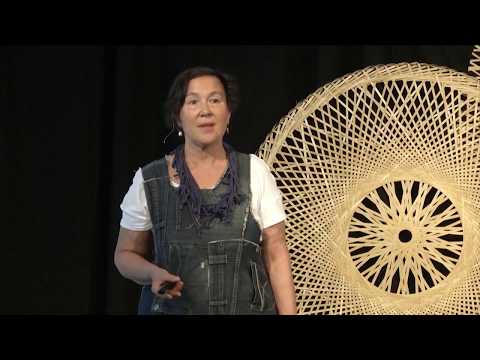
and repurpose I’m wearing a TEDx QUT
t-shirt thank you a necklace made from a
cotton singlet and a denim penny made
from jeans and a jacket which it
reflects my values it’s a creative
imperfectly created
change takes time you don’t need to feel
as if you’ve gotta introduce all these
changes into your wardrobe and your busy
lifestyle straight away just to some
easy ones like buying well and and
having less slow clothing is a
philosophy it’s about owning your style
and ensuring it doesn’t cost the earth
be bold
have fun as you learn to survive and thrive in a material world