
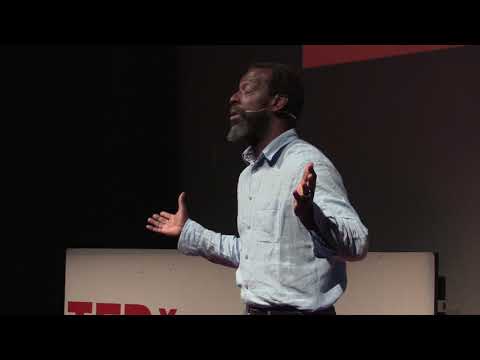
[Music]
my talk is about asking some simple
questions about inclusion and equality
and to invite you to engage with me in
trying to understand why the asking of
those questions generates complicated
answers um my argument is that we should
reclaim the term inclusion if we are
serious about equality’s because
diversity is only a part of the story
diversity is about audit whereas
inclusion is about action so here’s the
thing you know when you’re at a party
and you meet someone that you don’t know
and they’re interested in you and they
want to find out more for a simple
question they ask you what do you do
okay seems like there will be a simple
answer to that question I say I work at
a university I’m an academic we’re in
good ground yeah
but some people would say and I agree
with them but that’s not the end of the
story
and for me for this body I have to say
something else I have to say that I am a
black academic or an academic who is
black and that’s not just playing with
words it’s opening the door to something
which is significant because this body
speaks for me in ways that sometimes I
cannot control and so there is an
argument that says I cannot simply be an
academic so I’m a black academic working
in a predominantly white Academy it’s
there a park now and we’ll come back to
it later when I applied for this talk
some of the political situations that
we’re seeing on the various news feeds
across the world hadn’t taken place and
I think now there’s all the more reason
for us to consider bringing back the
notion of inclusion into what we do a
word about black academics there aren’t
very many and a colleague’s has likened
them to hen’s teeth and for those that
don’t know hens don’t have teeth yeah so
some statistics to back up what I mean
in 2009 of the 14,000 professors in
universities across the UK 50 were black
which is about one in 285 something like
that and in the 2016 survey of higher
education how many senior managers of
universities were black simple question
answer zero now it might seem that when
I give you that information that I’ve
located myself in a position of judgment
as a person from a minority
I’m giving statistics that allows me to
pass judgment on a predominantly white
audience that’s not my intention but
what it does trigger is a feeling I
can’t lie when I did hear the odd sorry
well if there’s discomfiture in you in
the audience hearing those statistics
there is discomfiture in me sharing them
with you and that’s one of the really
interesting things about work around
inclusion and diversity one of the major
elements that’s in it is emotion its
emotion the power has been using for
centuries to keep those different groups
in their place and obviously I’m talking
about ethnicity here it’s one of the
elements of my body that speaks the
loudest we could be talking about any
other trigger which keeps people
excluded but for this talk I’m going to
talk about ethnicity okay so the theme
of this TEDx is the next stage so my
question hopefully a simple question is
what is the next stage for higher
education what is it that universities
need to do to increase inclusion and
equality so it would be remiss of me
seeing as we are in a school of speech
and drama to not mention some other
research recently the acting up research
that was done by Tracy Bhavan MP and
others talked about those people from
different minority situations that were
not being represented in film and
television and theatre and also a more
globalized piece of research which is
important to this argument talked about
segregation in UK universities and by
that this was research that was done by
the University of Bath by that I mean
the self segregation of students from
ethnic minorities in their selection of
universities and the research revealed
that students from ethnic minorities
looked at their current demography of
the student body when they were applying
to universities yeah well that seems
reasonable but if you consider this if
you think about some of our more
august’s schools of learning they may
not be that diverse so there is a
vicious cycle that is set into being
where students method minorities look at
those universities and one of their
major fears was if I go to that
institution will I experience racism so
therefore I won’t go there
and I think that notion that
internalized concern coming from the
person who is the minority is one of the
things that I want to challenge when I’m
talking about the term diversity there’s
what does it really mean if you were to
put me that’s that that black academic
in a room with a hundred ninety nine
white academics it’s a diverse
environment
but is it an inclusive environment I
would say not so what we need to
consider are the ways in which we can
postulate those simple questions in a
way that the emotion and the judgment
isn’t necessarily there now I’m no
expert in inclusivity and equalities but
I have gone through the years research
as being a black person in a black body
and I’m bringing that to the fore now
because if I’m really honest with you
looking like this and having my body
speak about me in the way it does one of
the last things I wanted to do as a
researcher was look at issues of
inclusivity I didn’t want to be the
person that when I walked into the room
and people knew what my research was
they would go oh I could see were you
doing that I didn’t want to be the
poster boy for inclusivity but if you
step back and look even further my
presence in the Academy meant that meant
that I was doing some kind of diversity
work already I wasn’t doing the
diversity potentially I was the
diversity and that’s not ideal so one of
the things I considered was I had to
move past that poster boy stuff and had
to move past that discomfiture and begin
to ask those simple questions how can we
make this place more diverse whatever
that place Eve so that’s what I’m doing
now but before doing that I was doing
some other practice it’s called applied
theatre and for those who aren’t
necessarily okay with it it’s the use of
theatrical practices outside of a
theatre environment and what’s
interesting about it is that it often
works with participants who are the same
participants who are experiencing
exclusion and marginality and
additionally applied theatre tends to
work in environments where it hasn’t set
out the rules of engagement
so there was this synergy between work
around diversity and inclusion and work
around applied theater
I might bugbear who thought you’d hear
bugbear on a Friday morning my bugbear
with the term diversity is that it
doesn’t ask the question and I can
understand why diversity is a term which
has gained more and more traction
because for those people working in
diversity talking about in quality
equality and inclusion triggers
responses both in the speaker and the
listener and reading the work of Sarah
are made and others I could only agree
when I say when I see and say those
ideas about what what about inclusion
and there is a collective sigh and a
rolling of eyes amongst some in the room
those people who may not be as vested in
issues of inclusivity inequalities as
those people who because of their bodies
it speaks loudly for them and in that
way the term diversity is slightly more
palatable it’s slightly easier it also
runs the risk of becoming something that
is done yeah we’re doing what we’re
doing diversity we’ve got lots of
policies we are we’re all over diversity
okay and that’s one of the simple
questions that I’d like to challenge
what does all-over diversity mean and is
all-over diversity inclusivity now one
of the ideas about change that I’m
thinking about comes from the Japanese
ceramic art of kansui for those that may
not know
kansui is what happens when you have a
precious object ceramic object and it’s
broken
kansui is the act of repairing that
object but repairing it with gold so
that the new repaired object has a MOT
has a stronger material value than it
did before it was broken and why I was
drawn to consume it was this one of the
things I believe we should be
considering is bringing our kansui
to issues of diversity equality and
inclusion if there are people who don’t
consider equality and inclusion
significant how could we draw them as
stakeholders into the conversation
because sometimes just calling people to
account creates a stepping back a
retrenchment and a defensive set of
behaviors that are not productive as I
said I think diversity is about audit
inclusivity is about action and I would
include all those people who are parts
of the majorities of whatever majority I
know there’s a massive intersection here
to be part of that conversation and
that’s where my consumer is for me if we
can somehow draw attention to the fact
that as a body we are interested in
issues of inclusion and equality we are
beginning to offer the conversation in a
different range of ways what do I mean
well I mean it’s things that we can do
often those people who are interested
about diversity equalities and inclusion
look to institutions to change it’s not
a bad start if you go back to the
statistics I mentioned universities can
do some things but as individuals in
universities and as a black academic I’m
reminded of the work of feminist
researcher Janice Raymond who talks
about women in business and she says
that women in business are often
inside Outsiders not of the system but
somehow accepted in a way that gives
them a different kind of agency and I
would say as a black academic in a
predominantly white Academy I’m an
inside outsider and that inside outsider
Ness gives me an opportunity to use my
insurgent applied theater practice
because that’s what I argue applied
theater can be
it’s not often codified by the people
who commissioned it and it does all
kinds of things like the amazing
transformation and changes that you’ve
heard from speakers earlier so what
happens if we bring that insurgency into
issues of inclusivity and equality
because one of the things that turns in
applied to theater is it creates
platforms for reflection and change and
sometimes those people who we don’t want
to retrench into positions of we’re
doing this we’ve got policies we’re
doing everything I’ve got some my best
friends are we don’t want that that’s
not productive what we want is them to
be alongside us those people whose
bodies are speaking for them for
whatever reason in increasing
inclusivity so what do I mean it took
stand-up comedian to make me aware that
a disabled toilet is a toilet that’s
broken it’s not a toilet that everybody
can use so one of the things that we can
do is think about the language that we
use and I don’t want to sound like one
of those inspirational life coaches but
the mic really helps
and I’m minded of those folk posters
with cats and writing on but perhaps we
should be the change that we want to see
perhaps we can do that so if you are
already enrolled in an academic journey
and you’re feeling well you know I’m not
fully represented in the curriculums
that I’m studying or the theorists that
I’m encountering bring them to the table
bring the feminist sociologist bring the
black academics bring the working-class
academics into your work because there’s
a possibility that some of those
academics who are marking your work may
not have come across them and may be
inspired by them in the way that you are
and therefore might integrate them into
the systems I would invite you to just
play those mental exercises of auditing
can’t quite see the room I’m just doing
a quick diversity check all right let’s
not get upset but we should all think
about it when I go to the theatre I do
it often when I go to academic
conferences I do often so we should
begin to question that we can be the
change that we’d like to see and there
is definitely an urgent need for this
only this morning reports about a
dashboard camera of a law enforcement
officer catching comments that they made
mean that we really really need to ask
those simple questions and then maybe
just maybe the answers will not be so
complicated
[Applause]
Please follow and like us: