
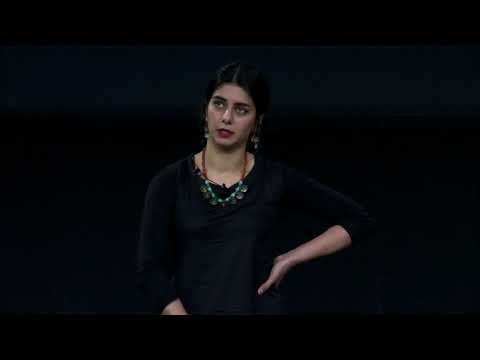
I am an alien no for real I’m I’m an
alien so many differences to overcome we
have food you can’t really eat if
clothing you can really wear for more
than an hour as you can say from an
interesting outfit and we have letters
that your throat is not even structured
to pronounce like or C well according to
the US law an alien is an individual who
is not a US citizen or a u.s. national
well and since I’m from Iran I also
count as an alien I volunteered the
space visualization lab of the Adler
Planetarium and it’s kind of a nice
place for an alien to be because you’re
surrounded with all these space images
you know some nice moon rock and space
rock in a place that advocates for
exploring the universe and is not
obsessed with national boundaries well
that things happen to you sometimes as
when you’re an alien you just like click
things and they suddenly turn into other
things you like where’s like my
superpowers don’t know I have those um
I’m gonna go on and talk to you about
the planetarium how it’s different from
other places you know when you want to
find your way you know when you want to
know where you are you use a map like a
normal map like this one
I am gonna wait for the map to appear
and using this map you know where you
are you know like this is where I’m
standing on earth right but in the
planetarium we use a different kind of
map that is the map that we use in the
planetarium voila
that was my power of like I just look
into those facts it’s as if they’re
trying to use science to tell you that
we’re all standing at the same point on
earth in the same space and this is
something very interesting when you
think about it
so I’ve spent the last year learning and
studying science communication at the
planetarium and I think the most
important thing that I’ve learned is
that science communication can bring
people closer together I have this
Japanese friend from my PhD program and
he’s actually yes sitting with us today
sometimes we sit together we have some
nice green tea he opens his Japanese
book of history and reads to me stories
of the Edo era after samurai and the
Shogun and their bravery but he reads
them in Japanese and even though I don’t
understand his words in my heart I feel
them and he connect to them and what I
do I open my Persian book of poetry and
read to him a verse of Rumi he nods and
lets me know that in his heart he also
understand what I’m talking about now
that’s just ridiculous we both speak
English I would I
I would seriously have no idea what you
would be saying if you would be starting
speaking Japanese that’s the same
problem when science and society talked
to each other science and society are
completely two different languages and
we need a neutral language to translate
them to each other that mutual language
that mutual point of reference
could be basically a movie we have both
watched it could be an example we both
know it could be an analogy just
anything that we could relate to you
know it might be hard for people to
relate to the language of jargon
hypotheses numbers theories but it’s
easier for us to connect to something
that we already experienced maybe that’s
an example that we already had in our
life on an experience or an emotion so
when a scientist tells you about their
journey you could connect to their
motivation their feared hardness of the
journey the all the problems they have
experienced but it would probably be
harder if someone would say you know
what
black holes eat up everything around
them I eat food I could totally relate
to black holes I I don’t I don’t think
so I don’t think that’s a thing and as
an alien you soon realized that if you
don’t have that neutral language you
will be having a really hard time making
sense of the world and an even harder
time connecting and sharing your ideas
with the world one way that you could
share your ideas is through stories from
real stories of scientists and inventors
coming up with all these fascinating
things to fake mythological explanation
of natural phenomena for example did you
know that
rainbows are actually unicorn burp yeah
science growing gap I inherited a lot of
my brothers book interest my favorite
ones were Greek mythology there were
these ridiculous weird stories of this
gods and goddesses who fell in love and
were revengeful and were happy and sad
and for whatever reason would turn
people into tears and bears and spiders
and stuff and they’re kind of fun to
read years later in high school my
friend sangamam told me about her new
interests astronomy and stargazing she
taught me all these different
constellations and told me about
the stories behind them and I was really
surprised because these stories were the
same Greek mythology that it was reading
while growing up and suddenly knowing
these stories this foreign weird science
of astronomy was not that strange and
unrelatable anymore my favorite story is
of the constellation the jaja the Swan
our sickness this Greek mythology
follows the adventure of zeus the god of
all the gods who follows in love with
Leda the superhot wife of Spartan King
and for whatever reason he decides to
turn himself into a swan to seduce
letter successfully and unless that swan
has the face of George Clooney I don’t
really know how that story could be
realistic
I just don’t know and some versions of
the story letter later lays two eggs
giving birth to her own children with
Zeus and the children of the Spartan
King now what is really fascinating
about this constellation apart from the
weird story that I just told you about
try to forget that it’s very weird is
what hides in this constellation
somewhere deep in the neck of Zeus there
is a black hole just think about it Zeus
is just like flying by and then he finds
this super tiny super-heavy black hole
and he’s like hey I could be dad
uh-uh he can can’t be dad he tries and
it just like gets stuck somewhere in his
throat and you can’t swallow it and
there there is a black hole in his
throat now knowing this weird story and
being able to see that constellation and
know that somewhere there there’s a
black hole that was my first hook-up
experience with astronomy and man I’d
never broke up with it just that was
pretty damn good science storytelling
you don’t always have to come up with
good stories to help people relate to
science sometimes you could draw upon
things that people already know about
through analogies so
what’s the big deal about the super tiny
super heavy black hole that eats up
everything around it
well that’s closely related to
Einstein’s theory of general relativity
that every object produces a curve in
space-time I want you to imagine a Tod
blanket if you put a ping-pong ball what
happens it causes a little curve from
the blanket right now if you put on that
blanket a bowling ball the curve becomes
deeper right and if you put some marbles
around it it goes around it until it
falls into it if you think about the
context of space and the texture of
space as a blanket it produces the same
kind of curves when you have an object
in it and those object
effect objects around it in the same way
as well and that’s the basic of the
theory of relativity general theory or
life deity okay now let’s remove that
bowling ball and replace it with a dot
if you squeeze in that dot not just the
mass of one Sun but the mass of fifteen
Suns then you have a black hole like the
one in the neck of the Swan called
Cygnus x1 this black hole causes a curve
and a gravity so deep and so strong that
nothing that comes close enough to it
could get away from it not even light
how close is that that’s 40 kilometer
let’s look at a half an hour drive from
the black hole it’s pretty scary if you
think about it and it’s human nature to
be scared of the unknown unknown
situations unknown creatures or unknown
numbers growing up I was scared of three
things sharks
piranhas yeah and black holes my parents
used to collect this German science
magazine it was called the PM and I
remember on one of the issues I see this
picture by the way that’s actually that
issue that I’m talking about and I asked
my mom like say on this she said oh it’s
about this black hole that it’s near us
but don’t worry it’s fine it’s like
really far away I can’t remember much
but I remember I was scared out of my
mind what there’s a black hole and it’s
coming towards us and it’s gonna just
eat us all up and we’re all gonna die
I’m too young for this can’t happen to
me it was pretty traumatic but when you
don’t know what numbers look like
especially when during scale is too big
or too small you start making up things
that might or might not be true my
analogies might not make that much sense
if I don’t know what are the numbers
that are using them what are these
numbers in relation to each other what
are the contexts in which the numbers
are used so numbers matter a lot and we
have to make them imaginable and
tangible so should we be scared of
cygnus x-1 the black hole in the neck of
the swamp no cygnus x-1 is 6070
light-years away that means if that
black hole even if it’s coming towards
us which is not with the speed of light
which is not it will take it as long as
it took for human civilization to get to
where we are right now that’s a long
time those same ancient civilizations
use stories to make sense of the
universe what our constellations but
just some stars scattered in the sky but
they gave them
they gave them emotions that they could
understand they turned them into lovers
siblings parents and sometimes all of
them all at once quick mythology but we
need stories to make sense of the
uncertainty of the universe up until
today even though we know that sickness
is not a weirdo creepy Swan we still
could enjoy a ridiculous soap opera
story about it getting through the
jargon the hard to understand scientific
terminology the complicated explanations
have always been a problem for
scientists when they try to explain
their work they have to make them self
understandable and relatable in order to
build relationships
what makes communication work is a
mutual ground for science to talk to the
society they need mutual grounds like
analogies and examples and stories and
sometimes just really bad drawings to
build a visual mutual ground but we’re
using those shared experiences to
understand something more important that
is human beings with all of our
differences we share a greater neutral
ground
the same shop Sun that shines on us
every day and the same night sky what is
constellations that puts us to sleep the
laws of physics are human beings mutual
ground and understanding that help us
change our view from being obsessed over
thinking that we’re here aliens to each
other to realize that we’re all here
together
thank you
[Applause]
Please follow and like us: