
[Music]
[Laughter]
but you have all just seen was a piece
called Kennedy performed by ensemble and
Barbra – you could hear music but you’re
going no instruments also the people
were moving in a particular way but it
wasn’t really dancing so what was that
actually mmm
body music is a way of extracting
various musical sounds for one’s body
and now I’d like to tell you about four
more specific ways of sound creating
which body music consists of its body
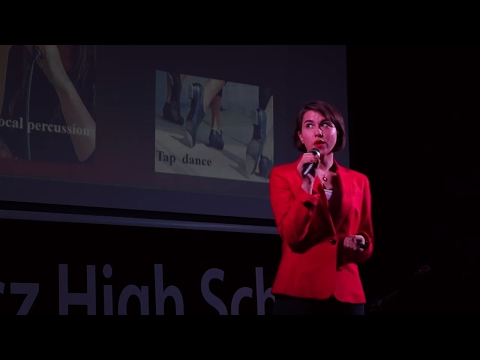
percussion vocal percussion vocal music
and last but not least tap-dancing body
rotation is a way of using one’s body
parts as percussion instruments which
basically means creating sounds and
vibrations with something your seat
bedding your thighs clapping or snapping
and in just a few ways of doing so vocal
percussion is some crating based on
usage of one’s mouth also to imitate
percussion sounds are just a safety same
purpose as percussion instruments it can
be done in many ways for example
clicking clicking your tongue or
slapping your open mouth or at one is
probably the best note which is B boxing
and then we have vocal music it’s a
piece whose main focus is singing but we
all have to redefine a review of both
singing actually is because it is much
more than just musically vocalizing
words it can be anything any sign that
you pronounce with your voice so it can
also be blowing air or just breathing
deeply and last part is tap dancing it
is a form of dance which is a special
shoes with metal taps on the toe and the
heel part of it and it is a way of
striking the floor as a form of
percussion oil dancing now that we all
know what body music is I’d like to sing
some something about his origins
first let’s think about African tribes
and their energetic dances for
some making like shouting clapping were
stomping it is where you can find first
traces of body music also it can be
found in 16th to 19th century
african-american slaves dances they were
not allowed to any drums in order not to
send one another secret messages that’s
why they use their own bodies to create
with in their music I’d also like to
mention the role of body music and one’s
development
it helps musicians and dancers to
practice their rhythm tempo and music
accenting but anyone can benefit from
trying it out it helps to create to
develop creativity
coordination and psychomotor conception
of oneself and others also it realized
is only when we started practicing body
music but it really helps you to gain
confidence it takes a lot of bravery to
overcome the awkwardness in situation
when you have to make monkey life sounds
in front of a group of people and
another practical aspect of body music
is that everyone possesses a body
everyone can try it because it’s very
accessible and free the only thing you
need in order to start is a little bit
of goodwill and to end my talk I’d like
to put emphasis on something I already
mention in this presentation which is
rhythm we all know what rhythm is when
we hear it but what if we have to define
it actually it rhythm is sound and
silence combine to create repetitive
patterns the master body music you
really have to be able to feel the
result with your whole body
also you have to be able to become a
part of the rhythm and to think about
rhythm we never actually realize is the
role of silence and everything we’re
here without silence through it with no
rhythm and without rhythm there won’t be
no music this isn’t something I’d like
to wish us all be confident if you do it
in your body and
your years with the beauty of silence
[Applause] [Music]