
Continental Divide
it was very remote and there was known
around except for one man one horse and
a whole lot of sheep and he approached
me and since he’d been alone up there
all summer he was very eager to talk and
I was eager to talk to him as well but
the only problem was that he was from
Mexico and only spoke Spanish and I had
taken French and Latin in high school
and it occurred to me that there was
something rather sad and and and absurd
about the idea that I was in my own
country in a place where there were no
people and the one person there you know
we couldn’t communicate and so I decided
then that I wanted to learn Spanish and
so over the course of the next several
years I traveled to several Latin
American countries I took some classes
and in the course of this I found myself
in Bolivia and I was on a bus trip in a
remote area and the bus broke down and
it was serious enough that they told us
to get off which is never a good sign
and so as all the passengers were
standing there on the side of the road
these women in traditional dress came
out of the mountains and opened up these
big colorful blankets onto the ground
and they began slicing chicken and
cutting avocados and slicing bread and
making sandwiches and they sold these
sandwiches to the passengers including
me and of course they did a brisk
business because you know there’s no
better customer than someone stuck in
the middle of nowhere on a broken bus
and but it struck me then that you know
capitalism was so much more than I
thought it was I had always thought that
capitalism was the men in suits rushing
for the train to Wall Street that I used
to see when I was a boy in New Jersey
and I thought capitalism was the number
that goes along the bottom of the screen
for the Dow or the S&P but I realized
then that this was a much truer and
deeper form of capitalism and it struck
me that if this could be harnessed
somehow that the energy and creativity
of these women selling sandwiches could
be applied to something else then
there’s no telling what could be
accomplished and so a few years later I
became acquainted with Kiva in fact they
were not even founded until right around
and I was attracted to it for these
three basic reasons the first one is
that it’s not a gift it’s a loan and so
it encourages both the lender and the
borrower to take it seriously and it can
be repeated and then the second point
which is maybe most important to this
presentation and maybe most important
overall is that you had the opportunity
to read about and see a picture of your
borrower if you’re the lender and back
in 2006 that seemed even more amazing
than it does now but the point is that
with most charity you just don’t know
exactly where your money’s going
but with Kiva you can literally put a
face to every dollar and then finally
it’s a small very efficient organization
and all of your money goes exactly where
you want it to go so the basic idea is
you go on the website and you pick a
borrower and you can sort them based on
country and occupation and environmental
criteria and gender and all sorts of
things and then you make a loan of $25
or more and then you wait some months or
perhaps a couple of years and you get
the money back and then you can either
keep it or hopefully you can send it
back on to the website again and pick a
different borrower and then if you like
you can just repeat this cycle so if we
take a look at my own lending page from
a couple years ago I want you to notice
there’s a lot of information there but I
mainly want you to notice the part that
circled in red which is the number of
deposits and the number of loans so up
until this point I had only ever spent
approximately $250 of real money and yet
I’ve been able to lend a little over a
thousand dollars so that’s essentially a
five to one gain and if you’re a person
of modest means like a teacher it’s nice
to think that you can do a little bit
more with your money and so a year and a
half ago I got this amazing opportunity
to go on sabbatical and to become a Kiva
fellow which meant spending four months
or so in Peru and Ecuador and there are
a lot of wonderful things that happen on
this trip but the important one for this
discussion is what I call the Wizard of
Oz moment and what I mean by that is
that as wonderful as the write ups of
the borrower’s are on the web page when
you actually get to meet
of them you realize that there’s even
more to it than that
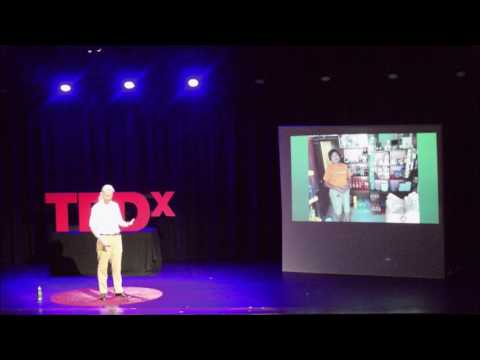
and so to illustrate that this is
Victoria Mendoza and I met her
eventually while I read her profile this
is what you would see if you saw her on
the website and so it’s great I mean you
get a picture you get some really good
information but I actually got to meet
her and when I met her in person this is
a picture that I took of her in her shop
and you can already start to get a sense
that there’s a lot more going on than
the website necessarily you know
revealed and then I got to talk to her
and so on and so the italicized portions
there are what it said on the website
and that’s great
and it gives you an idea of who she is
but hopefully those are things that
almost any borrower would say or you
know the would fit almost any any
borrower but when I talked to her she
told me in person the part of the bottom
everything I’ve accomplished has been
for my son and when she said that you
know suddenly she became much more of an
individual and much more of a human to
me and I realized that that’s where the
empathy really starts to kick in is when
you actually meet the person so it’s
nice to see them on the website but it’s
even more when you meet them in person
so I would like to share just a couple
more pictures and quotes from a couple
of other borrowers to illustrate this
point of how people can really come
alive in various ways so this is
dionisio and he is a coffee grower and
he says a plant is like a Christian and
this one really struck me because I’ve
done a lot of gardening myself but I
honestly never thought of it this way
but for him apparently you know plants
it’s almost like a religious experience
and I thought what a great way to look
at at agriculture and sometimes the
Bowers are just fun and they don’t
necessarily impart wisdom so much as
they just you know want to have a good
time with you and so you can see from
his smile and from what he says that
Wilmer was just one of those people that
was just fun and I think that’s an
important thing to remember too and then
I always like to include this one of
midian because I think we tend to
romanticize poverty sometimes a little
bit and I think that it’s important to
get past that and so I think she really
tells us both sides of it on the one
hand she’s happy with her
situation she’s not complaining she’s
not asking it for pity but on the other
hand she recognizes that it could be
better and she would like to be better
for her children when I started on this
project people asked me this question
what does microfinance have to do with
teaching English and I honestly didn’t
have an answer I just thought that there
were two different things that I cared
about and so I wanted to be able to do
both of them if I could but they were
sort of on parallel tracks and then as
part of the Kiva fellowship I had to do
a training in San Francisco and during
that training I had this sort of
Epiphany and I realized that there is in
fact a connection and the connection is
the Kiva is where a good story can
change a life and of course stories are
what English teachers are preoccupied
with and so I don’t know if students
always appreciate this but the reason
that we make you read things that you
may not always want to read is I think
mostly to get at that sense of empathy
of course we want you to write well and
do all those other things but the books
that you encounter in English class tend
to tell you stories about other people
just as the website of Kiva tells you
stories about other people and so
stories of course are composed of
sentences and what I find remarkable
about a lot of material on Kiva is that
there’s nothing fancy about it it’s just
a very simple statement about a person
and yet I think that can be one of the
best ways of bridging some of the gaps
that we have whether it’s distance or
other things we have all heard about a
lot of the bad things that are going on
in the world and I think that really
sometimes maybe we focus a little too
much on this because in my experience
having traveled to over 50 countries
there’s a tremendous amount of hope and
of course there is despair as well but
when you look at statistics like this I
think it can be a little bit misleading
and when you hear stories on the other
hand and you look at people like this
and you meet them if you’re lucky you
start to realize that there’s another
side of it and so people that are
separated by all these things you just
sometimes takes only a sentence or two
to bridge that gap so I just picked
these three sentences as examples of
what I’m trying to talk about here and
these are sentences that appeared on the
Kiva website
and so the first one is about delivering
bread on a bicycle and I just think that
that’s kind of a reminder of sort of the
mechanics of life that people have to
deal with sometimes maybe in some sense
that’s a nicer way to do it but it’s
certainly not an easier way to do it and
so I think when you read a sentence like
that from our perspective in the u.s. it
really makes you think about a different
different life and then the second
example is about a woman who has many
difficulties of her own and many
children to care for and yet she’s
voluntarily taking on extra people extra
children to care for and then the third
one is interesting because it’s not
really about survival so much but it’s
about the idea of building a school and
promoting culture and it’s important to
remember that too that microfinance is
not just about helping people survive
but it’s also about helping them build
and get better at various things so it
seems to me that when you read a
sentence like that it sort of almost
takes you into that person’s life and
that’s really the fundamental thing of
empathy but it doesn’t have to be a lot
to do that it can be a very simple
sentence or story it’s important to keep
in mind with Kiva and with other forms
of microfinance that we’re talking about
very small amounts of money most of the
loans that I dealt with were maybe three
hundred five hundred dollars something
like that but there’s something more
important in the sense that these are
people who’ve never had an opportunity
before and so regardlessly the amount it
gives them the sense that they’re in
control that they have some power over
their own destiny and from the other
perspective as the bar as a lender you
know whether you’re thinking about it or
not you are saying to this person that
I’m interested in your story I like your
story and I want to help you come up
with a better ending to your story and
it’s also important to note that
microfinance has a real possibility of
failure traditional charity typically
you know you expect that it’s going to
succeed and if it doesn’t you might be
upset understandably but with
microfinance you’re taking that risk and
I think that’s important because that
means that on both ends from the
borrower and the lender you know you
have a real incentive for this to work
and so a Kiva
then in the end is really I think much
more than the money but it’s about this
idea that you have made an attempt to
understand someone from a different
country different language different
culture and so on and you’re willing to
you know put some skin in the game in
terms of a little bit of money to try to
make sure that they can do what they
want and so that’s the power of
narrative or empathy and that’s Kiva
magic thank you [Applause]