
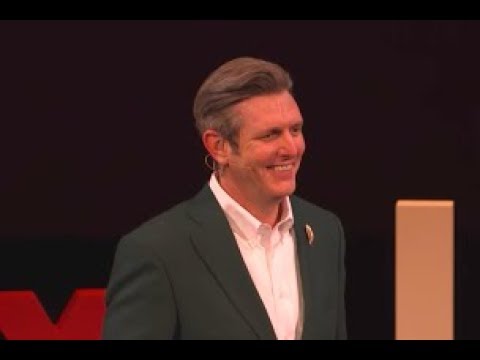
well that was ten like many other kids
my favorite part of school was the
weekends yeah I didn’t like to really
sit around and watch TV or goof around
at all really what I like to do is
explore and my favorite place to explore
was the grasslands and woods near our
small cabin in Bowie Texas one day I was
walking through those woods with my dad
when boom the ground erupted below me
the wind rushed past my hair I squeezed
my eyes so tight I could only see white
I thought I’d been bit by a rattlesnake
maybe stepped on a landmine but I looked
up towards my dad and he was laughing he
said those were quail oh well I was
hooked
it’s that exhilaration that drove my
passion for hunting well through high
school and it’s one of the things I miss
most when I was in the Navy I couldn’t
wait to get back home and hunt some
quail but when I get home in 1996 all
the quail in that area were gone that’s
really what started my passion and while
I’m here tonight I wanted to study quail
in fact I got a PhD in quail and tonight
I come to you as the nation’s quail
professor where my job is talked to to
talk to our nation’s farmers and
ranchers about America’s greatest game
bird my favorite game bird the bobwhite
quail now you may not be as familiar
with quail as I am and that’s okay
because tonight what I want to share
with you is not only why those quail are
important to me and those farmers and
ranchers but why they’re critically
important to you I call quail the canary
of the Prairie and you probably recall
before ventilation was a thing those
coal miners used to place Canaries and
cages and set them along the mine shafts
as long as they could see that canary
move or hear that canary sing they knew
their air was safe to breathe but a
silent dead canary and something was
wrong
their environment had become unsafe well
quail or the canary of the Prairie they
live in our nation’s prairies and
grasslands and just like that canary
they’re very sensitive to environmental
change the key environmental factor for
quail is tall grass and thousands of
acres of it now that tall grass is
important to quail because it protects
them from predators like hawks and
bobcats and that tall grass is important
to me in you because it cleans the air
we breathe it filters the water we drink
and it plays a critical role in
sequestering carbon so quail are the
Canaries of the Prairie and as long as
those populations are moving along and
singing their famous song
everything’s gonna be alright but a
silent dead quail population I mean
something’s wrong and our grasslands are
unhealthy
well quail have been telling us that
something’s wrong for quite some time if
you look at the graph of their
populations you can see they’ve declined
80 percent since 1967 and if I can draw
you back just for a second back to 1996
you’ll see that we had lost well over
half our quail by that time if we can
visualize that year you’ll see that
quail it waned in the Northeast and only
high densities existed in the Midwest we
were worried then but fast forward seven
years and you’ll see those high
densities are gone fast forward seven
more and you’ll start to see holes in
the population now this last graph is
from only two years ago and you can see
quail or gone in those northern states
and if you draw a line from Pennsylvania
down to East Texas those states are
probably next quail of becoming silent
and they’re telling us something’s wrong
they’re telling us our grasslands are
unhealthy and going away in fact in 2014
we lost more acres of grassland to
agriculture then the Amazon rainforest
did two deforestation and hardly a word
was mentioned so what’s the culprit
grass of course right it’s more
important more profitable for those
farmers and ranchers to put that into
food and save some grass for some little
bird can’t fault them for that however
the typical result of conventional
farming and ranching looks something
like this where the ground is plowed and
the grass is grazed down to the ground
not one bobwhite would survive little to
no carbon would be sequestered there and
if rain did fall on that ground it would
surely runoff or erode that ground and
farmers and ranchers would have to spend
a lot of money on things like pesticides
and fertilizer for regrowth my research
shows that those pesticides they’re very
detrimental to quail and human health so
what do we do you ask we could start by
growing some taller grass but to do that
we’d need to change the face of
Agriculture and as I travel around the
country as the nation’s quail professor
I see through rules three real solutions
to do this the first is grazing that’s
right if you want more grass graze it
but do it with regenerative grazing
regenerative grazing is a little
different than your conventional grazing
it takes those big pastures and divides
them into smaller ones it takes those
cattles and puts them into one big herd
that one big herd moves around those
small pastures over the duration of the
year allowing those recently grazed
areas to rest and grow back their grass
that one big herd presses the manure and
urine into the ground an X is natural
fertilizer this grows back the grass
really fast and you get a quicker return
on your clean air you’re filtered water
and you’re sequestered carbon this
picture you’re looking at is from 2011
in Texas on a regenerative grazing side
it was the year of our worst drought but
you can see on this site we had
everything we’re looking for
we had tall grass lots of quail no
monetary loss for the landowner and good
health benefits for me and you
now the second solution I see you may
find a little shocking I think we need
more quail hunting I know I know it may
seem counterintuitive to most of you
that if you want more quail hunt them
but conservation be it for wildlife for
quail for grasslands is almost entirely
funded by hunters hunters have placed a
voluntary tax on themselves so for every
sale of a gun a bullet a hunting license
those taxes are directly returned to
conservation now my research shows that
a private landowner would be very wise
to invest in quail hunting it’s part of
a 2.8 billion dollar upland game bird
industry and quail hunters plays a major
role they spend nine thousand dollars a
year per hunter and that comes out to
two hundred and forty three dollars per
bird that’s a major incentive for that
landowner to grow more grass have more
quail but a little money at his pocket
and provide health benefits for me and
you now this third solution is a little
more complex and it’s a call for quail
corridors now quail corridors are vast
expanses of grass lands so that quail
can move freely and we’d have that tall
grass if you take a look at the amount
of public land we have in the United
States and then you overlay the
grasslands and then you slowly take them
away what you’ll see is that about 90%
of our grasslands are privately owned
and those good ranches are very sporadic
in that area so I propose we connect
them building these big grassland
corridors with public land paid for by
those conservation tax dollars it would
certainly get our grasslands put it back
in the right direction start building
them back and it would meet all our
requirements
we’d have tall grass lots of quail a
little money in the pocket for those
involved and you know the health
benefits by now would have cleaner air
cleaner water and more sequestered
carbon well if you’re not a landowner or
a policymaker
I’m sure you’re wondering what can you
do I say be like the ten year old Kelly
go out there and explore those beautiful
grasslands get involved take a kid take
them hunting be the next grassland hero
of course you could donate to our
research at the University of North
Texas but you know the message now we
need vast expanses of healthy grassland
and your health is in the hands of our
nation farmers and ranchers we can
change the face of Agriculture and quail
what you know now are just a messenger
the canary if you will and if we can
save them even if it’s one quail at a
time we can save the help of all
Americans thank you
[Applause]
Please follow and like us: