
[Music]
[Applause]
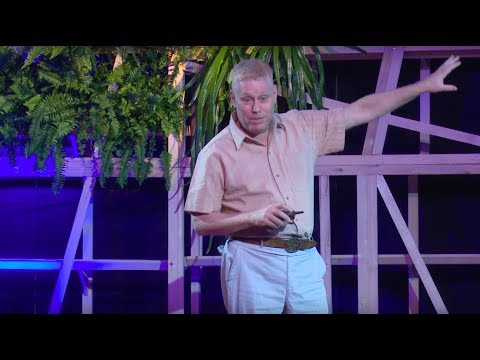
oh you may not have guessed it looking
at me but I’m here to talk about Japan
Japanese villages in particular and it
has some relevance as well to Thailand
because although I’ve lived in Japan
since I was a little boy this year I
think is the 54th year in Japan
I’ve also all those decades been
traveling to Thailand as well and so
certain things that I’ve seen in Japan I
think will have some bearing on what
year or you will be experiencing here
iya Valley this was my first village
which I discovered when I was 19 a
completely magical place it almost
looked like a Chinese landscape painting
they used to call it the Tibet of Japan
people live on these incredible slopes
with the mists coming in and I fell
completely in love with this place you
can see here where it is it’s in the
middle of ku it’s a very remote even now
it takes hours to get up these windy
roads and when I first went there back
in the 70s it was filled with old
thatched houses and when I was still in
college I bought one and there it is
and it was 300 years old a completely
amazing place but in horrible condition
that had been abandoned empty you know
just a disaster we spent the next 50
years 40 years fixing it up and this is
how it looks today one of the things
that I think is noteworthy is notice how
it looks a little bit like Thai houses
that because of the deepest roots the
Thai style of old wooden house is
actually closely related to these very
old Japanese structures well when I went
into yeah those were happy days there
were children and there were festivals
there was a lot going on but something
happened and this is really my subject
today
and it’s depopulation today eeeh is
filled with abandoned houses the
children are gone it’s old people and
this is actually not just to Japan
problem this is an international problem
it’s all over the world you’ll find it
in Italy Austria Scotland
it’s starting to happen in China and
Japan is just ahead of the curve because
the depopulation is so much more severe
in Japan you can see here this
incredible drop last year Japan lost
350,000 people in a year which is like
losing half of Shanghai in one year it’s
happening in Thailand too
the national population hasn’t fallen
yet but the rural population that is
people living in villages are down 10
million since the year 2000 so
everything that I’m about to talk about
you will start seeing more and more in
this country I think but what has
happened in Japan is this empty streets
abandoned houses there are 10 million
abandoned houses around Japan now many
of them looking like this I travel
around and this is what I see all the
time a moss garden and the tatami from a
leaky roof and as this process continues
the villages are in a state of collapse
they can’t keep up their shrines and
temples and so then the question is what
to do and one lady up in our valley of
iya decided well since the people were
gone she would repopulate it with
scarecrows and here they are and they’re
waiting at a bus stop for a bus that
will never come and they’re in the
fields they’re everywhere and she even
have a scarecrow traffic policeman but
there there have to be other ways and of
course there are and sustainable tourism
is really the great angel the last hope
for for these rural areas and this is
true
and so in what we did is focus on long
state tourism people coming there will
actually stay in the village and we did
that with these old houses and the old
houses are just for people that want to
get away we have people coming to year
than want to just sit on the ground and
watch those mists come in it’s a magical
place to be but they don’t want to
suffer they want to be in comfort and so
we’ve restored the houses but you know
plumbing heating nice kitchens and beds
and so on and when that happens people
will drive for hours up into the hills
to get there they’ll take ferries over
to distant islands because they’re in
comfort and what we’re doing is in real
contrast to the way tourism usually goes
in Japan and I suspect here in Thailand
two bureaucrats especially love the idea
of numbers right we got a hundred
thousand people we got three hundred
thousand people and they come in and big
tour buses and they count them but
here’s the problem they did a study for
example on a place like this and they
found that the average stay is 40
minutes and they basically buy a coke in
a vending machine and they use the
toilet and they take one photo and they
leave so in the meantime what if they
had to do they’ve had to build this huge
disruptive and expensive parking lot
visitor facilities toilets
you know plumbing widening the roads all
this construction has to happen that’s
very disruptive and the villagers no
longer have a real life because
thousands of people are traping this
traipsing through their village every
day and the money doesn’t even stay
there because it goes to the vending
machine so what we did in yeah we it’s
small-scale we did nine houses which
weari thatched made comfortable and what
we found in iya is it’s a completely
different economy because people come
they spend the night that supports a
whole crew of people that look after
these houses so we have young people
that have moved in now and are working
in iya looking after the houses we have
[Music]
people restaurants caterers
because they buy the food as well so we
did a little calculation for the income
that comes to you for three thousand
people how many people would have to
come to the big bus town almost seventy
thousand so it’s basically one person
staying in ears were the bus load and
it’s not disruptive because three
thousand people in a year is about ten
people a day so the village can go on
sustainably
well gaining quite a big economic
benefit so what I’ve been talking about
so far is that Japanese have an old word
for this which is metate it’s a very old
word from 400 years ago when the tea
masters decided that they would you take
one thing that had an old use and find a
new use and so they they loved these
rough Korean rice bowls now they thought
that’s very artistic well let’s use it
in tea and so they’ve found a completely
new way of using it and so we do this
with our house reconstructions for
example they eat or tea that’s this
floor hearth and that was the that was
the center of life that’s where people
sat around and chatted together so we
took the e doherty and we just lowered
the floor that frame is where it’s been
for two hundred years nothing has moved
but it’s a completely new use and there
are other ways of doing me taught days
so today I wanted to talk about three of
those ways the first one we’ve talked
about which is the houses but you can
also do it with food and with art in
fact this map shows you three of the
places eeya
where we’ve just talked about which go
where we’ve done a food program and
pocket oh where they’re doing it with
art the thing about food which is also a
huge tourist resource sustainable
tourist resource is unfortunately a lot
of small towns and villages they have
these incredible foods that rice and
fruits and vegetables and fish and sake
and many other things but they don’t
know how to serve it in a way that’s
interesting or appealing or creative for
modern travelers and so we have this
program that we call dining out which
we’ve done now in villages all around
Japan and the most recent
just a few months ago was a niche NGO
which is a beautiful historic town it’s
got incredible detailing on the houses a
beautiful old Street but you may notice
empty they need help and so what we do
is we bring a world-famous Michelin star
chef down to it which go and we take
months going through looking at their
orchards tasting the persimmons talking
to the farmers about their grapes and so
on finally the day comes and we’ve done
a meet at a on the street we took that
Street which was an empty street just
with traffic and now it’s a it’s a
restaurant alfresco restaurant inside
the chef is working away with volunteers
because one of the crucial elements it’s
rather like TEDx when I think about it
is the impact that it has on the locals
the people that volunteer and are
involved and so these people have a
chance to work next to a world-famous
chef and see the magic that he can do
and there it is these incredible
creations that are all done with local
food and finally the the end of the
evening comes and all the staff comes
out of bowels and this is kind of the
critical moment because those hiso
guests they’ll leave right they go back
to Tokyo but the volunteers have stayed
and we go back to these villages a year
or two later and we find it has an
incredible impact you’ll find you know
guest houses and coffee shops and
restaurants and inns and it’s
transformed their cuisine and sometimes
you even have one of these people create
their own new rep brand new restaurant
at which people will travel days you
know to get there and see it so it has
quite an impact on the food and there’s
another way the Third Way which is art
arts and crafts in a particular
Contemporary Arts are a critical move
really in the world
tourism and the town that’s really made
a success of that is Takata which is a
small town in central Kyushu otaku ties
an old castle town
it has samurai houses it’s it’s got real
cultural riches you know but the old
story shuttered empty houses probably
I’d say about what half the city of
Takata is empty so what did they do they
took these old houses and they offer
them to artists so they took a samurai
house and made it into a bamboo artists
studio they took a storehouse and gave
it to an indigo dye dye er this little
town house here is where a calligrapher
is working they have international
artists come in all of this once these
are 10 days and studios are up and going
and they have these tours and people
come from far away and enjoy it once
that happens you need restaurants and
guest houses this guy set up a really
popular Italian restaurant some people
come to Tokyo just for his restaurant
now you have a bakery other things
happening the result is literally
several hundred young people have moved
into Takata and you have a truly
brand-new community going on
so Takata has found a way within this
overall trend of depopulation to revive
itself doing something completely
different a kind of meat taught day with
those houses so all this brings me back
to something great personal since I was
a little boy in Japan I’ve always loved
calligraphy and whenever we do cultural
events and restore houses and so on at
some point you can’t stop me I’m going
to write calligraphy and this is a few
years ago in in Kyoto and I wanted to
show you just one of the pieces this one
and which you of course can all read and
it says the the bright jewel the shining
jewel is in the palm of your hand and
it’s an old Buddhist story and it talks
about a man who
looking for the brightest shining jewel
in the world and spends decades it looks
everywhere I can’t find it and finally
realizes that it was in the palm of his
hand all along you don’t need to build a
huge bus terminals and spend bring in
the big investor and build a huge spa
and do all of those things that really
are not sustainable very often and run
against and could even destroy what what
is a value locally because you’ve
already got these incredible cuisines
you’ve got the artists you have the
young people you have the crafts you
have these old houses it’s all just
sitting there in your hand so it’s about
it but you have to bring it into the
modern age and so it’s a matter of using
these techniques applying the techniques
of metate to make the modern and just
figuring out how to use it thank you
very much
[Applause]
[Applause]
oh you may not have guessed it looking
at me but I’m here to talk about Japan
Japanese villages in particular and it
has some relevance as well to Thailand
because although I’ve lived in Japan
since I was a little boy this year I
think is the 54th year in Japan
I’ve also all those decades been
traveling to Thailand as well and so
certain things that I’ve seen in Japan I
think will have some bearing on what
year or you will be experiencing here
iya Valley this was my first village
which I discovered when I was 19 a
completely magical place it almost
looked like a Chinese landscape painting
they used to call it the Tibet of Japan
people live on these incredible slopes
with the mists coming in and I fell
completely in love with this place you
can see here where it is it’s in the
middle of ku it’s a very remote even now
it takes hours to get up these windy
roads and when I first went there back
in the 70s it was filled with old
thatched houses and when I was still in
college I bought one and there it is
and it was 300 years old a completely
amazing place but in horrible condition
that had been abandoned empty you know
just a disaster we spent the next 50
years 40 years fixing it up and this is
how it looks today one of the things
that I think is noteworthy is notice how
it looks a little bit like Thai houses
that because of the deepest roots the
Thai style of old wooden house is
actually closely related to these very
old Japanese structures well when I went
into yeah those were happy days there
were children and there were festivals
there was a lot going on but something
happened and this is really my subject
today
and it’s depopulation today eeeh is
filled with abandoned houses the
children are gone it’s old people and
this is actually not just to Japan
problem this is an international problem
it’s all over the world you’ll find it
in Italy Austria Scotland
it’s starting to happen in China and
Japan is just ahead of the curve because
the depopulation is so much more severe
in Japan you can see here this
incredible drop last year Japan lost
350,000 people in a year which is like
losing half of Shanghai in one year it’s
happening in Thailand too
the national population hasn’t fallen
yet but the rural population that is
people living in villages are down 10
million since the year 2000 so
everything that I’m about to talk about
you will start seeing more and more in
this country I think but what has
happened in Japan is this empty streets
abandoned houses there are 10 million
abandoned houses around Japan now many
of them looking like this I travel
around and this is what I see all the
time a moss garden and the tatami from a
leaky roof and as this process continues
the villages are in a state of collapse
they can’t keep up their shrines and
temples and so then the question is what
to do and one lady up in our valley of
iya decided well since the people were
gone she would repopulate it with
scarecrows and here they are and they’re
waiting at a bus stop for a bus that
will never come and they’re in the
fields they’re everywhere and she even
have a scarecrow traffic policeman but
there there have to be other ways and of
course there are and sustainable tourism
is really the great angel the last hope
for for these rural areas and this is
true
and so in what we did is focus on long
state tourism people coming there will
actually stay in the village and we did
that with these old houses and the old
houses are just for people that want to
get away we have people coming to year
than want to just sit on the ground and
watch those mists come in it’s a magical
place to be but they don’t want to
suffer they want to be in comfort and so
we’ve restored the houses but you know
plumbing heating nice kitchens and beds
and so on and when that happens people
will drive for hours up into the hills
to get there they’ll take ferries over
to distant islands because they’re in
comfort and what we’re doing is in real
contrast to the way tourism usually goes
in Japan and I suspect here in Thailand
two bureaucrats especially love the idea
of numbers right we got a hundred
thousand people we got three hundred
thousand people and they come in and big
tour buses and they count them but
here’s the problem they did a study for
example on a place like this and they
found that the average stay is 40
minutes and they basically buy a coke in
a vending machine and they use the
toilet and they take one photo and they
leave so in the meantime what if they
had to do they’ve had to build this huge
disruptive and expensive parking lot
visitor facilities toilets
you know plumbing widening the roads all
this construction has to happen that’s
very disruptive and the villagers no
longer have a real life because
thousands of people are traping this
traipsing through their village every
day and the money doesn’t even stay
there because it goes to the vending
machine so what we did in yeah we it’s
small-scale we did nine houses which
weari thatched made comfortable and what
we found in iya is it’s a completely
different economy because people come
they spend the night that supports a
whole crew of people that look after
these houses so we have young people
that have moved in now and are working
in iya looking after the houses we have
[Music]
people restaurants caterers
because they buy the food as well so we
did a little calculation for the income
that comes to you for three thousand
people how many people would have to
come to the big bus town almost seventy
thousand so it’s basically one person
staying in ears were the bus load and
it’s not disruptive because three
thousand people in a year is about ten
people a day so the village can go on
sustainably
well gaining quite a big economic
benefit so what I’ve been talking about
so far is that Japanese have an old word
for this which is metate it’s a very old
word from 400 years ago when the tea
masters decided that they would you take
one thing that had an old use and find a
new use and so they they loved these
rough Korean rice bowls now they thought
that’s very artistic well let’s use it
in tea and so they’ve found a completely
new way of using it and so we do this
with our house reconstructions for
example they eat or tea that’s this
floor hearth and that was the that was
the center of life that’s where people
sat around and chatted together so we
took the e doherty and we just lowered
the floor that frame is where it’s been
for two hundred years nothing has moved
but it’s a completely new use and there
are other ways of doing me taught days
so today I wanted to talk about three of
those ways the first one we’ve talked
about which is the houses but you can
also do it with food and with art in
fact this map shows you three of the
places eeya
where we’ve just talked about which go
where we’ve done a food program and
pocket oh where they’re doing it with
art the thing about food which is also a
huge tourist resource sustainable
tourist resource is unfortunately a lot
of small towns and villages they have
these incredible foods that rice and
fruits and vegetables and fish and sake
and many other things but they don’t
know how to serve it in a way that’s
interesting or appealing or creative for
modern travelers and so we have this
program that we call dining out which
we’ve done now in villages all around
Japan and the most recent
just a few months ago was a niche NGO
which is a beautiful historic town it’s
got incredible detailing on the houses a
beautiful old Street but you may notice
empty they need help and so what we do
is we bring a world-famous Michelin star
chef down to it which go and we take
months going through looking at their
orchards tasting the persimmons talking
to the farmers about their grapes and so
on finally the day comes and we’ve done
a meet at a on the street we took that
Street which was an empty street just
with traffic and now it’s a it’s a
restaurant alfresco restaurant inside
the chef is working away with volunteers
because one of the crucial elements it’s
rather like TEDx when I think about it
is the impact that it has on the locals
the people that volunteer and are
involved and so these people have a
chance to work next to a world-famous
chef and see the magic that he can do
and there it is these incredible
creations that are all done with local
food and finally the the end of the
evening comes and all the staff comes
out of bowels and this is kind of the
critical moment because those hiso
guests they’ll leave right they go back
to Tokyo but the volunteers have stayed
and we go back to these villages a year
or two later and we find it has an
incredible impact you’ll find you know
guest houses and coffee shops and
restaurants and inns and it’s
transformed their cuisine and sometimes
you even have one of these people create
their own new rep brand new restaurant
at which people will travel days you
know to get there and see it so it has
quite an impact on the food and there’s
another way the Third Way which is art
arts and crafts in a particular
Contemporary Arts are a critical move
really in the world
tourism and the town that’s really made
a success of that is Takata which is a
small town in central Kyushu otaku ties
an old castle town
it has samurai houses it’s it’s got real
cultural riches you know but the old
story shuttered empty houses probably
I’d say about what half the city of
Takata is empty so what did they do they
took these old houses and they offer
them to artists so they took a samurai
house and made it into a bamboo artists
studio they took a storehouse and gave
it to an indigo dye dye er this little
town house here is where a calligrapher
is working they have international
artists come in all of this once these
are 10 days and studios are up and going
and they have these tours and people
come from far away and enjoy it once
that happens you need restaurants and
guest houses this guy set up a really
popular Italian restaurant some people
come to Tokyo just for his restaurant
now you have a bakery other things
happening the result is literally
several hundred young people have moved
into Takata and you have a truly
brand-new community going on
so Takata has found a way within this
overall trend of depopulation to revive
itself doing something completely
different a kind of meat taught day with
those houses so all this brings me back
to something great personal since I was
a little boy in Japan I’ve always loved
calligraphy and whenever we do cultural
events and restore houses and so on at
some point you can’t stop me I’m going
to write calligraphy and this is a few
years ago in in Kyoto and I wanted to
show you just one of the pieces this one
and which you of course can all read and
it says the the bright jewel the shining
jewel is in the palm of your hand and
it’s an old Buddhist story and it talks
about a man who
looking for the brightest shining jewel
in the world and spends decades it looks
everywhere I can’t find it and finally
realizes that it was in the palm of his
hand all along you don’t need to build a
huge bus terminals and spend bring in
the big investor and build a huge spa
and do all of those things that really
are not sustainable very often and run
against and could even destroy what what
is a value locally because you’ve
already got these incredible cuisines
you’ve got the artists you have the
young people you have the crafts you
have these old houses it’s all just
sitting there in your hand so it’s about
it but you have to bring it into the
modern age and so it’s a matter of using
these techniques applying the techniques
of metate to make the modern and just
figuring out how to use it thank you
very much
[Applause]
Please follow and like us: