
[Music]
2006 was a very interesting year for me
ladies and gentlemen
having worked as an engineer for a few
years I came to to stock realizations
firstly I wasn’t a very good engineer
and secondly I wanted some fun and
adventure in my life so I did what any
rational sensible person would do I quit
my job as an engineer came to France and
joined the French Foreign Legion
that’s me I spent five years in the Army
most of that in places of conflict like
Chad Central Africa and Afghanistan and
although I got my dose of adventure I
also managed to meet some really
interesting people one of those people
was this young South African by the name
of Jared Johnson Johnson was a bit of an
odd duck
he was stuff as mostly Gina’s are but he
wasn’t really aggressive in nature he
liked having a drink as most of us do
but at the same time he also loved art
after he finished his contract with the
army Johnson wanted good in New York and
join an art school and having seen some
of his art I agreed he really needed to
go to art school but Yancey never got
that opportunity in 2011 he was deployed
for a second tour in Afghanistan and he
never made it back a few weeks later I
went for the funeral and I met his
family and his sister who came up to me
and said Kerry he used to consider you
one of his best friends he had never
said that to me in spite of the fact
that we were quite close
we weren’t really transparent with each
other this story is not something new
but for me this story began my quest to
understand capitalism even though I had
no training in economics at that time
there were two things that were really
clear to me firstly
war is expensive and it comes at a
terrible cost and secondly
there is a direct link between conflict
and capitalism this link between
conflict and capitalism is not a new one
back in 17th century England when King
James the first wanted to raise revenue
for war he realized that taxes were
getting insufficient so what did he do
he began issuing licenses for the
production of goods and services in 17th
century England this act led to the
creation of monopolies and we had
monopolies for everything from coal to
bricks to belts and even buttons but
what the King failed to foresee is what
effect this would have on the culture of
his society in giving economic power to
landlords traders and manufacturers the
king had also given them political power
as they began to get more prosperous the
station and society began to rise and in
doing so the established hierarchy began
to crack making society more fluid and
more porous in the process subjects who
were previously subjects without any
power or rights now became citizens with
power and rights they began to take an
active role in the way that their
country was governed and over a period
of time this had massive effects on the
culture of society they began to ask
more questions challenge Authority and
changed their very perception of what
was acceptable in their society in the
span of 30 years capitalism was capable
of overturning the established hierarchy
and the cultural norms that we had
established in place to govern Society
for close to 4,000 years this also had
massive effects on the way we behaved we
began to take more risks change our
perception of formal communication and
more importantly our perception of what
was acceptable in terms of behavior and
beliefs the evolution of dance is just
one manifestation of this cultural
change although I’m not quite certain if
the last slide constitute us dance
the point to take away ladies and
gentlemen is quite simple capitalism is
a cultural construct as much as it is an
economic one in fact you can’t really
separate the two and this concept of
understanding capitalism as a cultural
construct is a very important point
because it shows us how capitalism
influences us but more importantly how
we influence capitalism and culture is
all about interactions I interact with
you and you interact with me I learn
something from you
you learn something from me it is based
on these interactions and what we learn
that we come up with beliefs make
conclusions and make decisions it’s the
formula for creating a society without
interactions there is no culture and
without culture there is no capitalism
and since we all play a part in this
maybe we should take the time to
understand capitalistic culture now
understanding capitalistic culture is
not really something very easy to do but
my mother who’s in the audience gave me
some very useful advice when I first
left India she said son if you don’t
know where you’re coming from you don’t
know where you’re going to go for most
of my life I have categorically ignored
this good piece of advice but I’m going
to use it today as a means to explain
capitalism throughout the 18th 19th and
20th century or season 1 of capitalism
capitalism spread like an unstoppable
juggernaut as an ideology it was
challenged by Marxism fascism communism
every different kind of ism that you
could think of but none of these isms
were capable of providing an
ideologically sound alternative it would
seem that capitalism had become the
de-facto method to spread prosperity and
to ensure democracy but in season 2
things began to change once again
because of conflict in the early 80s
following the outbreak of the iraq-iran
war and the subsequent oil
the economies of developed nations began
to suffer industry started grinding to a
halt and unemployment started to arises
the US government which is headed by
Ronald Regan and the UK government which
is headed by Margaret Thatcher realized
that they needed to come up with radical
new ways in order to spur economic
growth and remain in power so they did
something very interesting they decided
to privatize industries they were
essentially doing the same thing which
King James are done around 300 years
back they took economic decision-making
power away from the democratically
elected state and they gave it to wall
street but they also did something which
King James had not done they removed the
regulations for banks in order for them
to lend money or they made it easier now
the logic behind doing this was quite
simple if people were not able to work
the same amount and gain the same
revenue and maintain the same lifestyle
that they were accustomed to they could
borrow they were – it seemed very
feasible seem very logical but once
again this had massive effects on the
culture of society previously capitalism
had made society more porous and more
fluid and had allowed a large number of
people in society to access new kinds of
opportunities this is why prosperity
spread more easily but this time in
season two capitalism was changed
because prosperity could now be attained
by a debt if you could not earn the
revenue that you needed to you could
lend debt became an intrinsic part of
maintaining our capitalistic culture
over a period of thirty years once again
it was debt that became intertwined with
capitalism and this once again became a
cultural standard and changed a lot of
things regarding the way our societies
work it led to increase deregulation of
banks it led to increasing amounts of
public and private debt and most
importantly it led to something a lot
more disturbing it led to the
accumulation of capital in the hands of
a very small
of people not only with the people who
are able to benefit the most from the
deregulation of banks and the
privatization of industries able to
extract a maximum benefit from society’s
prosperity but they haven’t been
contributing anything to it that
responsibility was instead handed over
to people who don’t have accounts in tax
havens people are given me the effect of
debt becoming part of a capital
capitalistic culture is the primary
reason that we have growing amounts of
inequality in our societies today how
did this happen
how did we go from using capitalism as
the means of generating and spreading
prosperity to a means of creating a
self-imposed hedonistic prison in which
an increasing amount of people find
themselves with unsustainable amounts of
debt there’s two reasons for that the
first is clarity although we have access
to the repository instantaneous access
to the repository of all human knowledge
we don’t really have access to the
activities of what the banks and the
financial institutions are doing that’s
why every time we see one of these
financial scandals it’s a big surprise
and the surprising part is it’s getting
more and more frequent we don’t react
with the same amount of shock because
we’re getting used to it the second
issue is trust most reefers don’t really
understand how the financial system
works so we have outsourced to our trust
to the people who are supposed to make
the system function the banks and the
financial institutions the reason that
debt has become part of a capitalistic
culture is simply because we have
outsourced trust at the expense of
clarity let me repeat that again we have
outsourced trust at the expense of
clarity so if you want to get capitalism
to work for society again you have to
get this balance of clarity and trust
back into kilter capital
very unique thing in a number of ways
and the blockchain is the new technology
that is coming and having an impact on
it what I am going to try and explain to
you today is why do you need to
understand it and to help me I’ve got my
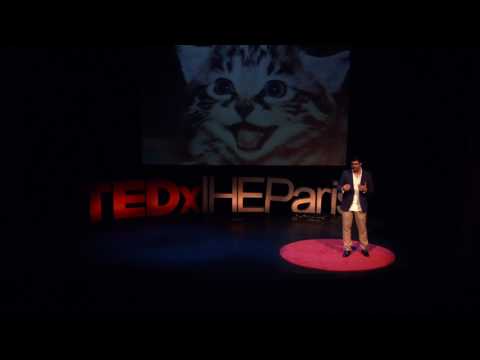
little friend over there now what’s the
first reaction when you see this
adorable little guy ah obviously the
next reaction and the next reaction is
you want to take a picture you want to
copy-paste it you want to send it to
your friend
bla bla bla the reason that we do this
is because the cost of sending
information on the Internet is very very
low the Internet is a network which is
decentralized and completely distributed
so if you want to share any kind of
information whether it’s a cat pic or if
it’s an excel file or a PDF or an email
you can copy/paste that and send it to
someone else because of this distributed
architecture that’s why the cost of
sharing information has come down
dramatically in the past two to three
decades but when it comes to money you
can’t use the same formula turns out
that if I use the Internet to engage in
a financial transaction with one of you
then it’s really really important that
you or someone else is incapable of
going and copping those strings of zeros
and ones which essentially make up the
financial transaction that I’m sending
that you’re not capable of copying that
and pasting it and sending it to someone
else that’s why we use banks banks
essentially do two functions firstly
they’re ensuring that I have the funds
necessary to make this transfer the
second thing they’re doing is updating
our balance sheets once it’s done in my
case it’s obviously going to get debited
in your case it will be credited it’s
also the reason that we have outsourced
our trust to them but it’s an expensive
one in case any of you are wondering how
much the average cost is but the
blockchain flips this what the
blockchain does is rather than using a
bank to validate a transaction it uses
the network more specifically it uses
the computers that are on this network
to perform a very simple or very
complicated mathematical operation and
this mathematical operation is
essentially doing the same
two things it’s ensuring that I have the
funds necessary to make the transfer and
once the transfer is done it updates the
balance sheets but instead of counting
on a bank it counts on the transparency
of the network to ensure trust in such a
system the blockchain makes every
transaction that happens on this network
recorded and published on a shared
balance sheet which is accessible by
everyone who is on this network rather
than outsourcing the trust to another
Bank it outsources a trust to
transparency remember when you share
information with the internet the cost
of sharing information goes down well if
you are going to use a blockchain which
is also a distributed system the cost of
making a transaction goes down
exponentially so not only is it able to
provide us with a greater way of seeing
what’s going on within a system it also
ensures trust and reduces the cost of
doing so this is why the economist calls
the blockchain the trust machine and why
I like to call it the engine of
transparency moreover apart from
addressing the two problems that we
mentioned about capitalism which is
clarity and Trust the blockchain also
provides two-way transparency today
banks and financial institutions have
massive amounts of clarity in terms of
what we do with our money but we don’t
have the same clarity as they do with
the blockchain since every transaction
has to be published on the shared
balance sheet for the first time as as
banks know us we get the chance to know
them just as banks know their customers
we now have the opportunity to know our
banks and more importantly to know our
governments this has been unprecedented
till today and I specify today simply
because one reason the timing has to be
right
capitalism has been punctuated by events
that have massive effects on the future
of society we are at such a landmark
event today as we enter season three
with the blockchain
in recent years especially in the last
year there’s been an increasing amount
of investment by banks financial
institutions and governments in the
blockchain because they want to leverage
the ability to make transactions with
very reduced cost but as they pursue
this hedonistic goal it offers us a
window of opportunity for the first time
we have the opportunity to see the
interactions that are actually happening
within our capitalistic system for the
first time we have the possibility to
witness capitalism and to see its
effects on society as it happens in real
time the title of this talk is
rethinking capitalism with the
blockchain but as we come to the end of
it what this conversation has really
been about is not about the blockchain
or capitalism what this talk is about is
questions we need to question our banks
and ask them to be transparent with us
just as we are with them we need to use
this technology and question how can we
use it in order to reduce inequality
that is plaguing our societies today
more importantly we need to question
ourselves and ask ourselves how are we
going to use this technology and
together redefine capitalism after all
it is only by asking these questions
that we can have the right conversations
with the right conversations we can have
the right interactions and it is
interactions that create culture and
therefore capitalism not the other way
around we have to start asking these
questions because if we do not ask these
questions and have the right
interactions we will never be able to
sever the link between conflict and
capitalism if we do not ask these
questions and have these interactions we
will I fear be obliged to start a
conversation with the next generation by
beginning with an apology and that
ladies and gentlemen will not do it is
interactions that make culture and it is
culture that makes capitalism I think
the time has come that we start having
these interactions so that we can
redefine capitalism for this new
thank you
[Applause]
Please follow and like us: