
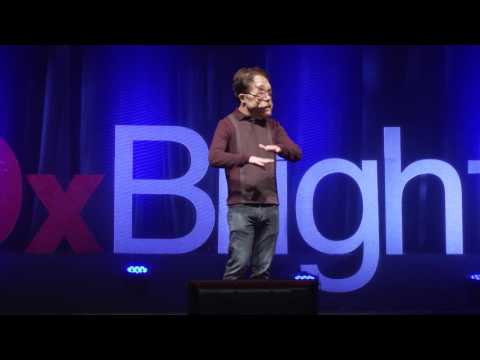
some of you may recognize me from the TV
I’ve got one of those faces seem to just
feel that but just feel the auto
attention just still disrobe for some
reason when disability is mentioned it
turns us all into morons like case in
point I used to live here and Brighton I
studied at Brighton uni just up the road
in wall scone and I was in my house one
day used to live on the Avenue and the
gas man came round or was he only going
in and I let him in he did his job when
it was great but the entire time he was
looking at me really really awkwardly
and I was just thinking either he’s
worked out I’m disabled or I’m getting
laid
either way mondays just got brilliance
and as he’s leaving he turns to me and
just as you like says my friend Paul has
a distinct event do you know him well no
however my friend bill is a bitter
that’s what do you got me thinking why
why does this happen why when there are
10 million disabled people in the UK
right that’s why we aren’t numbered
Dom’s by 1.8 million and we all know how
to handle a dog why is it like that and
it’s because it’s almost invisible when
you look at things like the mainstream
media you very rarely see it and when
when we as children and we look the
heroes when we look for role models we
look at people we identify with people
from other similar backgrounds with the
same interests that do what we want to
do or excel that we want to excel at the
the title the the name on the marquee
the TEDx Brighton we can be heroes it’s
a real – it doesn’t as a business brand
to me this is like perfect marketing I
imagine meet the ambience the ceiling in
the room would have been a lot less so
had they called it and they kind of
half-ass the brainstorming meeting
Toby had a rough night out comes and
goes we can be average or no and it’s
also my travel to sell it to the
speakers as well I imagine I don’t know
a lot that excite a lot less excited
have had the call come in hi is that
Adam Pearson yeah see I don’t Pearson
yeah I’m fine why don’t OB what I’m
calling from TEDx Brighton okay we’re
having an event called we can be average
and we thought you’d be perfect
to talk at listen and so I when I got
into TV this still still not me whenever
you see disability or disfigurement on
TV as I said there were ten million
people with disabilities in the UK
cycles in the forty thousands of which
are people who have some kind of facial
disfigurement which is a ballpark
average of one in every 144 people where
are they when you hear the word hero I
don’t know who who your heroes are some
people will jump to the great athletes
of our time 1966 World Cup final in 1974
George Foreman Muhammad Ali the rumble
in the jungle some you might be looking
forward to USD to Gregor any average
some of you may think of the great
humanitarians at that time Martin Luther
King
mother Teresa Bob is not your kind of
thing but give me a song with it with a
disability I didn’t have that and that
left me a confused as to where I could
sit in general and also it made me
wanted to become a broadcast or a
journalist incredibly unlikely and I’ve
always been a campaigning type I
campaigned for several charities and all
my work in TV has been a very fortunate
byproduct of being very very good at
that and a lot of the documentaries on
me look at the world of disability but
through a very different lens disability
in documentaries historically it has not
been done well um if you look at channel
5 they have these ridiculously since h
they named programs and it starts off
with this heinous voice Jimmy was born
and then Cole played six you start
playing in the body background with a
shark through an arm and in the parent
sit there and go oh that’s that’s not
how we want to be portrayed on
and it dawns on me from walking around
the hallowed halls of BBC Television
Centre long way at rest in peace a lot
of the decisions about disability were
being made by what were mainly white
middle-aged middle-class men who weren’t
disabled and I started asking the right
questions to the right people and
eventually caught the attention of the
head of TV Danny Cohen who when my
contract ends at BBC I originally worked
in diversity in commissioning on I then
got into the more production side of
things and BBC 3 ran this season on
about two years ago now called defy and
label they wanted to put out a whole
season of programmes looking at
disability from different angles and in
order to get a very good steer on it
they had this crazy focus and one of my
friends who I was organizing it said hey
are you ok and then the next day of this
focus groups you call me in tears saying
oh well I mean you doing that really
fine
number one you owe me dinner number
number two it’s at any point I have to
and so I’m in this room and then I’m far
away from the door which in retrospect
was stick and I’m shouldn’t exert my now
commissioner Elliot Reid and did lady
start the session and lo and behold
names and this girl stood up and said hi
my name’s Ellen and we all had to go hi
Ellen and then she she said my interest
in science is I have 10 different
disabilities and I said in what was a
very quiet voice burst out laughing so
I’m trying to be really soft about this
what we both look like idiots anyway um
Annie and hyung approached me and the
independent TV companies I work with to
make a program looking at disability
hate crime which is quite a diluted
eroded issue within law there were five
protected groups under hate crime
legislation then being based upon race
religion sexuality disability and gender
identity and I wanted to really
highlight the massive disparities in the
law as being Criminal Justice Act
section 163 if a crime is committed it’s
motivated by race or religion there is a
kind of 2-year place where is that the
same crime can we get the song with a
disability yup there’s only six months
and then all these really interesting on
discrepancies that exist when you have a
disability and I don’t want to stand
here and Salman Khan I’m moaning or so
I’m not I’m not grateful for the
provisions for disabled people that
exist in the UK as far as the rest of
the world goes we have it pretty good
over here all 10-minute of us dare I say
we have it better than the 8.2 million
dogs that are or anything okay and then
after afters that ran out that did
rather well and then between that I’ve
got to do the
do earlier mention some ways when
Scarlett Johansson which is good work if
you can get it I suppose I didn’t tell I
didn’t tell my parents what had happened
in the film I thought that’d be that’d
be a nice surprise then going to the
cinema expecting a jolly old romp
through Scotland then they see their
songs on the screen how you doing
and then after that film came out I took
a bit of a break and did what my mom
calls a proper job and then I got this
random Facebook message shown Los
Angeles and it just jazzy slightly and
it’s like hello Adam my name is Todd ray
Sarah no we saw you in under the skin
and we thought you were great I was
great old man I own and operate the
Venice Beach freakshow in California
this is and I wrote back going all that
jazz um dear Todd thank you for your
email James you like the film
unfortunately I have no real skills
carries my mother’s email she will
verify I have no active skills that
could benefit your establishment um and
then I told my boss about this in the
pub one night after work and he just
flipped to me when would you do it and I
was like and then we ended up making a
whole documentary about freak shows so
what started off this really a drunken
conversation in a pub turned into this
three-week whirlwind tour of America and
Mexico visiting various freak shows
which is not something doing previously
seen on TV with everything it’s all
about taking what is quite a soaring
subject disability and doing it in a
different way that’s that’s engaging
with the public the worst thing that we
can do
in theory with disability just make it
all medical we need to start appealing
about human spin on disability whether
that is kind of taking people out to
concerts or or just doing the right
thing just saying hello that’s that’s
all it is and people may be sitting here
thinking that sort when I’m great for me
but what can what can we do and I think
we all have it in us to be to be heroes
we all have it in us to tell great
stories and make a real impact in our
lives and there are three simple
questions I believe we can ask ourselves
done enabled us to make a great
difference not only in our lives but in
those of the people around us
number one what do we like and number
two what are we good at it’s at this
point I’ve already stopped and have to
clarify so if what you and I come what
you’re good at aren’t legal then please
please sign other things like so often I
I say that to young people and they
cannot see others go I can do that no
[Music]
put the pool away and think of a
different idea and then come back to me
but number number three what pisses you
off quite often if we can find what our
misery is we can find what our
quote-unquote ministry is I’m from
working around know you as I said
hallowed halls of BBC TV see so I didn’t
like about our industry saw how badly
were handling disability and decided to
be that irritating voice of reason that
made was part of making a change and we
are now 66 years so when I first started
in TV and we’re making very good strides
channel 4 and the Paralympics have done
wonders Alex and Josh on the last leg
I’m amazing and that’s really helped to
normalize disability so I would
encourage all of you find what different
to make in this world decides what you
want to be and go and be it no excuses
full throttle I’ve been havin Pearson
thank you so your time [Applause]