
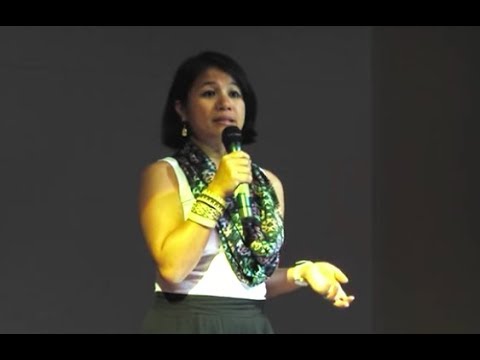
okay so today I’m going to be talking
about oceans the blue planet so our
basically our planetary lifeline
conservation as well as us or you and
the future and our roles in it a little
bit about myself I am a marine mammal
ecologist and I co-founded a local
marine conservation NGO named Mars set
and so we do research on dolphins and
porpoises dugongs here in Malaysia and
we use that science to inform
conservation work and I’ve been doing
this this sort of job or this sort of
work for the last 13 years of my life
and so the question that I want to pose
today is do we have an ocean
conservation problem and through the
through the work that I’ve been doing
for the last 13 years of my life you
know I’ve seen a lot of problems in the
ocean I’ve seen a lot of animals get
caught in fishing nets I’ve seen how
their health is compromised you know
we’ve seen animals with skin problems
we’ve seen animals
we’ve seen animals with very skinny
we’ve cut open animals that have
consumed a whole lot of plastics so you
know do we have an ocean conservation
problem I think sir is yes I think the
slides are not moving so I’ll just keep
going and so do we have a problem and a
lot of people think that maybe we don’t
because especially for us here who live
in the city you know we are quite
disconnected from the ocean it’s far
from us we don’t see it you know we
don’t live near it so maybe everything
is fine and a lot of people think that
fish basically comes from the
supermarket so as long as you go to the
supermarket and there’s always going to
be fish then there’s always you know
gonna be fish and you’re never gonna run
out of food however however in Malaysia
we’ve actually we’ve actually lost 90
almost 90% of a lot of our fisheries
stocks and basically our sea is almost
empty we are one of the largest
consumers seafood in Southeast Asia and
we run the largest consumers of seafood
in Southeast Asia and we’ve depleted
almost 90% of our fisheries stock and
the picture that you see behind me is
basically all the fish that didn’t make
the cut as commercially valuable fish so
they end up being scooped up in a basket
like this to be grounded into fish meal
to be fed into aquaculture and to be
made into your fish ball fish cake and
any fish related products so what’s bad
about it is that because we’ve already
depleted you know almost all our
fisheries stock and at the same time and
we’ve already to believe that our
fishery store and at the same time all
the all those little fishes are not
being left in the season yes they’re
being taken out and being taken to
remain products I just mentioned about
the next problem that we have is the the
issue of marine
that’s impacting you know all our oils
oceans and guess what in 2015 a group of
scientists published a paper and
basically they had looked at the amount
of rubbish that is going from land into
the sea and they looked at it at every
country across the world and guess what
Malaysia made it to the top ten on this
ladder of shame and considering that
we’re not a very large country we still
managed to make it to you know ranked
number eight and that’s that’s quite
telling that’s an issue that I think we
really need to think about we need to
address so as you can see on the chart
we’re on number eight and you know if if
you think that oh but how can this be
true then you know the next photograph I
took in some porn ah which is the
gateway to our top diving destination
which is Pulau Sipadan okay just just
take a look at photograph basically it’s
like a supermarket I think if you were
to wade in there you’ll find anything
from diapers to straws to cups to plates
to shoes to slippers baskets and maybe
even the kitchen sink and this is just
one of many examples of places all
around the country of our beautiful
country that we are where we are
suffering from the issue of marine
debris and it’s not just sitting there
it’s actually getting into our oceans
into our waterways next and every year
now at least eight million tons of
plastics are going into the sea and you
know these plastics have nowhere to go
they’re just sitting there and
scientists have predicted that by the
year 2050 there are going to be more
plastics in our oceans than fish so you
know and as I said earlier we are a
large fish eating nation and then we
ranked 8th on that ladder of shame but
in 30 years time there could be more
plastics in the ocean and actually it’s
already happening now because some
scientists are finding that even the
plankton
consuming plastic and then the fish is
contain you know consuming the plankton
and then we are consuming the fish
because these plastics don’t go away
they just simply break down into these
my new things called micro plastics so
we really need to think about this issue
marine debris it’s huge so the ocean is
a continuous system just like this
beautiful infinity scarf that I’m
wearing the ocean is it’s infinite you
know it’s it’s connected as much as we
think that it might be vast and as much
as you think that okay if I were to just
toss something any I’m too lazy to walk
to the bin and I’m just gonna toss it
right here and it just floats away and
you never see it again this away
actually ends up being on somebody
else’s Shore or it ends up being on you
know in some animals stomach or ends up
being fished out by somebody else
somewhere far away and and just like
this scarf you know our impact our our
actions here will impact something over
on the other side and so so what I was
trying to illustrate is that it’s a
continuous system so like this scarf if
I were to pull here that this moves if I
were to pull here this moves so we
mustn’t ever think that our actions are
all in isolation because it basically
impacts everything out there no matter
how small your action might be just
always remember that the ocean is a
continuous system and that you should
never take your little action for
granted in that we should always be more
responsible about how we treat the ocean
and how we’re disposing of our little
waste so given that all you know these
are just some of the issues that are
impacting us as a society as a country
as a species and moving forward into the
future how are we going to redefine
conservation I often get a lot of emails
from young people like yourself saying
dear dr. Louisa I love dolphins and I
want to save them dear dr. Louisa I want
to be a marine conservation
dear doctor Louisa I want to be working
in conservation and that’s really good I
like that you know there are people out
there who are interested in taking up
this cause but I think that we also have
to remember to move away from these
traditional ways of doing conservation
into thinking that you know what you see
on TV is all there is
or that you only you know you have to be
a marine biologist to do marine
conservation work the truth is moving
forward into conservation we have to be
a lot more practical and here are some
ways that we can consider if any of you
out there are interested in doing you
know marine science and conservation
work here are some things to consider
first of all you can do research that’s
great we all need research and we need
science science helps us find out
problems and science helps us find
solutions but um all too often a lot of
scientists live in an ivory tower as you
can see over there and they think that
okay I’m doing science and it’s so
awesome and I’ve just discovered this
thing whoo-hoo
when in fact there is a huge gap between
the scientists in the ivory tower or any
scientists at all and community out
there you know so somewhere for the long
alone down the way there is maybe a
villager that somebody else is talking
to say hey ma’am I don’t think you
should be doing this destruction
destructive fishing method it’s killing
a lot of endangered species and it’s
causing overfishing and she goes
endangered species overfishing what’s
that
so the point is that we can do science
for conservation but we have to ensure
that our work is taken out there and
it’s brought down to the ground and
apply on the ground in order to solve
you know conservation problems so the
point I’m trying to get at here is that
you can be a researcher if you want to
work in conservation but also be an
educator be an educator take your work
and tell others about it share your
knowledge and have them share their
knowledge within their circles and so on
and so forth next I to realize in the
you know last 14 years of
thirteen years of doing this that to be
able to care about the environment
especially if you’re in a rural poor
community is that social economics are
important people who are poor cannot
care about conservation you can’t see
stop doing that stop fishing that now
cuz it’s killing all the endangered
species well they are first worry is how
am I gonna put food on the table for my
family I can’t care about conservation
what’s dolphins got you know how does
that impact my life so we have to always
remember that in doing conservation now
and in wanting to have people care about
it you know in the large the large
majority of people we need to consider
their social economic standing which
means that you can come in to do
conservation or work by providing
communities with solutions with
alternative livelihoods and train them
up to be stewards of their own
environment and empower them to to have
a livelihood but to also be able to care
for the environment and then there’s
some this so we live in an age of
biotechnology and so we live in an age
of biotechnology and information is at
our fingertips and we live in an age
where things are being engineered and
developed you know to solve many
problems or just for fun and these
things call compostable packaging are
available but they’re not widely
available and I found this online and it
says packaging the future my question is
why wait till the future as I
demonstrated earlier we have a severe
problem with marine pollution there’s
only so much more the planet can take in
terms of single-use plastics and things
that never break down and truly be
reabsorbed into the earth so I urge
people out there if you’re interested in
doing your part for the planet consider
perhaps engaging in some form of bio
technological innovation to make
compostable packaging for example more
affordable and more widely available
because they are available now but they
cost a lot more than your paper cup or
your styrofoam plate
or your plastic cups so people will opt
to just go for those disposable one-time
use things so but we can’t afford to
wait for the future because it has to
start now otherwise we’d be living in
out you know our own pile of rubbish and
the next thing the next thing is some
people will say okay well I’m already
doing my part I recycle and that’s
really good and I think all of you are
any of you out here who are already
sorting your waste or recycling doing
recycling that’s really good but
recycling really cannot be the only
long-term solution for our planet
because essentially we are still to
recycle you are still producing things
you know to be put onto this planet the
important thing to remember is that to
want to affect conservation as well it’s
not just about recycling it’s about
reducing okay so we need to reduce can
we give up that plastic straw can we
give up that plastic wait can we bring
our own power container to pack you know
to get food if you’re eating if you’re
not gonna cook at home and you wanna you
know take away can you bring your own
packaging that’s reusable so we need to
remember that it is important moving
forward into the future to reduce you
know what are the things we can give up
that we don’t really need that’s you
know just never if we have it it it
doesn’t make a difference to our lives
and and also it never goes away and
remember as I said there’s really no
such thing as away so think about that
we need to also reduce so this is
something that I want to touch on a
little bit it’s called being silly for
the environment so I’m just gonna
explain in a minute I’ve after I put on
my little head
okay so I look silly now because I’m
wearing a little Dewgong hat but there’s
a point I’m trying to make um so it’s
okay to be silly for the environment you
know I’ve been called all sorts of
things ocean hugger tree hugger
you know eco warrior whatever and some
people don’t even mean it in the in the
good good sense of the word but the
point is this is not about tree hugging
this is not about ocean hugging this is
not be hugging anything it’s it’s about
your future it’s about you know the
living environment that you are going to
live in and so it’s okay to want to
fight for a brighter future it’s okay to
want to fight to live in a clean
environment in the future and it’s okay
to be silly so for example one of the
things that I do nowadays is when I when
I I eat out and I order a drink I’ll
tell the waiter or waitress no straw
please and a lot of times I get you know
this look what you don’t straw how you
gonna drink well you know I can I have a
mouth I can drink on the cup and but at
first it it discouraged me when I was
starting out too you just refuse to
trust neurotic you can think I’m weird
but then as time went on I just thought
who cares you know I want to do my part
for the environment and I don’t care if
I’m being silly or if they think I’m
silly you know for example it’s okay to
question where your seafood came from
it’s okay to ask did this fish you know
but the method of catching it did it
caused the death of many other marine
species was it caught ethically but the
people who caught it you know what they
paid properly it’s okay to ask and I’ve
been shot down I just eat your fish
lines stop asking so many questions but
I ask them anyway because I think it’s
important to know you know where that in
the face of dwindling fisheries stocks
it’s very important to ask these
questions or even you know even if the
barrister you know the coffee cafe looks
at you funny because they have to make
your coffee in a cup that you brought
and not in the paper cup that you know
they usually serve coffee in does it
matter
is it matter that for that you know a
few minutes while you’re waiting there
for your coffee the barrister thinks on
this person’s it extreme or weird no it
doesn’t matter
so the point is just it’s okay be silly
for the environment because it’s about
your future it’s about taking charge and
ensuring that you can live in a planet
that’s gonna be alive in the next 30 40
50 years so you know being um being
environmentally responsible is
inconvenient I won’t doubt that but
would you rather live like this you know
surrounded by your rubbish maybe waking
up you know rolling out a bit and that’s
just tons of you know stuff that you
didn’t you know that didn’t have
anywhere to go anymore
so we have to think about this in the
future how much more you know can I’ll
plan it take so I want to challenge you
you know get out there our country is
beautiful but it’s all of America
environmental problems so don’t just
read about it on Facebook or to the
newspapers or from your neighbor you
know listening to story from your
neighbor I challenge you to get out
there to get out there to see for
yourself one of these issues take
yourself to a fish landing site see how
they land the fish see you know what the
conditions are see what’s being landed
are there’s so much fish that’s being
landed or take you know go visit a
landfill see for yourself the amount of
rubbish that we as a society are
generating and that this rubbish really
has no ethical mountains hi looking at a
picture is one thing I think
experiencing it firsthand is another and
I think it’s through these you know
hands-on experiences that you can really
decide for yourself okay what to stand
I’m gonna make for the future of the
environment that I’m gonna be living in
so I’d like to suggest just sort of
close off soon by saying that these are
two very good documentaries that I would
recommend all of you to watch one is
take the end of the line which talks
about the state of the you know
fisheries all around the world and the
other one is called a plastic ocean and
a lot of a lot of the things that I’ve
covered actually you know these
documentaries cover as well but you know
visually they’ve captured some of these
biggest issues that are plaguing our
blue planet quite aptly so
suggest you you know take some time out
to watch these two documentaries and so
lastly I leave you with this this is a
real real photograph which I took
somewhere on on one of our beaches and
it’s it’s a pea it’s a plea for help
it’s a plea for help for our blue planet
it’s a plea for help for our oceans the
ocean that feeds us the ocean that
provides a lot of people with jobs
almost three billion people in this
world rely on it for jobs and you know
it’s the oceans that have brought you
everything that you have right now your
clothes your phones your laptop your
shoes how did it get to you most of
these things were shipped to the country
you know so a ship needed an ocean to
sail to bring you your things so do not
discount the importance of the blue
planet and think about what you can
really do to secure your future by
taking care of you know our planetary
lifeline thank you
[Applause]
you
Please follow and like us: