
clean air clean water and all the energy
we need my house and electronics are
powered by wind and solar and I Drive my
hydrogen card work but as a scientist I
have a confession to make about
renewable energy we’re not there yet the
painful truth is even if we had the
money to replace all of our coal and gas
plants tomorrow we wouldn’t be able to
make it work and to explain why I want
to tell you about a friend of mine steve
is a meteorologist and he comes to work
every day at 430am within two hours he
needs to have accurate weather
predictions for every service area with
these predictions he can predict how
much energy we will use and how much
wind and solar power we will produce for
every hour in the day but for the way
that the grid is set up now if he is
wrong even by a little bit it can cost
the utility hard money as they scramble
to ramp up their gas plants to
compensate unless we get smart about how
we deploy renewables in the future this
problem will only get worse we need a
way to store renewable energy so that we
can use it anytime we need a way to
transport this new kind of power so that
we can use it anywhere and we need a way
to convert it into fuel so that we can
power our planes trains and automobiles
what we really need is an energy
revolution Thomas Edison was successful
at just such a revolution can you
imagine him walking into downtown vegas
or Times Square the world we have today
would be unrecognizable to him hey Tommy
you know that light bulb you invented
yeah there are now billions of those
around the world but what we often don’t
think about is just how difficult that
was because before the light bulb there
was no reason for you to have
electricity in your house so in order
for him to sell his light bulb he also
needed to create the infrastructure to
get power to those lights but he wasn’t
all that successful on
zone for his first demonstration project
he led up his lead investors mansion
with 385 lights to become the first
electrically lit home in New York what a
spectacle that must have been and so you
know he got the library on fire after a
few years he lit up 82 houses with the
nation’s first electric power plant
unfortunately after a few years that
burned down as well over decades science
and engineering completely transformed
our world and so was born the lighting
revolution this is the scale of the
problem that we are dealing with for
renewable energy these are not just new
products to plug in but ones that
require a vastly different
infrastructure than what we have today
because today our infrastructure is
built around burning things we burn coal
we burn oil we burn gas we’ve become
really really good at burning things
we’ve become so good at burning things
that our world has essentially become a
furnace and it’s changing the climate
all 10 of the warmest years in recorded
history have taken place in the last 20
years last year was the warmest year
ever and we’re already doing damage
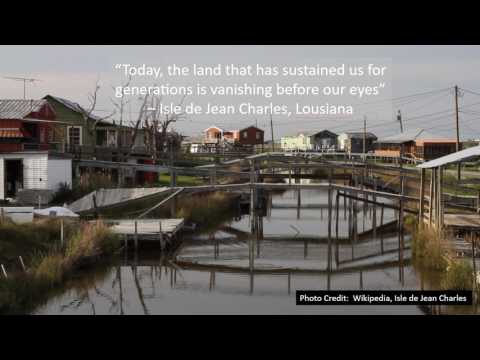
control we are currently in the process
of resetting our nation’s first climate
refugees from an island in Louisiana due
to rising sea levels an entire town is
being moved off the island this is just
the beginning on a global scale the
United Nations Framework Convention on
Climate Change stated that in order to
avoid the truly devastating effects of
climate change global temperatures
should not rise by more than 2 degrees
Celsius above pre-industrial levels we
are currently 1 degree Celsius above
pre-industrial levels in order to meet
this ambitious goal a global carbon
budget was set and if we go business as
usual we are expected to exceed this
global carbon budget by the year twenty
forty our earth as we know it depends on
is too rapidly divest from fossil fuels
but society as we know it depends on
reliable access to affordable power
these two requirements are at odds and
the only solution lies in innovation so
how do we get there how do we make sure
our species survives how do we make sure
that our planet is still habitable in
100 years I believe the answer lies in a
class that many of you probably found
very boring statistics in 1991 a
scientist named John Gilman made an
observation that came to be known as the
rule of 10 the rule of 10 states that
10,000 ideas usually lead to about a
thousand experiment worth writing home
about which results in a hundred patents
of these ten make it to a store near you
and one is the game ginger just one is
even close to light bulb caliber
industry makes products from patents but
universities and National Labs make
patents from ideas we can’t just sit
around and wait for the next game
changer that’s crazy we need to
statistically ensure that these game
changers come to market by funding as
many ideas as possible in short the
progression of science is not just a
series of independent and unpredictable
breakthroughs the game-changing
technologies that we are speaking of are
built on decades of foundational
research at universities and National
Labs Thomas Edison didn’t just come in
one day and change the world the first
lamp was invented almost a hundred years
before he came into the picture and
lights weren’t commonplace in homes
until decades later so right about now
you might be chained yourself well this
all seems really important I bet we’re
doing everything we can to make sure
that this all happens well I have some
bad news for you here’s a picture
showing the government’s commitment to
scientific advancement over time you see
that spike there that shows commitment I
look at that and I see that we are
really trying to solve a problem because
the space race wasn’t just another
science project it was a unifying
mission
for all Americans as a nation we came
together to heavily invest in the new
frontier that is why we were able to
achieve such an engineering marvel on
such a short timeline you see this
depressing downslope here in our decade
it kind of reminds me of the game
kerplunk do you ever play this game it
was one of my favorite games as a kid
the premise of the game as you have a
collection of marbles lying on a web of
straws the players then remove the
straws one by one until eventually the
marbles fall through I am picturing
these straws as the resources that we
give scientists whether it’s money for
equipment and experiment labor support
services etc and the marbles they’re the
foundational research which supports
society as we know it and compared to
all of the other kerplunk games that our
government plays we are essentially
getting the straws pulled out from under
us because we’re scientists were really
good at looking at depressing graphs and
making conclusions about the universe
here’s the conclusion we made about this
graph the government isn’t going to
solve this problem on its own so it’s up
to us that’s why I teamed up with other
clean energy experts to build a
mechanism for Concerned Scientists to
find clean energy research directly we
are building the first and only
grassroots funding source for clean
energy research we call it the alt e’
fund as a collection of clean energy
scientists and experts we are uniquely
qualified to make sure that your
donations go to the most promising
projects at universities and national
labs around the u.s. rather than
spending time on lobbying Congress to
amend their type federal budget we are
empowering concerned citizens to fund
clean energy research directly because
one person with ten dollars is limited
but a million people with ten dollars
can change the world you see each small
contribution is another straw to put
back in the crib plonk game together we
can build up the foundational web of
knowledge needed for the next Thomas
Edison to come
and transform our world and we can do it
in a way so that Steve can make sure
that you can turn on your lights
whenever you need to if we invest in
that world today one day we’ll live in
it thank you [Applause]