
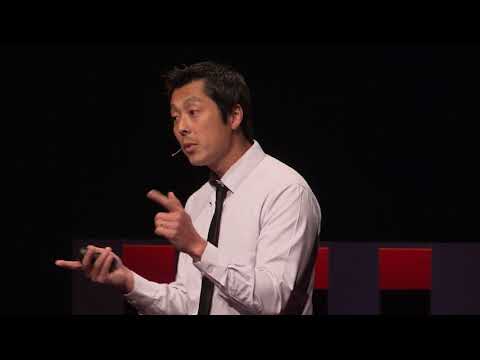
I’m here to tell you that stem cells are
probably coming to a clinic near you but
that’s not necessarily a good thing you
see whenever people find out I’m a
scientist do you usually ask me how’s
this whole stem cell thing going and
I’ll be honest with you I for the
longest time I had no idea how to answer
that question you see I’m from Brazil as
you can tell and and we and you and your
birds in Brazil when you tell people
you’re scientists there’s there’s no
follow-up question there’s only this
look on people’s faces you know it’s a
mixture of sorrow concerned a little bit
of disappointment you know it is really
the look of a father whose daughter just
brought a boyfriend home and it’s going
of all the choices out there I mean
that’s what you decided to go with and
and yes and so I stuck with science and
I was really fortunate to have the
opportunity to come to this great
country and for the past 10 years I have
immersed myself in stem-cell research
now that the but in here people are
really interested in science right but
like everything else nowadays the only
time people are really interested in
science is in social media discussions
isn’t it in social media discussions
science seems to be such a winning
argument I mean if you drop a scientific
fact then you basically win the
discussion right which is basically why
we have discussions anyways I guess but
as a scientist that has always baffled
me okay because if there’s one thing I
learned in science is that David premium
was right when he said the more we know
the less we know and the less we know
the more we think we know so quite
honestly what people want to know is
when can I go to the doctor get some of
it simply and it’s fair and I think
there’s only one way to describe the
current situation we find ourselves in
as it relates to stem cells and that is
to say we have reached a critical point
in the history of stem cells
a point that can only be described as
this what you see is a massive number of
different stem-cell treatments out there
and really the only thing between them
and us our regulatory agencies such as
the FDA in the US but the number of stem
cell treatments out there are getting so
overwhelming the some are just falling
through the cracks and the question then
is how did we get here and what does
that mean to you so the first thing we
have to understand is that stem cells
really exists within a relatively large
spectrum okay it starts with your
embryonic stem cells goes through your
postnatal adult stem cells all the way
to adult cells that we can now it
genetically reprogrammed to become
embryonic like stem cells we call those
induced pluripotent stem cells or iPS
cells now we knew from the beginning
that embryonic stem cells offer perhaps
the greatest differentiation potential
which is by the way what defines a stem
cell is a cell that can replicate and
giving the right cue it can
differentiate you to something else
hopefully something useful but we’ve
always known that great differentiation
potential also means the greatest risk
and it’s a very simple concept to grasp
right we tell our kids I tell my kids
they can be anything they want when they
grow up
all right don’t you accept the chances
of my son become a professional
basketball player probably really slim
right but I don’t tell them them but we
also know that there are very specific
conditions environmental factors the
half should be present just for a kid to
become a functional contributing member
of our society and more often that we
like to admit those conditions are not
met they’re not in place and a lot of
the kids end up going straight
unfortunately when it comes to embryonic
stem cells in IPS cells going astray
really means turning into cancer and
that’s the last thing we wanted now as I
speak and I say in an upset a lot of
scientists by oversimplifying something
very complex there are many scientists
working precisely on deciphering those
conditions and in the future it’s quite
possible that the choice between using
neck stem cell in IPS cell we would come
down to a moral choice but with that
link said I have to tell you that both
embryonic stem cells and iPS cells
represent a very small fraction of all
the stem cells out there what makes the
bulk of them are really adult stem cells
in going in we knew that adult stem
cells have limited differentiation
capacity after all they already decided
to be something or on the road to become
something but then ten years ago
something happened that can only be
described as a paradigm shift these
cells are better a subset of these cells
we call the mesenchymal stem cells or
MSC’s for short we’re able to treat and
improve a lot of experimental models of
disease from heart attack type 1
diabetes neurological diseases without
ever needing to differentiate into
anything and after 10 years of research
I can tell you that the way they
accomplish such features is by simply
going at it it’s by simply doing
everything itself can possibly do in
fact that’s why we still call them adult
stem cells because you do find them at
various ages but can you imagine if they
were teenager stem cells I mean first of
all they wouldn’t like to go there
because it would be boring right and
they were gay and they would get there
and they wouldn’t do anything it just
being titled that the whole disease
would just treat itself because they
were there I mean nothing will get it
right but as responsible adults
themselves they go to work and they
employ a plethora of different molecular
mechanisms things like genetic transfer
transfer of mitochondria secretion of
anti inflammatory proteins secretion of
growth factors that combine we modulate
key systems in our body
so I’m talking about your vascular
system your immune system and even other
stem cells are have in your body and
they modulate them towards healing as
simple as that
and I challenge you to think about any
disease or condition and I can guarantee
you you would benefit from either one if
not all of these interactions and that’s
what’s causing the stem cell revolution
we see today but that’s not all
something else happened it turns out we
discovered we can find these cells
virtually in every organ in your body
including your adipose tissue your fat
tissue so what I’m telling you is that
you could have a stem-cell treatment at
the same time you have liposculpture the
future in a country like the US where
the number of lipo sculptures or lipo
aspirated procedures reaches almost
300,000 cases a year you combine it with
a relatively simple method to isolate
those stem cells then you create a
perfect environment for the resurgence
of dr. Stanley and I’m not saying dr.
Stanley had in bad intentions on this
heart in fact I think we should have
fallen this whole snake oil thing but
the fact is that in the u.s.
particularly the FDA has not yet
approved a single stem cell treatment
apart from stem cell for bone
restoration in some cancer cases all the
other stem cell treatments are not yet
approved by the FDA and their taste is
really strict actually it’s the
strictest regulatory agency in the world
but I do tend to lean towards safety as
well because that’s what we live really
talking about and there are hundreds of
clinical trials which are really dead
their trials studies assessing safety
and advocacy in a very limited number of
patients and I think it’s it’s quite
simple to understand why someone would
be concerned about those cells cells are
not drugs
I could manufacture drug here send out
to Brazil and they would manufacture the
exact same drug but I cannot guarantee
that my stem cell in your stem cells
will act and behave the same everything
else should be a little bit different
and what’s worse if I can get your stem
cells I start growing them and I give
something to my colleague down the hall
a few weeks later and when we come back
and compare them they they might be
different and the last thing is
we know they do a lot of things but we
don’t know quite how to control them
okay and what’s really rare
dr. stainless are popping up everywhere
in the country and with them come the
horror stories and I’ll share two of
them with you today first one is a
middle-aged woman woman who saw an
advertisement for facelift in stem cells
facelift in stem cells now I know a few
scientists who work with stem cells none
of which work with facelift but this
physician in particular decided was a
good idea to inject stem cells in this
patients face around her eyes and a few
weeks later she woke up and every time
she blinked she heard a click and you
could think that’s cool for a second to
start freaking out and it turns out that
stem cells in her face decided to turn
into bone so she needed to have them
surgically removed and granted this
happened 10 I’m more than 10 years ago
the second story is really recent it
happened this year there were three
older patients who suffer from
degenerative disease of the eye macular
degeneration and they also saw the
advertisement for stem cells and the
physician in that case decided well
let’s go step further and inject these
cells inside our eyes directly into
their eyes and few weeks later or in
life and what’s worse about this case is
that the physician he had the trouble to
go to the FDA and start a clinical trial
so he could falsely advertise that his
procedures were somehow legit and so we
have really come to a point in history
in which the most reliable source of
information when it comes to stem cells
are really scientists and that’s very
scary Otto ADA there was a survey done
in Florida and they in which they asked
people how do you first hear about
scientific discoveries and out of 13
different possibilities scientists
ranked number 9 which means more people
learn about science scientific
discoveries by the way done by
scientists through comic books sitcoms
and
that’s how people hear about the
scientific discoveries and I think
that’s largely fog of scientists
ourselves we are largely faultless
you know being from Brazil I think the
biggest difference between Americas in
Brazilians are Americans tend to think
they tend to take themselves a little
bit too seriously and I think it’s
because you guys don’t have enough
problems you don’t right in Brazil
there’s so many issues so many problems
because we and we we can’t afford to
make ourselves another one we wouldn’t
get out of bed but here people tend to
think ourselves a little just I’m not
saying we shouldn’t take what you do
seriously because I think we do and we
must well we shouldn’t take ourselves
too seriously and scientists fall from
the same disgrace and what we really
need I think is science and as
scientists we need to get out of our
heads a little bit and reach out and
inform people about stem cells because
quite frankly a simple message could
have prevented those disasters and a
simple message will most likely prevent
future ones because stem cells are
coming we just have to make sure the
good ones make it thank
you
Please follow and like us: