
village little city not far from here
where I grew up
ah roughly fourth years ago I’m what you
can call a child of the 80s I grew up in
a world that was dominated by what then
was Generation X a world that wasn’t
connected yet a world that wasn’t
augmented yet
a world that didn’t know the internet
yet but I’m also a kid of the 90s I also
grew up in a world that knew the
Internet a world that became connected a
world where I felt intellectually
together I could share and I could use
all the devices that we have today but I
want to start with the beginning when I
was 10 years old I got my first computer
now it looked like this maybe some of
you recognize this device hopefully some
do this is a Commodore 64 now between
you and me don’t tell this to my dad
please don’t but when I asked for this
computer my dad was going listen why do
you want this computer out and I of
course told him because I want to learn
how to use and program a computer the
truth is I wanted to play games of
course but don’t tell him that how the
thing was that I quickly found out that
for the Commodore 64 there were no games
available they didn’t exist nobody had
made them yet there was no store to go
to that I could actually go and buy
again so I had to learn to build them
myself and this is how the screen of a
Commodore 64 looks like this was the
first graphical user interface and if
you look closely you see this little
blue dot that’s actually the mouse
pointer that’s what I worked with and a
Commodore 64 has
64 kilobits kilobits of memory now
imagine how much is that any idea shall
I tell you 64 kilobits of memory is half
a second of music on your mobile phone
you probably haven’t even noticed it and
that 64 kilobits of memory this computer
could execute programs and I could play
with it and I could use it I could
program it so there it is my first
computer and a little later is Steve
Jobs made this very remarkable comment
he said what a computers to me it’s a
bicycle for our minds it was really
impressive and it was a little bit of
magic what we could do with this very
early computers we can build programs
and we can make these computers do
things that we came up with in our
imagination and if you don’t believe
that a computer really is a bicycle for
your minds then you should check out
what TED Prize winner sumata Mitra did
with it he brought computers with this
hole-in-the-wall project to India he
gave it to children and slums and when
he came back a couple of months later
they not only understood how to operate
the computer they actually told him in
Hindu sir we need a better processor who
need a faster computer we need a mouse
and most importantly when he games of
course that’s amazing and he has
repeated that experimental over the
world getting these amazing results so a
computer really is a bicycle for our
minds but let’s continue with my story
ten years later when I was studying at
University now I was 20 years old the
world had changed already a little bit
there was this new thing that came along
and that was invented a little bit
earlier by Tim berners-lee in 1990 we
invented the internet and when I was
working at University of course I had a
much bigger and better computer it was
about a thousand times faster than my
Commodore 64 I could connect with people
all over the world and I couldn’t just
write software on my local computer and
show it to my parents and my friends no
I could actually show it to people all
over the world and I could engage with
them and
their feedback and of course in the
beginning I got a lot of very
interesting feedback which helped me
become a better developer later on so
here this is a map of the Internet today
this is three billion connections three
billion devices three billion people
being connected and a little while ago
not that dark Tim berners-lee actually
said the weapons I envisioned it as the
weapons I wanted to be seen isn’t there
yet the future is still much brighter
than the past now imagine that we could
connect seven billion people and that
they would have free and direct access
to the Internet and that’s what we
started doing we a little bit later we
started not just writing software for
our desktop computers we started writing
what we call web applications this is
what you all use today but it was very
exciting for us when the first web
browsers came and when I could start
writing software that I could share with
people I could install on the internet
and people could use it and play with it
without having any technical knowledge
so I met a couple of people online in
2005 they were as passionate about that
as I was and we started a little project
so like hey let’s try to come up with
something that allows people to easily
build their own website wouldn’t it be
cool if everybody could do that so we
created two one and when I founded
Joomla in 2005 together with 17 other
co-founders we did a little search on
Google and you can ask Google a lot of
things you just heard this was what
Google had to say about Jun why he had
no clue they were all together four hits
well I did that same search yesterday
and this is the result more than 120
million hits on the name Joomla today
Jumma takes about 3% of the Internet and
we are not alone in that there’s other
software
out there that does the same thing you
might have heard of WordPress and you
might also have heard about Drupal which
is also co-founded an and created by by
a Belgian three splattered together all
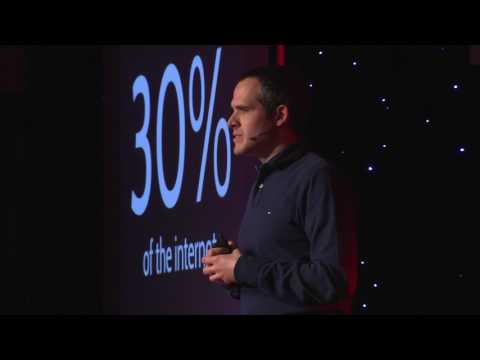
these three take 30% of the internet 30%
of the website of the internet run this
one of those three pieces of software
today now there is something special
about them they’re open-source software
well they’re a little bit more than
open-source software because people
always will is say this is open source
and it’s true it’s open source but not
all open source software is created
equal so we are talking about what we
call free and open source software and
the freedom here means free the freedom
to use the freedom to study the freedom
to change and the freedom to share so
it’s not just free as in free beer as
some people sometimes say beer is also
important in Belgium a problem about
that it’s important but still those
freedoms are also important now I see a
couple of people in the front going like
what why are you spending three years of
your life giving this software building
this software and then you’re giving it
away for free are you out of your mind
like what doesn’t compute up there why
didn’t you just commercialize it and
sold it for a lot of money see that’s a
very interesting question a question
that I struggle with for quite some time
why don’t I do that and it didn’t have a
good answer to it until quite recently
actually in the beginning you know we
joked around in the geek world we often
say if you want to have a geek we
consider myself a little bit of a geek
if you want to have a geek right good
software you’re given free beer and free
pizza and everything will be good and
that’s probably partly true but there
should be a little bit more to it so a
while ago I was watching the TED talk by
Daniel pink about the puzzle of
motivation and
and in that talk Daniel talks about the
maximizers of purpose and I realized for
myself that I wasn’t just a guy that was
pursuing his next paycheck that was
trying to maximize profit I was somebody
that was looking to maximize my purpose
in the world I was looking to master
something to be independent to change
things and that made a lot of sense to
me and another reason that I think I do
what I do is because in a sense I want
to be part of building this world I
cannot control it but I might be able to
influence it a little bit and that’s
what Douglas rushkoff writes about in
his book program or be programmed you
have two choices either you can let
people build the world for you and then
you’re gonna need to live into it in it
and you’re going to be programmed or you
can try to influence it and help program
it yourself and I think the most
important reason that I’m doing this is
because I don’t think we have a choice I
think that we are coming at a point in
time that there is no choice anymore
technology is evolving so fast
technology evolution is exponential
there is more technology progress in the
last 10 years than in the previous
hundred my computer that I got when I
was 10 was a very simple simplistic
computer the computer that I got when I
was 20 was a thousand times more
powerful the computer that I had 10
years later was a million times more
powerful we need to work together we
need to collaborate to be able to
increase technology and change our world
and that is part of the movement that
I’m in the free software movement we
believe that software doesn’t improve by
having a million users or by having a
million people talk about it
we believe that software improves our
participating
by collaborating about contributing to
it and there are many people across the
world that are doing this in their free
time now I have a question for you are
you a pirate are you able to stand up
and say hey I want to be part of this I
want to help make change happen because
I see a lot of people around complaining
about things that are going wrong about
how bad the world has become how much
problems that we have and if you ask
them well what are you prepared to do
about it then they go like well maybe I
should but I haven’t done it yet but why
haven’t you done that yet see Douglas
rushkoff says we are today creating a
blueprint a design for our collective
future and we cannot do it alone we need
to do it together and then my next
question for you is if you say hey I
want to be that pirate I want to help I
want to be a hacker I want to be a
change maker I want to be a trouble
maker then my next question is what
future do you wish for if you thought
about that
is it the future made by Facebook where
maybe there’s another future out there
for us and think about that as designers
and developers we have an even more
greater responsibility than ever before
that responsibility is directly
proportional to the number of people
that we affect with every product and
service that we create the more
technology that we weave into our lives
and there is a lot more technology
coming the bigger the implications of
our work will be we need to think about
each meme pattern metaphor and script
and API that we developers create will
become part of that collective future we
shape our tools that’s what we do today
so my question again there is no
guarantee that if you put up your finger
and say hey listen I also want to be a
pirate
that any work that you do will have
impact but there’s a very likelihood
that it will so again what future do you
work is going to fill a large part of
your life and the only way to be truly
satisfied is to love what you do
Time magazine I think says
single-handedly created the industry it
was the magic we could influence the
most places in life is continuously
telling you that your dreams aren’t
possible or practical what you want to
[Music]
you know being successful unquote the
eyes of society and the ones that didn’t
oftentimes it’s the ones that are
successful love what they did so they
could persevere we believe that people
with passion can change the world
that’s what we the minute that you
understand that you can poke life you
can change you can mold it once you
learn that you’ll never be the same
again
[Music]
[Applause]
stay hungry stay foolish and I have
always wished that for myself and now I
wish that for you stay hungry stay
so I want to leave you with two wishes
that I always had for myself and I want
to wish them for you too this is things
that I try to remind myself of every day
I don’t try to live a base mundane life
just just with the idea of living a
happy life I see it everywhere
the latest newest hashtag is Yolo you
only live once which is awesome and you
definitely make the best out of it but
you can also make the best out of it
changing things so what I try to do is I
try to pursue things that are so
important that even if I fail and I have
failed many times already it’s still
better to having tried that’s my wish to you thank you