
[Applause]
good afternoon everyone I like to start
this talk by introducing three seemingly
unrelated to situations situation number
one this is Lagos in Nigeria it’s a city
that now has twenty to twenty five
million inhabitants commuters in Lagos
face incredibly inefficient
transportation and some of the worst
traffic in the world it’s so bad that
when you ask locals for tips on how to
avoid traffic you’re likely to hear a
response like try to drive only between
midnight and 4:00 in the morning that’s
how bad it’s become situation number two
some children are doing their homework
or reading in the dark they’re part of
the more than 1 billion people in the
world who don’t have access to
electricity situation number three a
child who lost family members to Ebola
is playing in a childcare center in an
Ebola treatment unit in in Guinea what
do these three situations have in common
well for one thing they all depict
problems which are at least partly
information problems now what do I mean
by information problem well when you
think about it with better information
and how people move or want to move in a
city we would be able to plan and build
infrastructure in optimal way let me be
clear information alone is no magic
bullet that’s going to solve all of our
transportation issues but urban mobility
can be significantly improved through
smarts and coherent infrastructure
planning traffic management and public
transfer planning what do you need for
smart and coherent planning you need
information you need reliable and timely
information coming back to our situation
number two the children reading in the
dark if policy
acres and businesses knew in which
places they could find the right kind of
population density the right kind of
economic development and demographics to
sustain either access to the electric
grid or what we call a mini grid which
is a small independent power station or
even household solar panels like opinion
go solar panels they would be able to
push in to deploy the right kind of
energy solutions to the right places
faster and better in the third situation
the Ebola situation if public health
actors knew early enough who is infected
with a virulent transmissible disease
and who is likely to be affected next
they would be able to respond to this
outbreak before it reaches the
catastrophic proportions of the one that
struck West Africa two years ago now
this is not to say that information
alone can solve these problems of course
not of course even after having the
right information you still need the
right resources to be able to tackle
each one of these problems but the right
response to important social questions
must always start with the right
information in developing countries
especially the poorest countries
information has historically been scarce
how does a city planner in Kinshasa know
where to build a new road how does an
organization fighting Ebola Ebola know
where the virus is going to strike next
until recently the answer to both of
these questions was pretty reactive
rather than proactive stakeholders were
making assumptions
perhaps gathering survey data and maybe
feeding the survey data into mobility
models but the problem with this
approach is that survey data is
extremely expensive to to collect and
therefore it’s almost never updated and
in addition it only covers a small
sample of the population so you end up
with some of the most important
decisions in the country being made on
data that’s often out-of-date or
unreliable
but things are changing in the past few
years we’ve seen the phenomenal rise of
digital technologies and not just in
rich countries but also we’ve seen
developing countries leapfrog older
technologies like fixed-line telephones
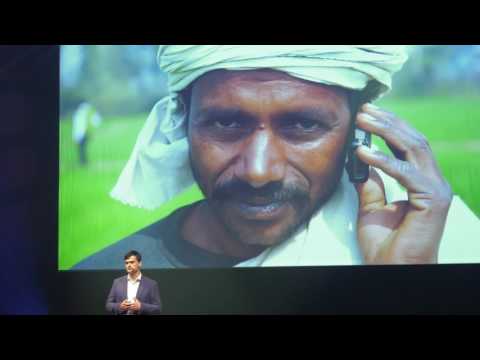
fifty percent of Africans or more and
now have access to a mobile phone and
this is a percentage that’s rising
steadily every year of course this has
very direct benefits for example farmers
can know the price that it can find for
their crops on different markets before
having to actually physically go there
migrant workers can keep in touch with
their loved ones with their families
money can be exchanged over long
distances safely through mobile money
which enables commerce enables
remittances and so on so what does that
have to do with this information
scarcity problem that I was mentioning
well these digital technologies also
have a more hidden benefit digital
devices leave digital traces and these
digital traces can be used to inform the
most impactful decisions taken in
countries rich or poor let me give you a
few examples the way that people use
their mobile phones can tell us about
their economic situation because we can
look at aggregated topic patterns or
aggregated mobile money transfers or
aggregated remittances and we can see
for example if there is a sharp drop in
income in a specific village or in a
specific region and this in turns in
turn enables us to perhaps detect a food
security situation a food crisis
somewhere mobile phone data also tells
us about mobility because we can look at
which antennas phones connect to and so
we can see and understand the movement
of the entire population in a country
basically in real time we can do that
over long periods and long distances for
example to study migration that’s the
screenshot that you see on the left
it’s an application that we built in
Zambia or you can do it over short
distances and short periods of times for
example one day and that’s what you see
on the screenshot on the right of an
application that we built in Uganda to
monitor traffic in the capital city this
gives us insights such as how many
people move from A to B at what time at
what speed using which routes etc if we
can see and understand the mobility of
the population in real time we can use
this to predict the spread of
communicable diseases
you see mosquitoes don’t travel very far
so when a communicable disease is
transmitted over more than a few hundred
metres it’s usually because it’s been
carried by a human the same human the
same person who is probably carrying a
mobile phone and the nice thing for
privacy is that you don’t need to know
the identity of the person you don’t
need to know who is infected as long as
you can estimate how many people who are
infected are traveling and where they
are going to this information where they
are going to allows us to build models
that can estimate how many numbers how
many new cases of a disease like Ebola
are going to pop up in which places the
right implementation of this kind of
technology can potentially save
thousands of lives
in a crisis such as the one that struck
West Africa a few years ago I’ll give
you one last example which is also
related to public health this is a
screenshot of an application that we
built also in Zambia which enables us to
simulate what happens if we completely
eradicate malaria in a specific area so
in this case we’ve simulated eradicating
malaria in the red circle and what we
see is the impact on malaria incidence
in the rest of the country what’s
interesting is that an intervention
that’s localized in this red circle
actually has an impact on almost the
entire country some places more than
others
are the red and orange places but almost
on the entire country
why because less people infected with
malaria would be traveling to to these
areas and infecting new people these are
the kind of insights that are very
valuable if you’re trying to know where
to strike malaria first how which places
do you focus on if you want to gradually
reduce the geographical footprint of a
disease like malaria so these are just a
few examples of things that our team at
Dalberg data insights has been working
on but there is a vision much greater
than us here the amount of data that is
being generated is going to massively
increase future phones are going to
gradually be replaced by smartphones
even in the poorest countries and your
smartphone’s capture a lot more
information objects such as cars are
going to be evermore packed with sensors
and connected to the Internet as well
satellite imagery is going to become
cheaper and more precise allowing us to
do things like monitor the quality in
the health of crops that are growing in
the fields which is also something that
can tell us about the food security of a
region a few months in advance there are
many possible uses for these new data
sources and the new algorithms that are
going to run on them not all of them are
good ideas for example ever greater
intrusion into your private data for the
purpose of ever more targeted
advertising might not be the best idea
but there are many other ideas that have
the potential to transform the lives of
millions especially in places where
traditionally little data existed
however most of this data currently is
and is going to stay in private hands
it’s in the hands of mobile phone
operators it’s in the hands of tech
companies who build applications that
people love and use like Facebook like
Waze like Google it’s in the hands of
utility utility companies and so on
and all of these companies are
rightfully very concerned about the
privacy of their customers but also
about the competitive edge that lies in
this data we can build bridges between
these private data sources and the
public need for it by setting up
rigorous and transparent privacy
policies that enable us to anonymize an
aggregate data data to points where the
privacy of users and the competitive
edges of business are fully protected
organizations like ours can start
building this ecosystem for shared data
we can become the trusted partners that
will build this ecosystem we do not need
to get data I get private data out of
the servers of these private companies
we can simply leave this data there this
raw data where it currently sits safely
behind a firewall and we can bring onto
this data our algorithms algorithms that
are going to distill only the non
private and socially useful insights
necessary for social impact we are
already doing this with some mobile
phone operators we are doing this with
satellite imagery but we want this to be
a societal change and not something that
we drive alone in a connected world the
most important decisions in society are
taken better and faster because we all
generate and we all share the necessary
information we can all do our parts if
you are a company that collects
interesting data you can choose to let a
trusted partner bring their algorithms
on to your data and only extract these
socially valuable insights that don’t
threaten privacy if you are a data
scientist you can join or create
projects like ours if you are a
government you can set up the regulatory
framework that allows the benefits of
such data to be shared without the risks
for privacy and you can also encourage
companies in your country to take part
in such initiatives
if we all do this we can trigger a data
revolution
putting the power of such data into the
hands of humanitarian NGOs of
development organizations and other
public actors who truly need it when we
do this we will give our private data a
truly public impact thank you
[Applause]
Please follow and like us: