
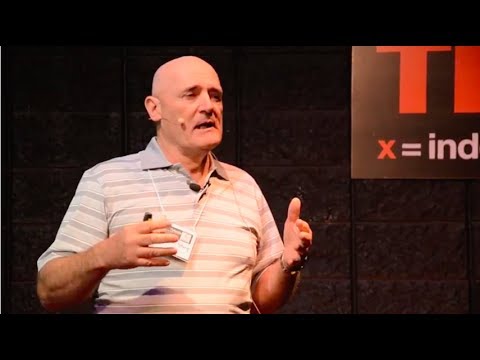
what I do is a founder CEO of the
permaculture institute of Thailand we’re
an organization based in Asia that
teaches farmers small farmers in poor
rural communities how to increase their
income sweet cash cropping and we do
this through our culture that’s me with
my my Asian hat on
[Music]
so I originally from Newfoundland I’m a
Canadian and I’m very proud of mating
I’m very proud to do this work as a
social entrepreneur and I live here
heavily care of the island for 30 years
but now I spend a lot of my time
probably most of it in Asia and I come
here for the summers and I’ve been here
a few weeks and I’m still waiting is it
coming let’s hope that this is just a
change in weather and not a changing
climate because it’s a very significant
difference between weather climate
climate is a permanent change weather is
just a variation so let’s hope that this
is an example of what next year will be
like and the year after and so what we
teach is sustainability and let me see
if I can stop that I’m going wrong is
here for you
and we do that by educating not only
local farmers but we also educate young
people from around the world we have
roughly a thousand young people who
travel from Europe and North America
Canada who come to tile
and Cambodia and Laos and they learn
permaculture we have about 200 farms who
host these they’re usually farm families
and these young people go there and they
spend half a day working on the farm
learning about sustainability learning
about how to live a life of shall we say
sustainable life and using lower
resources that they use in their homes
in North America and Europe so we
combine those these organizations
permaculture institute of Asia and of
Thailand
and we teach sustainability resilient
village design food sovereignty and also
work internationally with wolf other
people familiar with wolf worldwide
organization of organic farms looking
pretty alright so here’s an example of
one class and wow this is this January
this person here is from peers from
France she’s from the United States both
these individuals from Israel this
individual from UK these people here is
a couple of years from sweden and
denmark a german couple and these people
are canadians and these last two here
are from russia so this is our our
facebook website we give out
certificates a permaculture design
course is a two-week course and covers a
number of set subjects mostly about
soils living sustainably inside the
boundaries of our planet so here’s at
that same group they graduated and they
get there these are some of the local
farmers that these people work with
graduated often they will go to their
farms the farmers farms and they’ll
spend a week of two weeks learning
aquaculture hands-on actually doing it
and then I’ll move spend another two
weeks learning about say natural
building techniques using Adobe bamboo
straw bale and the other like Earth Bay
construction but these are all
sustainable methods which load use low
embodied energy of the materials on like
our North American design materials or
shell use high embodied energies like
cement
[Music]
so we have the opportunity to educate
young people in a different environment
and one of the things that they
experienced they’re coming from a
temperate environment is how easy it is
to live in the tropics Louisiana being
the Canadian having lived here and then
going to live in the tropics may be
painfully aware of the cost it takes to
live in a temperate climate like Canada
the cost of our food have an attractive
in the wintertime the cost of our
heating the high cost like to hundreds
of dollars per square foot of our
housing whereas when you live in the
tropics it’s kind of like camping and if
you can imagine you just need a good
protect you from the Sun
so they get to see visually what like a
sustainable lifestyle can be we pay a
high price here
we’re on able to really feed ourselves
as a country in December
even November December January February
Karen BC most all of our food comes from
California which I’m sure you’re aware
of and down to California and they use a
pesticide or herbicide and weed control
column roundels and when for years the
company it produces as in Monsanto and
they said look it’s safe you can drink
the stuff just recently the wh show’s
discovered it’s not safe you can’t drink
the stuff and I can really can’t consume
it at all but it’s actually a boost all
the products that comes out of
California roundup is drenched in ramen
as recently as last month then with WH o
found that all California wines contain
roundup now all understand even your
gang equals because it’s used so much
that’s gotten another water supply and
it’s now in you victus it’s everywhere
alright so learning about what we’re
eating and what’s happening to our
planet although we may be not happy in
our lives we need to be really focused
on the ball here because the next
generation you’re going to have a
terrible time getting out of the soils
if they can do as at all so that’s what
we do is we talk about resilient
lifestyles soil fertility increasing
film deals and keeping that food healthy
clean so permaculture design as I
mentioned
course it works the premise is that we
work with nature rather than against her
and our dust really commercial eyes big
egg companies don’t understand this is
Savior working with nature rather than
against her we force our will on land we
force all the trees off that land we
force nitrogen potassium and phosphorus
into that soil and we force the plants
to grow and look healthy but there’s 56
different minerals and nutrients missing
from our food system that occur
naturally in nature and occur naturally
in organic foods
it’s Tony missing in our food system our
commercial system forward forces and NPK
nitrogen potassium and phosphorus but
what about those other fifty three
nutrients like copper iron magnesium all
those trace elements which may give us
healthy healthy lives it’s kind of
spawned the sort of the vitamin industry
the supplements because we kind of know
there’s something and I’m sure you’ve
all picked up food from the grocery
store and took it home and we have these
great big beautiful strawberries and
when you bite into it certainly well
that doesn’t taste anywhere like it
looks and maybe we’ve gone on been lucky
enough or gone to an organic farm and
picked up with like a little tiny
strawberry that’s organic taking it home
a bit bit into it and all of a sudden
there’s this explosion of flavor that’s
the difference between organic full
micronutrients and commercial
food so what’s happened to us is is
we’ve allowed corporations to grow our
food and process it and we’re now
allowing corporations to process it and
cook it and serve it to us that should
be a big red flag for us ok a
sustainable system would look like this
you know the farm briefly and you have a
relationship with him you know the
person that processes and cooks your
food you should have relationship with
that person and that way you know
exactly what you’re eating and you have
more relationship like a heifer your
doctor they have a same kind of one with
your farmer that’s where we need to go
to ensure healthy future for all of us
and less disease through cancers so
permaculture covers these kind of
subjects talks about ethics which is
Earthcare people care and fair share
those are the four powerful the three
foundational ethics of protection we
talk about climate soils water trees
natural ecosystems earth work designs
and bio-intensive gardening which is a
form of a cup organic gardening that
sequester’s carbon into the soil if you
plan is for a year you plant rice and
wheat if your plan is for ten years your
claim trees but if your plan is for
years you educate children this is an
old Asian Saint Confucius so what I want
to talk about is how our global problems
can be solved in the garden and how
healthy soil will save our health
and society and what I want to talk
about is topsail it’s the medium that
was here long before our species evolved
out of africa before we made that big
Trotta
journey out of Africa and into Eurasia
where we started to farm
10,000 years ago and before we then
migrated into Europe and then eventually
and across and into the new world it
takes nature up to 500 years to create
just an inch of that beautiful gold
topsoil and we all get we owe our whole
existence to six inches of topsoil on
the fact that it rains without that we
will be or other elements as well so
something is sustainable this word has
been used a lot today it means that its
effect is long-lasting so for example of
you create an organic garden once you’ve
created it it stays organic and you may
put in a little bit of supplement to it
each year however if you use chemical
fertilizers on the garden you’ve got no
choice but to keep adding each and every
year and what that chemical fertilizer
does it actually destroys the bacteria
in the soil it kills it off so it’s
unable to have organic matter in it and
this is how our commercial agriculture
system yours we need to consider the
very long-term consequences of our
actions we need to really look at
ourselves individually and our ethics
about how we live and how are we want
the next
and are the choices should be based on
that so I think probably most of us in
school of seeing this kind of a soil
food web in a agricultural current
industrial system the Sun shines down on
the farmer’s field they add chemical
fertilizers which actually start to
immediately kill off the back to natural
occurring bacteria down these things
here right of course the sauna giving
co2 see what here comes the plant a set
up and creates sugars down here which
actually feeds the bacteria but when you
put in chemical fertilizers those
bacteria immediately start to dry out
and it’s necessary to replenish that at
that fertilizer every year you get no
choice all these other systems of course
start to degrade and anyone here is a
farmer or anyone here gardener who’s
created to compost
how many composters I forgot yeah you
know when you start off with a pile of
carbon and nitrogen
there’s just the carbon or nitrogen you
may have pile of leaves and then a
little bit of common your and after
about a week or two or three usually we
cover that over with ATAR
you pull it off and when there was no
life before all of a sudden you start
seeing spiders and all of these they
don’t have arthropods they come with
feed they’re in other words you’re
generating life it’s like Genesis itself
okay this is a natural system that the
world has worked on forever you’ll see
it in a force when you go for a walk on
a forest floor this is all decomposing
matter it’s full of these small life
forms which are the foundation of life
on the planet because they feed all
these big early forms which you can then
feed the bigger life forms which
eventually lead of course to us so with
industrial agriculture this gets killed
up and you must replace the nitrogen
potassium and phosphorus those only
those three things avoiding out of the
56 neutral micronutrients Otis Leland is
just going on every year and this soil
begins to become non hydrated in other
words you’ve got to add a lot more water
to it when you use a natural organic
system this actually sequester’s carbon
so what’s been estimated is because of
our agricultural food system we’ve got
80 billion tons of carbon dioxide in the
atmosphere that has been released from
this song’s great around the world 80
billion tons okay much more than comes
out of cars much when it comes out of
factories what we’re suggesting is a
simple thing that doesn’t take a
trillion dollars to read sequester all
the carbon dioxide we’re suggesting we
use bacteria that we give them back
their life and we generates organic
soils around the world in our backyards
in our front yards in our community
gardens and we start to sequestered that
carbon dioxide back in the soil where it
came from
it doesn’t cost a lot of money all it
does involve a commitment in our
communities to go or anything
so in healthy soil there’s more life and
tables
our people on the earth a non healthy
soil we’ve got to go maybe much bigger
to cubic cubic yards but doesn’t give
you an idea of how much life there is in
on the planet there’s much more below
our feet
the Nerys above the soil a soil profile
and if you walked in they’ve got
reinforced you see them right the soil
the forest floor is full of life it’s
all decomposing life and then you get
this little tiny maybe six inch layer of
topsoil that’s taken hundreds of years
off of them to generate in permaculture
we can show you how to do that in a
matter of a few years we use Berkeley
method composting we use all kinds of
different soil generation techniques
it’s one of the magics of permaculture
which by the way the work is comes from
permanent agriculture to collapsibles
those words and that soil in case most
people want to wear this you know where
does that topsoil come from well it
comes from a parent material which you
lean deeper down and through erosion
over the hundreds of thousand years the
sand and the clay silt and alone have
built up and weird that sand caught play
and long meet life fungal leaf and
bacterial life we get a generation and a
melting of those
to the geology with the biology and with
the air water and this gooses are tops
well what is top soil by the way it’s
healthy top soils roughly 25% water most
beautiful and that amazing it’s 25% a
year it’s only five to ten percent
organic matter but it’s a very important
five to ten percent all right and it’s
40 to 45 percent geography so the Green
Revolution has released this 80 billion
tonnes of carbon in the atmosphere and
I’m sure you’re familiar with Norman
Borlaug and hybridization of rice seeds
and weeds etc back in the fifties the
one praised by the Peace Prize in 1970
for his work which allowed a doubling of
food around the world particularly in
India and Southeast Asia and I really
stayed off a lot of potential famine
hunger however what came with this Green
Revolution was the need for extra
fertilizer chemical fertilizer and also
Okemah that was agriculture extension
services and the amalgamation of family
farms and certainly here in North
America we are all very aware of that a
great amalgamation of all those family
farms and authorities or 50s into these
huge agricultural companies now who
practiced industrial agriculture
well that agriculture is what’s causing
us great grief both in our health and
also
our so what is healthy so I look like we
all know that somewhere in the
background Island dark rich loan that
we’ve seen okay that darkness oftens
mostly is coming from the Carmody when
soil has been leached out through using
industrial fertilizers it turns from
this into this you start to lose that
karma base and now all that carbon has
gone up into our atmosphere so once that
soil is blue losses biology and also
whose ability to suck up water so it
takes a lot more water to grow in that
environment
so basically nitrogen fixing bacteria
when you apply nitrogen it accelerates
the bacteria that eat nitrogen and they
dominate the soil or kill off the other
bacterias and that leads down through a
sequence of events where that nitrogen
ventually is not able to stick in the
soil gets washed into our river systems
and creates this great degradation of
our top soils medivac is the biggest
problem facing you man
now is not pollution in the atmosphere
it’s not lack of I lost biodiversity
which is forced and life in those force
our biggest single problem it’s at the
river maps of all the major rivers of
the world and that’s our loss of topsoil
we’re losing that topsoil because it’s
no longer live and able to stick
together in these escape like globules
it’s being washed away by range with the
nitrogen and you can fly
part three anywhere in the world whether
it’s over two mouths at the timid
retains or or the Amazon or the Hudson
or that the child Prao
or any modern world and you’ll see is
big trail of topsoil being washed out
into our oceans along the edge and it’s
crazy dead zones like in the Gulf of
Mexico nothing breezy lives because of
our dust really culture system so what
I’m suggesting as an innovation
sustainable innovation is that we are
all in our communities wake up the
conversation of going mechanic of using
organic fertilizers of growing or doing
putting a garden in our backyard or
allowed inside a house to put a garden
in our backyard we want to change the
effect on our planet that
culture has laid on us we want to be
responsible individuals on the planet
and to do that we have to act on our
knowledge of how
the future generations so they don’t
have to inherit or get to America less
on this then help me out right now
thank you
Please follow and like us: