
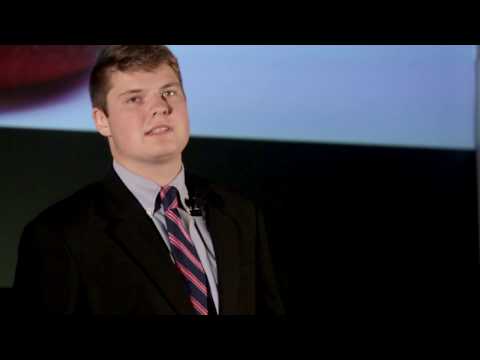
in the day when I want to talk to you
guys about is our foundations the things
that make us who we are as individuals
and there’s many different elements to
that but what I’ve learned in my own
personal life and the stories I’ve heard
from others that it actually really
boils down to our memories our memories
are what truly makes us who we are and
I’m going to tell you a little about
myself to kind of get you to understand
that idea so I grew up in Maryland I
actually lived in California eight years
ago and my family moved out there and
through my childhood I was a little bit
of a nerd not going to lie and
unfortunately a lot of kids didn’t see
me the way that you would consider
normal and I suffered a lot of bullying
and harassment from my peers and truly
as I stand here today I’m not ungrateful
for it it may be the confident person
that I am today and but one of the
things that really terrified me was
having those memories in my head they
were painful memories they’re ones that
they became baggage that I had to carry
around with me but the thing was is that
they actually were supporting me and I
didn’t even know it and so when it came
time that my family told me that we were
moving out to California again I was
extremely excited it was a chance for me
to turn a new page in my life and the
reason we were moving is because there’s
something in my family that I like to
refer to as the eight-year curse as my
mother would like tell me it’s a little
bit morbid but I think it’s kind of
funny but every six to eight years for
some reason the company my dad works for
has some major malfunction and decides
that they do not want to keep the
company together anymore so they
liquidate it and slay my dad off they
want to move us somewhere that my dad’s
not comfortable with us living like
tornado country and having my family
already been through one tornado and me
growing up in a southern background my
mother always like to inform me in that
beautiful southern accent of hers that
if we go through another tornado we
might end up on the TV describing what
it sounds like and we don’t want to be
that family so the third reason is
usually because they get bought by a
bigger company and that’s what happened
in this case and so we moved out to
California and now my dad works for n
phase doing solar energy and
so when I came out here my parents had
already told me that I would be going to
Cardinal Newman and it was definitely a
culture shock for me because I was going
to be coming from a public school with a
thousand kids to a Catholic school with
around six to seven hundred and so I was
terrified of how I was going to find my
place here and I had that baggage with
me and I didn’t know how I was going to
handle it because it was going to play a
role in how I would project myself into
the outside world so I went to Miss
Fuller’s office on my first day of
school and I asked how can I get
integrated in the human community what
sport can i play and it can’t be a sport
with hand-eye coordination because I
have none so she told me to do cross
as you can see by this beautiful picture
of myself which I have to say looks even
better on this gigantic screen it was
not easy it was quite painful honestly
and you can see that through my obvious
sweat and tears so that is actually here
at Colonel Newman on our lovely two mile
course which is not that lovely but
cross-country actually opened a door for
me that I wouldn’t even realize it had
it’s where I created numerous memories
that I will carry with me to the very
distant future and they will be there
for me in times of need and so in all
honesty I have to thank miss fuller for
sending me to the cross country team
because I wouldn’t be standing here
today so today what I want to talk to
you guys about is how do our memories
make us who we are and in turn allow us
to connect with each other so one of the
movies I watched for my research was
these five guys I don’t know if any of
you are aware who they are but they are
the personified emotions of a girl of 11
year old girl named Riley who lived in
Minnesota and it’s from pixar’s
animation movie inside out and Riley
moved from Minnesota to San Francisco
something I can quite literally relate
to because I moved from the east coast
to the west coast and she was terrified
of trying to figure out who she was
because she had those core memories the
memories from her childhood growing up
in Minnesota that made her who she was
and she was terrified to let go of them
terrified to have to make space for new
and so as the movie continues on she’s
begins to lose who she is because she
doesn’t know how to integrate into this
new life and she attempted running away
I did not attempt that I like shelter so
I found her way to get ingrained here in
the community but kind of Riley’s
attempt to go home made me think about
that concept of home and how that plays
a role in making us who we are so I
listened to a song called house that
built me by miranda lambert it’s a
country song and in the music video she
talks about her home and how it made her
who she was and she actually goes back
to her home and she knocks on the front
door and the person who lives there now
answers and she says I don’t think you
know me you probably don’t but the
handprints here in the cement on the
front steps they’re mine and as the
music video continues she goes to the
house and she goes through those core
memories the things that really make her
who she is as a person and goes on to
actually explain how she’s actually put
those things into her music into her
future life how she’s come to find
success and at the end of the music
video she leaves the house and she kind
of its this recognization for her that
she knows that those memories are there
for her but she has to move on but they
are part of who she is so I begin to
think well what if we didn’t know who we
are what if we lost who we are what if
we couldn’t remember and so I began to
look at Alzheimer’s patients Alzheimer’s
patients for those who don’t know what
Alzheimer’s is it is a generative
degenerative brain disease that causes
you to begin to forget who you are
memories or experiences and it’s a
breakdown and so I actually got to work
personally with Alzheimer’s patients
through my Eagle Scout project and I
also listened and interviewed other
people for their stories with who had
loved ones with Alzheimer’s and one of
the common things that I found in almost
every Alzheimer’s patient is frustration
Alzheimer’s patients actually know
what’s happening to them they understand
that they are losing who they are and
it’s frustrating for them and so what
happens is when their family members
come to try to visit with them it’s
actually traumatizing for them because
they know that their loved one is
forgetting who they are and that’s very
hard to do with because you try to see
yourselves in
we try to see ourselves and others and
so when you go to that person and they
don’t know who you are it’s traumatizing
for yourself but it’s actually really
more traumatizing for them and it
creates frustration for them because
they can’t remember who you are and in
that frustration it usually causes an
upset for the family member and they
leave the room and see that disconnect
is what’s the issues because our
memories help us connect with each other
they’re the stories we share with some
of you with the people who are sitting
next to you and your friends and family
it’s how we connect and so I begin to
wonder what would happen if we lost that
connection if everyone began to forget
who they were and we couldn’t connect
with each other what would happen and
like how would society Salida generate
if we could no longer connect and so I
looked at a quote by Elie Wiesel it says
without memory there is no culture
without memory there would be no
civilization no society no future for
those of you who don’t know Elie Wiesel
is actually a Holocaust survivor in fact
he actually spent a majority of his
childhood in one of the worst internment
camps in during the Holocaust at
Auschwitz and he endured some of the
most terrible memories in human history
he was a part of them he actually
watched his father died in the
interminable an important part of
society is amazing it really goes to
show that memory is a necessary part of
who we are of what it means to connect
with each other it’s important it’s part
of society it makes us whole it’s how we
connect our stories spread across the
globe and they make up what society is
so when I looked at this quote I began
to wonder well if society was to
actually have a breakdown since it is
dependent on memory what what if I take
a look at history books so I’m sure we
all love to read history textbooks we
all have them and love to lug them
around but I thought in a terms well
what if I took history textbooks and
instead of just reading them as records
what if they were stories what if they
weren’t simply just someone who wrote
something down but stories passed on
from ancestor to ancestor to grandchild
that were shared throughout the world
and that shape
what humanity is today and so I decided
I was going to look at a society that
did not have that collective memory so I
read the book the giver some of you may
have read this book already but for
those who haven’t I do recommend you
read it but the giver covers the story
of a society that does not have access
to this collective memory they don’t
have access to a motion in it’s because
they lack access to that collective
memory so every din morning when the
people wake up in this society they take
this injection and they’re told that it
actually prevents them from being able
to express emotion when that’s really
not the case of what happens it blocked
their ability to access that collective
memory of society that things that have
shaped humanity what it is so it’s this
very bland society they see things in
black and white they live by very basic
rules and they’re devoid of conflict and
there it’s described as a utopian
society but that’s truly not what it is
it’s actually a fake utopian society
that lives in dystopia because it lacks
access to memory and there’s a main
character in this book named Jonas and
he’s what they call the receiver of
memory the person in the society
responsible for holding all the memories
of society the collective ones that were
lost before we transition into these
communities and so what Jonas realizes
as he begins to experience these
memories he see ginz to see things in
color and see things for what they truly
are and realizes that no one should be
devoid of this no one should have to
live in a world where they don’t have
access to the memories of collectiveness
of society to be unable to connect with
each other in ways that are unimaginable
and so what he does is he escapes the
society and in doing so releases the
memories back of the world and you have
to kind of visualize it in the book but
if you watch the movie you actually
begin to see the characters it brings
tears to their eyes as they slowly begin
to see in color again it’s because
they’re actually getting access to the
things that they forgotten for so long
that allow them to connect with their
loved ones allow them to connect with
their friends the people around them the
things that shape who they are and so
what I want to leave you with today is
remember your memories I know that
sounds funny but give me a second I’ll
bring it back round remember your
memories because they truly do make
who you are there how you connect with
your friends your loved ones there the
stories that you make in your life and
some of you those stories will only go a
short distance and others they will go
around the globe your stories will be
the stories that are passed down to the
next generation and the one after that
that will continue to shape humanity for
what it is so what I leave you with
today is that your memories will serve
you when you are called to answer the
question do you know who you are and do
you know where you’re going thank you [Applause]