
I am an extremist I am an extremist
because of literature that I read
because of software that I use that
promotes privacy and anonymity online
because the literature that I read
explores topics in open and free
computing because government agencies
around the world label countless groups
of people just like me
because of what we use to browse the
Internet and what we use to check our
email when I stumbled across a cyber
security weakness at my high school that
somebody could have used to take down
our entire school district’s computer
infrastructure I couldn’t do anything
about it I couldn’t tell anyone it
existed or even how to fix it because I
would have been expelled or even charged
weaknesses like this potentially still
exist to this day when my father
introduced me to the computer at a young
age as so many parents did with their
kids knowing full well that it was the
future it was the latest frontier in
human discovery that was bound to swell
I gained an exposure into how these
technologies not only make our world go
round but how they’ve enabled us to
explore new worlds together I want to
explore with you a movement that is
confronting the largest privacy
violation in human history it’s called
open source software I want you to be an
extremist I want you to join me at the
age of three I had memorized the
keystrokes in order to mount the now
non-existent floppy disk drive in order
to try my hand at spelling and math
games on the family computer the age of
eleven I had discovered code and Linux
the pillars of which have shaped some of
my utmost core beliefs code itself is a
series of instructions that we give a
computer in order for it to complete a
task we then hand this code out in a way
that’s easily digestible as software
but just as we’ve been able to forge and
shape masterful pieces of technology
using this mysterious and unwieldly
cryptic medium that is code we’ve been
able to lock each other out of that same
mystery using those same unwieldly and
mysterious tactics we write code as a
method of communication like a language
yet it’s unintuitive it’s full of
numbers and values that we can’t easily
understand it’s because we’re not
talking to another human being we’re
talking with a computer let’s imagine
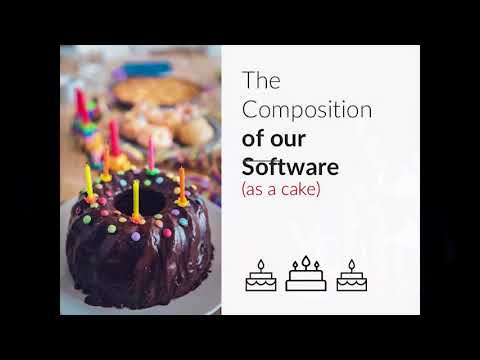
that software is like buying a cake cake
has ingredients like butter sugar salt
software has ingredients too but imagine
if you walked into the grocery store to
pick up a cake and the baker wouldn’t
tell you what’s in it what’s more what
if it was illegal for you to find out
software has ingredients – adding a
friend shopping online these are
software ingredients these are easy to
taste and that scenario is a closed
source philosophy now imagine when you
walk into the grocery store to pick up
your cake the ingredients they’re
labeled clearly on the back we’re
allowed to inquire and challenge what we
can consume in our software just like we
can today with our food this is an open
source philosophy it is the spearhead of
a movement designed to defend and
protect the way we access the single
largest collection of information that’s
ever been gathered on earth the internet
how many of you used an alarm clock on
your phone to wake up this morning how
many of you use a GPS app from time to
time to get around how many of you
bought your tickets for this event on
our website that’s all software software
brought you here in one way or another
if you can imagine where software has
brought you tonight can you imagine
where software has brought you your
entire life
software powers nearly every aspect of
our lives
it’s amazing the tools that we’ve
created together are beautiful but
there’s a dark side that isn’t beautiful
ask yourself how do websites that don’t
make any money off of you that don’t
cost you any money like social media how
do they make any money at all
they make lists lists upon lists of
information about its users are names
birthdays genders where we go to work
which coffee shop we spend the most time
at I’ve always thought it funny that my
mom refuses to tell her friends her
birthday but she tells Facebook this is
just one of a multitude of examples of
when a company on the internet takes the
trust that we give them for granted now
this information it’s being compiled
into advertising data marketing data
shopping and social trends monitoring
popular opinions voiced on the Internet
the thoughts that are on the minds of
the people if we made a list of some of
your Google searches what would they
look like what would you look like would
I see fear what I see curiosity would I
see joy imagine what kind of profile we
could draw a view as a person if we had
100 Google searches or a thousand or
every Google search you’ve ever made in
your entire lifetime well you and I
don’t have access to that kind of
information but someone does they know
what to do with it they know how to make
it work for them so how do we check
what’s in our software like we do with
their food we look for the open-source
license it’s like an FDA approval stamp
if you don’t see the open-source license
we can’t see or taste all the
ingredients we don’t know how they can
harm us
we have open-source web browsers like
Mozilla Firefox open-source search
engines like DuckDuckGo these are things
that are all freely and readily
available at our disposal we just have
to start using them now imagine you have
started using these tools what does our
portrait of you look like now now it’s
blurry the colors they bleed into one
another and soon it doesn’t look much
like a portrait at all and this is now a
painting that cannot be used by someone
trying to steal your online information
open-source proves that we’re better
together that collaborative technology
can’t hide what it does from its users
but it goes beyond software it’s a
philosophy it’s the way we use it and
the way we think about it and our
ability to build oftentimes moves faster
than our ability to look inside
ourselves sometimes our appetite for new
technology moves faster than our brains
but the honest truth is we cannot
contain technology we cannot contain
advancement we cannot contain progress
so why does progress have to sacrifice
our information why do companies and
lawmakers think they can contain our
right to privacy where does this bring
us to a duality of action or inaction we
can keep using closed source software
and keep having our information taken or
we can use open source software and keep
our information safe
Please follow and like us: