
hello everyone welcome I think most of
my introduction has already been done by
by Martin as you said my name is Jasper
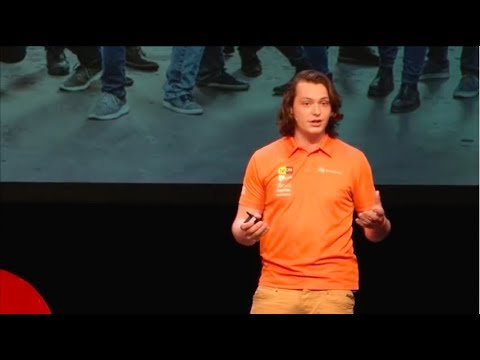
Hamish I’m 22 years old and now I’m
working on the new on solar team I
completely stopped studying for a year
and I have to be part of this team and
today I will talk to you a bit about how
it is to be on this team so here you
have our team there you see me I had
quite some longer hair a couple of days
ago but here we are we are a team of 16
students and with the 16 of us we design
and build a solar-powered car with which
we compete in solar races we all have
different backgrounds we all are
students from Delft but we have
industrial design students or aerospace
engineers or electrical engineering
students so almost every study from
Delft has someone in our team and we all
mend different functions within the team
as Martin said I was the aerodynamicist
so I took care of the aerodynamic design
of the car and we have electrical
engineers we have people responsible for
the marketing and for the public
relations so we really have everything
and what I think is special about this
team is the mindset we all work
full-time on this project we stop
studying for a year and a half and when
thing when things get busy we really
work work weeks of 80 hours and for the
entire year we get to have 12 days off
and what this means is that we work
really hard on it but we decided
ourselves to do that we’re a self
guiding team we decided to working terms
and there’s not really anyone telling us
what we should do
that doesn’t mean obviously we don’t get
any advice because from the old team
members we do get a lot of advice we’re
all students at Delft University of
Technology but building a solar car
isn’t really something you learn during
your studies so we do get a lot of
advice from old team mates they come by
I think every day there is at least one
alumnus coming by the office just seeing
how we are doing at that point and we
also organize design
reviews in which we present the design
we have made so far and then all the
alumni come by and just give us tips on
hey look at that you haven’t thought
about that because they have already
seen those problems that we are facing
right now and I think that’s a really
great extension of our team of 16 to
have all the old team members behind us
helping us to win the next race again so
what do we do is that we raise the solar
cars and we do that in Australia and in
South Africa we started participating in
Australia in 2001 and that really is the
world championship of solar car racing
and the first time we participated we
wanted already and since then we have
participated ever since as Martin said
it’s a two yearly event so there’s one
year without a world Solar Challenge and
then in 2014 we decided to participate
in another race in that year that has no
World Solar Challenge that turned out to
be South Africa and what really nice
about that is that in the year that we
are participating in Australia we have
to build an entire new car and that
takes a lot of time and that doesn’t
give us a much time to do all the
research projects that we would like to
do but in the South Africa race we don’t
build a new car we use the old car from
the old Australia race but then we do
have the time to look into all those
research project we don’t have time for
we’re building when building the new car
meaning that the next car we build for
Australia has improved even more well as
Martin said our history is quite
impressive about this we’re really good
at this we participated in Australia
eight times and we won six out of those
eight times and came in second the other
two times and since we participated in
South Africa we’ve won both times also
so to say we are really the best solar
car racing team in the world at this
moment and then looking at that history
and the theme of today discover Phil
reflects the depth we really don’t have
any room for failure in Australia if we
don’t win to us it would bit feel like
that we have lost but obviously we can’t
really think that everything we think of
goes exactly as we planned you can’t
expect that so in the design process
there is a lot of room for
failure so that can feel then and not
during the race yeah before going to the
design process I’m going to talk a bit
about our working method is that we use
scrim you might know it you might not
and it basically means that you look at
all the tasks you need to require to
build a solar car so you should have a
good suspension you should have a good
electrical system and then we start
breaking down all those tasks into
smaller tasks and we keep doing that
until you have bit size to do is that we
write on post-it and put up on the board
an example could be that you want to
have dinner and therefore you have to
get your groceries and then you have to
cook your dinner that would then be two
tasks in order to complete the dinner
tasks and then to get your groceries you
can break it down even more and you can
say ok I first have to go to the
supermarket then has to pick my
groceries I have to pay them and then I
have to go home again and then you have
bite-sized tasks to do as we call them
and that allows you to work in a very
structured way and also another great
thing that this allows you to do is to
finish each other’s tasks because the
workload isn’t that evenly distributed
throughout the entire year and sometimes
some people have just much more work to
do than others and every morning we
stand with each other at these white
boards and just explain what we’re going
to do today and if someone is going to
be very busy that would mean that
someone else can do some of his tasks to
evenly distribute the workload and as a
team to be that dynamic that really
greatly increases the efficiency of you
working as a team on the goal that
you’re going for but now back to
designing the designing of our car
really starts with the rule book every
new edition of the race there is a new
set of rules that our car should be yeah
should complain to and what they do they
really change the rules quite a lot
every year so that the previous car
simply doesn’t comply with the rules of
the next race and the reason they do
this is to keep pushing pushing us to
think of newer and better and smarter
ways to get faster every race and
another reason why they do this is
because we keep getting a better at it
and the technology keeps getting better
and they don’t want us to be able to
reach it speed limits of the public
roads we drive on so that’s another
small reason here you can see a big
change at first it didn’t really matter
and then they said in 2015 you have to
have four wheels in your car might not
sound it’s a big change but for the
entire concept and building up of the
car it really is big for us this year
the big change is that from six square
meters of solar arrays that Oprah views
cars have or even more we’re only
allowed to take four square meters so
the entire car will become even smaller
and gives us a bit more room to play
around with the design and I think it
become very interesting when we know the
rules
we could start brainstorming and
thinking of different concepts that fit
within those rules and then we quickly
start analyzing all those concepts and
in the beginning we had we had hundreds
and you can easily see that that one
doesn’t make sense and that one doesn’t
make sense in easily cross them away but
in the end you you end up with maybe 10
or 15 pretty reasonable concepts and
then we start analyzing them yeah as
fast as possible because you don’t
really have time to get into detail of
all those 15 concepts so you have to do
yeah use rules of thumb or really
calculations that don’t go into too much
detail to calculate what the performance
will be of that concept eventually this
year we ended up with two concepts that
were sort of inseparable you couldn’t
really see why the one should be better
than the other one and it felt to me
like a bit of a gamble which one we were
going to choose but in the end during
the process of designing it in more and
more detail we actually notice that we
did make the right choice and we have
chosen very great concepts and I think
something interesting to tell us how we
make decisions in for example choosing a
concept or how do we make decisions
during the designing of the car and we
do that using Racing minutes I just give
you an example for example I is
aerodynamic engineer I want the wheel
covers to be 2 centimeters thinner that
would mean the car would have less
aerodynamic resistance so let’s drag as
we call that and that would mean that we
could reach the finish line faster but
now the suspension which is in
that wheel cover should also fit in that
smaller space
and we might have to add metal to have
the suspension still be able to
withstand all the loads that it should
that would mean for example that we add
the kilogram of weight in the car so we
then choose for a faster but heavier car
or slower but lighter car so that’s a
very hard decision to make and then we
turn into racing minutes so we have
rules of thumb saying okay for example
if you reduce the drag by a certain
amount you reach the finish line ten
minutes faster so over 3,000 kilometer
you’ll be ten minutes faster at the
finish line and similarly we look at
okay if you add a kilogram to the car
you would reach the finish bond three
minutes later and then it’s just a
simple sum you say okay ten minutes plus
minus three if we go for the heavier car
with less drag we are going to reach the
finish by seven minutes early and that’s
how we make decision in the team and it
really is sort of universal language
with between the disciplines in the team
that we can all agree on the same thing
because we have the same roll on that is
to reach the finish line as fast as
possible then when we have chosen the
concept we really dive into the detailed
design we now have only one concept left
and we can get into all the details
first it is important to know who the
drivers of the car will be so we measure
everyone from the team
they’re all just team members the
drivers and yeah in essence the three
smallest team members day become the
drivers the way isn’t that important
because the weight is filled up to 80
kilograms but I mean the size of you is
very important for the aerodynamic
design and well obviously I’m not being
a driver I’m I’m too relaxed for that
but then in the end we end up with the
entire car drawn in 3d so all the parts
all the components have been drawn in
this in this CAD model and then we can
start producing those parts whereas the
biggest one is the carbon body of the
car so we have the mold and then we
layer carbon fiber mats into those molds
with resin to create a very lightweight
and strong body of the car and it’s
actually kind of similar to paper mache
so you just layer
the things and instead of using
newspapers and glue you use carbon fiber
and special resins this production is
again point where the team should be
very dynamic because we have five team
members now going into full-time
production they leave our office in
Delft and as as I just said we’re doing
that in Zwolle right now in the polymer
Science Park that’s where we are
producing the car and five teammates now
left our office and they are now doing
something completely different than what
they were planning to do in the
beginning and yeah again that that is
something very important we think just
be dynamic and be at the point where you
should be or where you are required
instead of just clamping yourself to the
pre-assigned role you had when you enter
the team during this production phase we
can already start the testing in the
Netherlands here you see our testing
mule which is just an aluminium frame
and it’s really valuable to us because
now we and have the possibility to test
the suspension and the electrical system
even before we have the carbon body
finished so we’re producing that right
now but we’re also already testing parts
right now that we have and secondly if
someone brake if something breaks then
we would ruin this aluminium frame and
we wouldn’t ruin the carbon-fiber body
we’re creating because that takes three
months to make and we really don’t have
time or resources to make another one so
that’s why we use our testing vehicle
which is named Benny over here and then
in the end we yeah the carbon body is
finished and we get to finalize the car
and then also we test that in the
Netherlands we tested at large ovals
where we can just drive constant at
speeds of 100 kilometers an hour because
that is the most realistic racing
scenario for us just constant speeds of
100 kilometres and furthermore this is a
nice moment for our drivers to get to
know the car it’s pretty different than
driving a normal car it’s very
lightweight all the weight is at the
same side of the car so it’s really
asymmetrical and this is great for the
drivers to yea get to know the car then
in the end when the race comes near we
pack up everything and we move to
Australia and there we have several
weeks again to do some more testing
we also take the time there to practice
or protocols what you see happening in
this picture and with that I mean for
example changing a tire or rotating the
car or lifting the solar panel that
things that you can really win something
compared to your opponents if you do it
fast in South Africa we have clocked
ourselves changing a tire in one and a
half minutes and we’ve seen our opponent
do it in ten minutes
well that’s an immediate and a half
minute wind that we have onto them and
that’s why we really yeah train that a
lot I think similar to firmly won pit
stops we just practice and practice and
practice and everyone knows exactly what
to do at what time when for example
changing a tire and then eventually the
race comes near we go through
scrutineering which is the process where
the organisation checks if our car
complies with the rules and then we go
to the qualification where we race it
around the track to determine who gets
to start first and then eventually we
get to start the race race takes about
four to five days four and a half we
calculated and you start in the morning
at 8:00 and then you drive until five in
the evening and where you are then we
just stop put up our tents and that’s
where we sleep for the night and well
yeah then in four and a half days we we
are going to reach the finish line
hopefully first again and yeah as I said
we really have no room for failure here
so when in second would feel to us a bit
as a failure but in a year leading to it
we really do have enough room for us to
fail thank
you
Please follow and like us: