
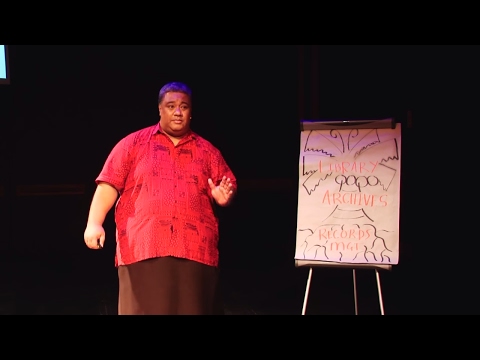
nurture our knowledge nurture our
knowledge this is something I’ll be
seeing quite a lot today because if
there’s one thing that you should take
from today it is that you me we us we
need to prioritize our knowledge we need
to nurture our knowledge master
navigator
Larry reggaeton said the first last and
most important lesson of traditional
celestial navigation is you must know
where your island is you must know where
you came from to know where you’re going
how to get where you need to get once
you lose your island in your mind you
can know is lost the ability of a
society to secure sustain and share its
memory information data knowledge that
has a direct impact on that society’s
ability to travel that society’s ability
to progress unfortunately for us in the
Pacific we undermine our knowledge we
trivialize our knowledge we say hey
don’t worry just remember it let’s
remember you don’t need to spend money
to put systems in place just remember it
okay the opposite is true we need a lot
of investment we need we need to put in
a lot of effort we need layers of
systems to begin to start to nurture our
knowledge that’s why it’s up to you and
me we us if we don’t make it a priority
it will never become a priority and the
status quo will continue
we cannot wait for our decision-makers
to pick this up they’ve not done so we
can’t wait for our consultants and
development practitioners to identify
this as a problem they haven’t done so
we have to do this we have to make it a
priority what do I mean by layers of
systems every Pacific country needs its
government to have a robust records
management regime in place why because
we need our governments to have evidence
of their business records management
supports all arms of government doesn’t
matter what sector you’re in fisheries
forests medicine whatever your sector
you will be making decisions based on
the quality of your information when
your information is questionable the
results will be questionable no matter
how good you are and how good your team
is accurate authentic accessible records
are the bedrock that enables all arms of
government to provide government
services without that thing’s undermined
from that fast pool of information some
of it is permanently valuable that
information must make its way into a
repository that’s available for all
Islanders all Fijians now and into the
future that permanent information needs
to be identified by the archives in
collaboration with records management
managers and and agencies they need to
work together to put together policies
and management systems to ensure that
this all happens in a systematic manner
so that the rights and entitlements of
the public are guaranteed answer that
the obligations of the state are upheld
are met also at the archives lots of
serious study takes place academics
lawyers
various streams of professionals come in
to conduct in-depth analysis of that
information
people like Derek’s car I met Ally
bridge loud they’ve all written
important books that have informed the
development of Fiji they all come in and
they all produce information product
these information products take the form
of books journal articles and so on and
they’re available for the society in our
libraries our libraries are safe public
spaces where we can all come together
and harvest this knowledge collaborate
use this knowledge to generate new
knowledge that’s all available here at
the library level we need all these
things in place just to start
unfortunately this is the situation in
Pacific Island countries
this is how we treat our knowledge this
is how we trivialize it this is how we
minimize our knowledge don’t worry let’s
remember so it’s up to us you me we we
need to make it a priority there might
be some people who say no you’re joking
or P don’t don’t lie
stop being crybaby you’re just blowing
this up out of proportion okay fine
let’s take a look at some examples now
rule at one time per capita the richest
country in the world they have all sorts
of opportunities open to them
unfortunately they fell on some hard
times then in 2009 their government
wanted to change things they wanted to
roll out a reform agenda they wanted to
know where are we how do we get here how
do we turn things around they were
committed but they couldn’t roll out the
reform they had no records they had no
information they didn’t know where they
were they didn’t know how they got there
the canoe was lost they say okay this is
a problem the real problem for us I’m
sure there are others in the Pacific who
are going through the same thing so they
asked the Pacific Islands Forum for help
they made a submission they said let’s
fly this as a development problem in the
Pacific because we need programs and
resources to address it the front
declined saying you chickie don’t worry
this is illusion processes we have in
place which didn’t prevent you from
dropping off and falling off those same
systems and processes will adequately
address your concern
today told now roof no it’s okay
ironically four years later when trying
to track the Millennium Millennium
Development Goals they issued this
report showing that there’s a lack of
data in the Pacific the very problem
that now route told them there’s no data
where there is data it’s questionable
so they extrapolate they guesstimate
maybe this is how we’re doing in the
Pacific with regards to the Millennium
Development Goals so we’ve spent
billions of dollars chasing this
remember country has said hey this is a
problem I don’t know
all right now real this thing so that’s
the Pacific here’s another example
not a Pacific island country the
Australian Royal Commission into
institutional response to abuse found
that weak record-keeping weak records
management was an enabling factor which
enabled abuse to occur they found that
it enabled abuse to occur they found it
that it prevented survivors of abuse
from proving abuse and they found that
it was difficult to prosecute people the
people who are culpable their reaction
to the problem was to acknowledging they
asked the community give us your
solutions how can we improve records
management to prevent abuse
we have those two examples in the
Pacific this is how we did outside the
Pacific they acknowledged the problem
and trainer try and deal with it
so now rue as an archivist I know
naruse position is correct records
management across the Pacific is weak I
know because I speak to archivist in all
the other Pacific Island countries
trying to emerge and audit with that I
was in the meeting once and a Pacific
island Auditor General was asked to make
a comment and the first words out of his
mouth were 90% I thought he was going to
say 90% of the records were available
but the critical 10% were not available
so we couldn’t do the audit properly nor
what he said he said 90% of the records
unavailable astounding yes rare not so
much how are we going to guarantee that
pensions are legally tied to the people
who hand them inch is there a problem in
the Pacific don’t worry
Toki I know someone who has information
how many
people have had their right to vote
taken from them because of bad electoral
records how many people or how many
cases have been thrown out of court
because evidence files have gone missing
our knowledge is important because it
saved us all these things if we don’t
put our knowledge in place all our
government services suffer if we don’t
make the priority it won’t become a
priority we need to nurture our
knowledge but so far we’ve just talked
about governance the governance
implications of poor knowledge poor
records that’s only half of the equation
the other half is a moral equation is a
moral question so so far here we’re
questioning accountability and
transparency and the efficacy of public
administration the other question is a
moral question about our identity and
the society we want to build for our
children and their children because
quite literally the decision made in
this space the decision made on this
matter
determines how our children and their
children know how they know what they
believe up about themselves how they see
the world around them and whether or not
they are equipped they’re equipped and
emboldened to meet the challenges of
their time or not here’s an example with
respect to
mmm in 2013 we were able to secure about
a million dollars from government to
salvage and digitize VG’s national
audio-visual collection footage from the
40s to the 90s which had not been to
manage over time so they began to decay
they were on the cusp of being lost to
us when we were able to save them this
has implications for culture because as
modernity rolls on parts of Pacific
culture stop being practiced in a date
on a day to day basis once that happens
that particular piece of Pacific culture
the opportunity to revitalize it or to
save it depends on our ability to manage
the recorded version of that cultural
practice if we stop practicing it and
then we don’t look after the recording
of it then we can lose everything
regarding it whatever that it is so this
stuff was saved and put into a media
management system and raw vector vector
Fiji when that 2,000 hours of
audio-visual footage came back home we
were faced with another problem
how do we get it to the people in a way
that’s not an imposition because $2,000
that’s a lot of stuff we’ve got just
dump it on people so partnerships were
made the Department of Information came
to the archives to harvest in a
controlled manner portions of this
$2,000 to then repackage that 2,000
hours into well not that 2,000 hours
parts of the 2,000 hours into a back-end
time program that back in time program
is now in its third season this third
season will be 40 episodes the previous
two seasons 70 episodes and it’s
reacquainting Fijians with themselves
with parts of themselves that they
didn’t even know existed
it’s reacquainting old Fiji all the
Fijians with their youth
or with the youth of their parents and
it’s opening the eyes of the younger
generation the younger generation that
seeing things they’ve never seen before
I’m almost 40 and let’s stuff on this
that I’ve never seen it’s amazingly
powerful italki ministry which is the
indigenous ministry they’ve seen all
these things that used to be part of
everyday life which have are no longer
observed they made a list they came to
us and they harvested the same footage
with the express purpose of going back
to those originating communities to
revitalize this practice there so that
the owners that generators the
innovators who dreamt those things up
they can have them again identity these
are just some snippets
no one account so we lose I won’t be
doing anything there are monuments
enormous matin sienhua vanunu we live as
anonymous when we came in the middle so
lucario Dibango good medium and Ohio New
Madrid eating cotton good my own recipes
Monsanto and nd rajender tomorrow
[Music]
Sheila’s Go Go
access to information our knowledge that
we need to nurture when we enable our
communities that have access to what’s
theirs it builds their confidence builds
their confidence in themselves and their
families in their community builds their
confidence in the state to look after
their heritage and to be able to provide
it to them and then they are then in a
position to be able to consider other
community
our knowledge is a vital resource and a
powerful tool to help us build the
society we want build the nation we know
our children deserve because we’re able
to go back to our knowledge and say use
authentic historical material to
demonstrate that all of the races in
Fiji have been here for a while all of
the races in Fiji
have put their shoulder to the wheel all
of the races in Fiji are building Fiji
eg is theirs
PG is mine Fiji is yours we are all in
the same could look together we are all
pulling paddling in the same direction
when we show heritage in that way it’s
difficult for demagogues demagogues to
get up and say no no you can’t stand
next to you and you can’t sit next to
you and you shouldn’t even be in the
room we can come to people who say or
who use extreme versions of identity
politics to divide us it’s not just you
know our culture our family to make us
feel good about ourselves
these are our building blocks left to us
by our ancestors it’s up to us if we
want to use those building blocks to
build for our children nurture our
knowledge
it supports government administration
make sure that we get the services we
need make sure that we can make sure
that we can hold our government to
account and then it does this as well
helps us know ourselves helps us build
what we want for our children you get
the same reaction when we take out our
outreach projects and we go out into the
community doesn’t matter which community
it is this is the reaction people
recognize themselves people find in a
way it’s a bit sad because people find
validation when they see this external
information because they don’t already
have it with them that’s the power of
our knowledge we need to nurture our
knowledge it’s up to us we can’t wait
for the big decision-makers to do it
they’ve had decades to do it they’ve not
done it we can’t wait for the regional
experts to do it they continue to ignore
it it’s up to you me.we us we have to
make this priority so what can you do
you can make your knowledge a priority
you can make sure that when you do your
work there are proper systems to capture
the information and evidence that you
generate so that that information is
ready for someone else we can ask us how
our schools and our churches and our
social clubs in our Rugby Club so please
keep accurate records don’t just keep
membership lists or financial accounts
we want photographs we want little you
know videos that people make on their
phones gather that stuff up we’re making
this stuff already this stuff is already
being created it’s just not being
gathered and made safe can you imagine
if your social club did that if your
Rugby Club did that that would be an
immense resource for your grandchildren
for their grandchildren make this
personal letter your knowledge also
demanded of your representatives when
they come and they want your vote you
say yeah what are you going to do to
guarantee that our knowledge is safe are
you going to make sure that your agency
its records management is up to scratch
are you going to pursue evidence-based
governance we need to push our
ministries of Finance to fund our
archives and our libraries we need to
build our knowledge stream we need to
push them they usually don’t like to pay
for that sort of thing
they put archives and libraries in a box
called culture even though we operate
across the sector across all sectors
even though we support all sectors they
say no no you can’t be everywhere you
just come here to your little hole and
we put you here and we don’t punch you
because with the return on investment
what was the value generation you know
usual look at idiots like that and say
there’s a difference between cost and
value it’s not the same thing and then
they say oh no no they treat culture as
a derivative of economics but the
opposite is true
economies emerge from cultures you have
to have your culture before you can have
your economics you have to know who you
are before you sell something when you
sell something is to grow and support
who you are
Germany doesn’t have the biggest economy
in the EU by selling French wine Italian
Italian pasta know they sell German
machinery they sell German
pharmaceuticals they saw German utensils
they capitalize on their knowledge I’m
not saying we need to be like Germany no
I’m saying we need to be the best
versions of ourselves because that’s
what we want for our children it’s up to
us you mean we need to make this a
priority now two things can
after this after this event one you can
treat this is entertainment Oh straight
love how all these passionate speakers
in I really enjoyed my time and that’s
the end of it or you can take this to
heart you can have in your mind that you
need to nurture our knowledge when
you’re talking with someone are you
talking about it when you’re doing your
work
are you considering so you have those
two options and if you should find
yourself drifting towards the
entertainment option stop please
and ask yourself this – my children
deserve this – my grandchildren deserve
this nurture our knowledge thank you
very much
you
Please follow and like us: