
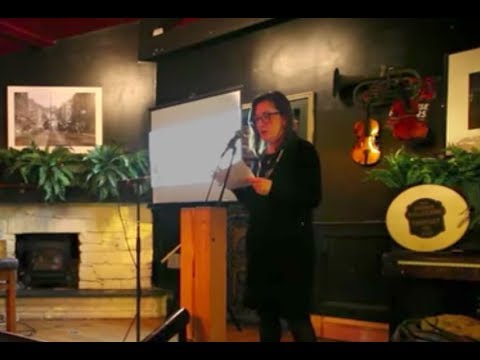
culture in the dark so ah I can see you
all and you can all see me and I’ve
quite me uncomfortable it’s easier to be
in a doomed auditorium waiting for play
or a film or a TED talk to unfold and we
can be still surrendered to someone
else’s story we can lose ourselves in
that moment imagine asleep you inhabit
another place another time a fan scape
there perhaps we can gain momentary
awareness of what it must be like to be
other than ourselves
at a light gate or in a nightclub I love
that feeling where we can just let go of
our bodies and move together in a crowd
to feel the music we can be united in
the rhythm and pace of the performance
and generally it feels just fantastic to
be listening watching or ala Bruce
Springsteen just dancing in the dark but
museums we do it with the light thumb
and I think that means that as well as
providing opportunities for something to
look at we are also providing an
opportunity for all of us to step into
the light and that can feel
uncomfortable and I think it’s cultural
spaces we need to remember that and
perhaps provide opportunities for all of
us to see each other in better and new
and more interesting ways so I’m the
director of a gallery here in Cork the
Glucksman which is on the campus of
University College Cork and I hope some
of you visited if and they’re all very
generally we shell work is described
sometimes is called provoking or
provocative in 2009 we commissioned the
gorilla girl the u.s. art based
collective to initiate a discussion
about gender in art in an Irish context
and
you know that’s wonderful that’s about
platforming the incredible work of
artists like Alva and other artists that
we are privileged to work with when we
present our exhibitions we provide a
space for display and a space for
viewing
so artwork and audience meet so I
thought that it might be worth using
this TEDx opportunity to ask you to
consider what it means to see and to be
seen in the public space of the museum
for me as a curator it means two things
very awkwardly feeling like this is you
have a clicker anyway first I think we
constantly have to challenge ourselves
to present diversity points within the
program and second we have to ensure
that as many communities in our city in
our country and in our critical Ambus
not only have access to but are actively
invited to explore the ideas and
artworks on show it means more than
seeing the art it means seeing the
audiences to museums do it with the
lights on and that allows us to observe
our audiences and to be responsive to
them and know that they in turn are
observing us and looking to see the work
and hopefully the Welcome that they
might be given and sometimes I wonder
what that welcome should really look
like perhaps it is reminding ourselves
that just because our senior visitors
might want chairs to sit on during their
visit it doesn’t mean they don’t also
want to dance our job is not just to
present artwork the challenges the
conventions of representation but we
also need to see beyond the stereotypes
of our own expectations from the excess
we have invited schools to participate
designed to introduce children of all
ages and abilities to the enjoyments and
learning possibilities of art because I
wanted to show that last photograph of
the very young children and because it
was taken ten years ago and those
children are now teenagers and perhaps
some of them might be studying for an
exam and hoping to get into Euston see
so these kids are great
teenagers are a tougher audience and we
were pretty delighted with ourselves
when some years ago we had successfully
completed a project with a group of
teenage boys in a city center school
which is little tradition of pupils
progressing on to third level following
an exhibition to celebrate their work at
the end of the project the principal
wrote me a letter with a letter of
thanks but in truth it reminded me that
the privileged I feel to work in a
university art museum is also a very
strong place of privilege in itself the
principal wrote to me we had such a
terrific day and the whole ambience of
the gallery contributed to this we were
thrilled with a visit to the gallery and
TCC by so many of our parents and
grandparents many of them were in UCC
for the first time I had simply just not
seen the fact that these children are
surrounded by their own communities who
themselves might not have access to the
museum or the University and we needed
to see them to not kind of became my
mantra to an encourage and invite all
kinds of communities of interest to come
to the museum for the first time when
they are with us to ensure that they are
seen and that they are welcomed and
hopefully they might have a reason to
come back or maybe they’ll just take it
and leave it and decide that the clips
one is not for them and our recent work
with children living in direct provision
have made me realize but often they
can’t come back unless we provide
supports to help them get there in order
to see and be seen they might require
something more than just a bus they
might require a me
they might require time to run around in
our beautiful grounds things that we
didn’t expect when we planned the
workshops from the outset I believe we
have a responsibility to enable all
children to express themselves
creatively perhaps by making the
creativity of these children visible we
can spotlight their desire to contribute
positively to Irish society this is the
young artist Emmanuel putting himself in
the frame in the foyer that lets me so
some communities need buses to get to us
the meals when they get there
others need a glass of wine and a place
to relax some communities need our large
lift that fits several wheelchairs at a
time some communities want to hear an
expert or an artist view or just a
different perspective this is the DJ CVG
giving an inspiring presentation about
music civil rights and album covers so
now in our foray we do regular
exhibitions of the work the different
community groups create when they are
with us and by displaying it in a public
space we hope that we are fighting other
people to see the diversity and
creativity that is present in our
society but just not always visible
perhaps seeing is not so much believing
as it is belonging and because museums
do it with the lights on we can really
start to see each other and know that in
this place in our city we are united in
ours [Applause]