
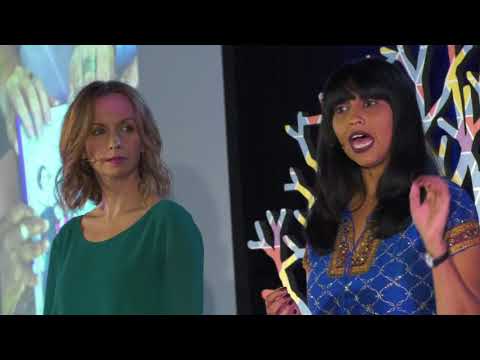
[Music]
where did you get him is he yours is she
adopted she’s so exotic
are you the nanny are you the babysitter
what are you what are you questions like
these four biracial people and their
families are constant they can be
curious and charming they can be hostile
and dismissive they can be aggressive
and hateful but they never really go
away no matter how you ask the questions
the message is clear two biracial people
where do you belong and do you really
belong anywhere so America has always
been a little strange about race-mixing
to put it mildly but this year is
actually a milestone anniversary for
civil rights in America for those of you
that don’t know this year is the
anniversary of loving versus Virginia
actually just this month which allowed
for the first time people of different
races to marry but the important thing
about these laws was that these were not
just about romance or procreation they
were actually the foundation of our
segregationist legacy of Jim Crow laws
and in fact in the final or oral
arguments for the case they were
referred to as the most odious of the
segregation and slavery laws but it
still took another 33 years for
mixed-race people to be counted on the
census in the year 2000 the mixed-race
population is growing at three times the
rate as the general population but as we
know if we remember our racist history
of slavery race-mixing has always been
happening ok so here we have these
pictures of these biracial people we
really fetishize them a lot in our
culture so biracial people are
fetishized for being beautiful and
exotic it almost ignores their humanity
and
the rest of their personhood so on the
one hand we asked them continually what
they are which is a dehumanizing form of
buttering on the other hand we simply
erase half of their identities when we
ask them constantly what they are and
try to place them into one box or
another but it occurred to Lena and me
that what all of us don’t try to do
perhaps is to understand their unique
experiences this very unique lens and
piece of racial justice in America and
so this is where our journey begins Lena
and I together and for both of us it’s
really personal actually so Katie and I
we discovered a few years ago that we
both have this in common that we’re in
interracial families and this is how we
discovered it I had just finished a
piece a video installation called I’m
not the nanny cuz I’m not the nanny I’m
the mom and she heard about it and she
we worked together she stopped me in the
hall and she grabbed me and she pulled
me into her office and said here and
showed me a picture of her kids and I
immediately recognized that they were
biracial so pretty shortly after that we
started to talk and we realized that we
kind of bonded very quickly over the
questions we had as being parents of
biracial people we realized that our own
racial identities were not significant
enough to understand the experiences
that our kids might have so we had a
couple questions that we thought about
we wanted to know do families that are
mono racial that are the same race do
they have the same experiences that we
do and what are those kinds of
differences we also wanted to know how
the world sees our children and sees
sees them in in culture and as people
and ultimately we wanted to learn what
we could do as parents to help better
our children’s identity formation so we
always start at this part of our journey
by explaining our own racial backstories
because obviously Lena and I are not the
same so I feel that I should tell you
that I’m white
I am white my family is from the deep
south but actually that’s significant to
say that I’m white because what I
realized from that is that I’ve never
been the victim of racial discrimination
I’ve never been asked what I’m doing in
a particular neighborhood I’ve never
been asked what are you where do you
belong where are you from
I’ve never felt any of those things but
when I had my children my biracial brown
children it is the most transformative
experience of my life because of how
deeply I see and understand race through
a different lens and here I think it’s
important that I say to you that I don’t
think this is an achievement I don’t
think this is something I should get a
pat on the back for this is not a hero
label but I’m honest with you when I say
that I see race very differently and I
move through the world differently and I
understand that having brown skin means
a thousand different moments in a day
where you feel race so there are moments
now that I understand with my son when
he plays with other boys of color and
there are clear cases of subconscious
bias happening they’re treated
differently there are cases with my
daughter who has been asked so many
times what she is and been told that
she’s exotic that she’s actually
developed a bit of a comedy routine to
respond to it so just a couple months
ago the latest person said oh you’re so
exotic and she said am i endangered like
a white tiger at the zoo just kind of
shut the whole thing down it’s pretty
hilarious so the lens is very different
and it’s something that is earned and
needs to be learned so I grew up in a
very small town in Ohio so small that we
were the one of the first immigrant
families there and the newspaper did an
article about us welcomed immigrants
right and but this came with the
backlash so one of my earliest is
actually walking home from school and a
kid yelling out the bus window where’s
your green card and I answered at home
with my mom where’s yours I didn’t know
that that was meant to be an insult but
this is where our stories differ a
little right so that story illustrates
why I as a brown
woman in in America have been thinking
about race from an early age and it
encompasses everything that I do one
thing that surprised me when I had my
son my son is half white was now I
discovered that I had to really start to
think and learn about whiteness and
especially his white privilege because
that’s something that I never had so
here’s what Lena and I decided to do so
we decided after we met a couple of
times and we had so many of the same
questions like what should we be
learning about our children’s
development what kinds of things should
we teach them how do we prepare them for
particular things do they actually have
a uniquely different experience than
other people and so we decided because
Lena and I are also documentary
filmmakers we decided to take our
questions on the road to film a
documentary and really this is our
journey through the United States at
this moment to ask and listen and learn
about what the biracial experience is
like 50 years after landmark law but at
a moment it turns out that is not at all
post-racial so here are just a few
highlights of our journey can I ask you
a question
describe mommy what color is mommy light
brown light brown okay what color is
daddy skin color
[Music]
if somebody said to you are you black
are you white what would you say beige I
like that answer
you constantly have people not
understanding where to put you not
understanding like when you don’t fit
into any of the buckets but they already
know to exist for a certain ethnic group
so it’s like either boxing at work I
feel like nobody can just like be put in
a box but I put down is hilar my kids
call themselves swirls you have no idea
whether that offends people they like it
[Music]
so Lena and I are both and mixed
marriages Lena’s husband is why my
husband is Caribbean Trinidadian
[Music]
my kids definitely look biracial they
don’t look like oh is that my breakfast
for me this defining moment when my son
was three we live in an area where the
president’s helicopter and plane fly
over a lot are you a dancing chan he
just said out of the blue he said Oh
mommy I love President Barack Obama
because he has a great helicopter is
that why you love him I just remember he
looked right at me said no mommy it’s
because he has brown skin like me I
realize I’m so clueless and what I
should be learning I do like my children
[Music]
[Music]
this was his self-portrait and then in
first grade this became his
self-portrait when we talk about race in
America it’s the strong binaries of
black and white it leaves people like me
really lost when you have a brown kid
[Music]
it started writing down questions like
here’s all the things I want to know how
does racial identity happen how does it
happen when you’re mixed-race
[Music]
it’s a picture I have the Irish mom in
the black dad Lina and I might be very
conscious of race we obviously don’t
know what it’s like to be a mixed race
person it’s like what kind of products
do you this is when I have braids this
is a show me shine why do you put all
that stuff in your hair well it’s
because my my hair is really curly we’ve
got some awesome dolls that say mix
chicks rock and they come in a variety
of shades and tones
[Music]
what are kids experiencing what does
that like for them I think it means like
that we’re different and when I was
growing up I thought the races
race was a bad word what have we learned
on this journey we’ve learned an awful
lot but we’ve learned really about
America’s real cultural ambivalence
about its mixed race reality actually so
we just have four takeaways to share
with you all today and they start when
so disgust disgust is a big word it’s a
word we usually reserved for things like
rotten garbage or life but unfortunately
we found out that some people reserved
this word for families like ours in 2013
General Mills featured a interracial
family in an ad for Cheerios the ad went
viral but mainly because the comments
had to be turned off because they were
so vile few years later Houstonian
magazine feet had the same thing
happened when they featured actually a
real-life family in one of their ads so
Katy and I wanted to follow this notion
of disgust and we met and interviewed
dr. Alison Skinner who’s a psychologist
and what she found was that when
specifically looking at a black and
white couple some white people the same
trigger of disgust happens to them but
here’s our take away and this is a good
thing is that she also told us that this
was learned behavior and we can actually
do something to change it so when Lina
and I learned that we’re like oh that’s
such a bummer we need people like sure
our families were so cute yes so when
you’re in the majority group it’s hard
to imagine and appreciate how much a
positive portrayal of yourself or really
any portrayal at all really matters to
your development as a person in your
self esteem so it’s been almost 40 years
since the first interracial family
appeared on American tell
vision that was the Jeffersons for those
of you paying attention but since then
there are actually very few normalized
portrayals of biracial people and
interracial families just doing their
everyday thing and importantly we’re not
talking about sexy interracial romances
we’re talking about families and
children and here’s why that matters
actually we met a lot of kids when we
were making our movie as you can see you
saw some of them and they don’t see
themselves portrayed on American
television and in pop culture and in
media and this is really important
because we know from many years of media
research that media reflections of
people really matters not only in
normalizing the experiences of the
people who are portrayed but the
experiences for all of us to normalize
their existence and with connection
comes the ability to empathize and
understand and that is the anti disgust
so mixed mulatto swirls one thing that
was unexpected that we learned was that
language becomes very important to the
mixed race identity the first term that
was used in this country to describe a
mixed-race person was the term mulatto
some people really shy away from that
term given the legacy of slavery and its
history others we found other biracial
people are reclaiming that word and
taking it on with the sense of the
oppression but also the triumphs that
come with that one thing that we learned
that Katie and I learned as parents and
as a culture that we do not if we force
our kids to pick one identity over
another we’re actually creating harm to
them we’re giving them stress and we’re
giving them low self-esteem so we cannot
pick and choose the words that our kids
or any by racial person uses to identify
themselves so here’s the really great
news so even if we mess this up
and parents mess up a lot of things
right so even if we as parents and as
the culture really don’t get this right
biracial people actually have
superpowers that inspire us so we
learned from psychology scholar dr.
Sarah
gaither who was also biracial we learned
through her research that biracial
people actually show less racial bias
than the rest of us they have racial
identities that are fluid and flexible
they’re able to maintain different
perspectives they are strong and they’re
resilient
so another thing Katie and I while we’ve
been going through this journey
a white woman a brown woman we learned
some good things and we learned some
not-so-good things what we did discover
is when we were contacting people to ask
them to be in our film
I was contacting the people of color and
Katie was contacting the white people
this unconscious bias and subconscious
bias went so deep that when we were
sitting next to people as they were
being interviewed I would sit next to
the people of color she would sit next
to the white people so much so when I
had Katie’s family over to my house for
dinner she sat next to my white husband
and I sat next to her black husband but
here we are were two people who are
deeply invested in race we think about
as a practice and we live it in our
private lives and if this subconscious
and unconscious bias is so deep within
us what about all the people who aren’t
thinking about race in this way so at
the heart of it what Lena and I really
hope to do with this project actually is
not to show that we’re experts because
we’re not but really to embrace and show
our real vulnerability that’s one of the
reasons why we’re actually characters in
our own film because our questions are
authentic they are vulnerable and they
allow us to to understand how much we
don’t know
so vulnerability when we think about a
social change project can often be the
most powerful force that we can embrace
because we know that vulnerability is
the language of emotion and the spirit
and humans that is where social change
happens fifty years after a landmark law
vulnerability demands that we care more
about learning what we don’t know then
showing and patting ourselves on the
back about what we do know and that is
the
of our project so I’ll close with just
one story that connects this idea of
ulnar ability and the idea of learning
and change so we were filming with a
group of college students down in North
Carolina and they call themselves the
swirls and this was a group that they
formed to actually find some real
conversation and solidarity talking
about their biracial experience and I
turned to a young man next to me a 21
year old biracial man and I said you
know I feel really embarrassed being
when I talk about race I feel really
self-conscious about it my family is
brown and I am dealing with real racism
in my life but I feel so confused about
it and embarrassed
do I belong in this and he said of
course you belong in it you’re already
in it stop waiting for permission but
the other thing that he said that was so
inspiring actually and so authentic he
said but you have to understand that
your job in any part of a racial justice
movement even this little tiny piece of
it your job is to listen your job is to
be in the back of the line not in the
front of the line at the back of the
table not at the front of the table
behind people of color just like I know
that my light-skinned gives me a
different kind of privilege and I need
to be there too so that kind of
vulnerability allows us to be in
conversations that we would never have
if we claimed that we had all of the
answers or that we’re doing a good job
about understanding race and racism
because we all have so much more to
learn
and we’ll end with this we know that our
journey and our conversation is not
magically going to solve all the issues
around race in America but we hope that
if we can really see people as who they
are they’re genuine selves that we can
change the what are you – who are you
thank you so much
[Applause]
Please follow and like us: