
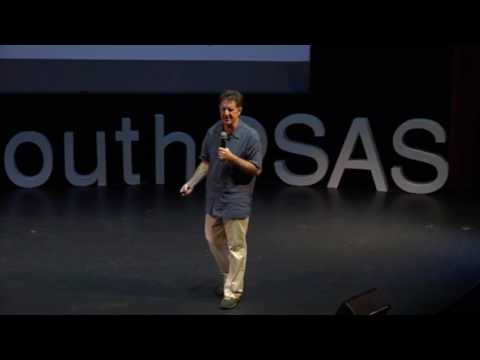
see I’m passionate about teaching
history not the facts dates or names of
history but the trends concepts and
discoveries that history can bring us
normally you can find me working with my
students in my classroom after school
and sometimes during lunchtime and
during class time we’re talking about
and thinking about ways to interpret an
analyzed history with their National
History Day projects now National
History Day otherwise known as NHD is a
competition for students each year
students research a topic of their
choice and then create a project to
compete against other students in the
same category throughout the United
States and now even throughout the world
students are allowed to pick not only
the topic that they want to research
they can also pick the category that I
just mentioned all this is based on a
theme the National History Day puts out
each year for example this year the
theme is taking a stand in history one
student wrote a paper about a Soviet
ambassador during the Cuban Missile
Crisis while other students made a
website about Soviet ballet dancers that
defected to the West sometimes we have
students who will also work on using
their knowledge through a documentary
movie and you can often see that
students are often really interested in
learning about Cold War history as well
sometimes students want to do in a
different way and that way it could be
for example an exhibit and they can show
it in a large three-dimensional exhibit
and students are quite interested than
this one particularly if they have an
artsy background they get to show their
thinking in a new way and the final way
students get to do it is in a
performance where we can see the
students up on stage showing what
they’re working on I got it I got it
there we go no matter which way they do
it they have a choice not only of their
topic but also how it is that they want
to do their project and show it to
everyone and there’s a lot of fun
working with these students and I have
to tell you that when students are
working on these projects there’s a
certain sensation a certain feeling that
that I get when I work with those
students and it’s a little bit that’s
not I’m going to describe it for you
when I was a kid growing up in Colorado
my parents
would often take us up into the
mountains to visit my grandparents that
lived in Coal Creek Canyon and sometimes
when we’re on that drive my parents will
let us roll down the window in the back
and we would put our hands out the
window we would wiggle our fingers
through the cool mountain air and there
was that great sensation and you could
just feel that freshness that silky
sensation of the air of flowing through
your fingers and for me that’s how it is
when I’m working with students it’s an
amazing feeling and I like to pass that
on to my students now working with
history has also given me some other
opportunity as well such as writing a
book I had an opportunity three years
ago I was doing some research on some
World War two soldiers and these three
soldiers the ocupado brothers had an
amazing story and I got the chance to
tell it it wasn’t easy for me took a lot
of work and writing doesn’t come
naturally for me either but I stuck with
it and I had lots of friends to help me
through it as well it hasn’t always been
this way for me to be perfectly honest
with you and in fact if you knew me in
high school you’d be pretty shocked to
hear this story
in high school I was going to be a track
star I was pretty good too and I know
that’s a little surprisingly seasoned
seeing me here today but in high school
my event was the 300 low hurdles and in
that event of 300 low hurdles I was
ranked 6th in the state of Colorado my
senior year and I was getting ready for
the finals races we had to go through a
series of qualifying racers races and in
the last qualifying race to go to the
state finals I was so enthusiastic I had
so much adrenaline that I went down in
the blocks that gunshot went off and I
blasted out of those starting gates I
had so much adrenaline by the time I got
to the first hurdle my steps were a full
step off which when you’re hurdler is a
really bad thing I didn’t have an option
I had to go over the hurdle so I went to
with my left foot first and
unfortunately I severely twisted my
right knee I had to keep going if I
didn’t keep going I wouldn’t be able to
qualify so I kept running that race and
in the race I really twisted that knee
three more times quite severely I won
the race never ran again
and so that was a hard moment for me
definitely the talk it took a lot to get
over that but one of the things I
learned from that is the passion I had
for running and the passion I had for
that event was something that could then
turn and work with students on what I
work on now is changing my passion for
history and working with students on
mentoring passions of their own so this
is how it looks for me
well sorry just a little bit about
mentoring mentoring is this idea about
how we can work with students to get
them further in their life goals and
this research done by the mentoring
fellowship um shows us that it can be
quite effective for example 55% of
students who are mentored effectively
they will go on to college that’s a
pretty good stat 78% of students who are
mentored will also be more likely to
volunteer
ninety percent of students who are
mentored are more likely to volunteer in
the future not only that an amazing stat
I think a hundred and thirty percent of
people who are mentored properly are
more likely than to go on and do
leadership things with their life in
their careers
this’ll amazing stats that’s coming out
of mentoring this is how mentoring looks
for me in this photo you see me standing
with three students this has been
Cristina and Maria and we’re at the
Library of Congress in Washington DC see
these students worked on their project
about a woman named Anna Coleman Ladd
and she was a sculptress from America
who went to France during the war during
World War one
she made face masks with these soldiers
to cover up their injuries my students
particularly been really worked hard on
building a mentoring relationship with
dr. Tarr Tapert on the on the left side
up here on the right side sorry and she
invited them to come to the Library of
Congress when we got there when they
qualified for Nationals she let us go
through the original photos from World
War one that’s an amazing opportunity
for students to have and it’s a memory
that I’m going to cherish for a very
long time so how do we get students
there what do we do to get them to these
moments well there’s a number of pieces
that come into place number one I know
that my students need to practice a
second piece that has to be in place is
they have to have the emotional support
go through all the things that they’re
going to be going through and the third
piece that has to be in place is they
have to be willing to confer and confer
with me back and forth and as you notice
when these building blocks are being put
in place by the teacher and starting to
disappear I’m going to come back to that
point in a few minutes so let’s take a
look at practice I know most of you’ve
heard about this guy Malcolm Gladwell
10,000 hours of practice to become an
expert and what I really like what he
says is this practice isn’t the thing
you do once you once you’re good it’s
the thing that you do to get good and
that’s a pretty important idea because
sometimes we look at people we don’t
realize how hard they’ve worked and
practice their craft to get to the where
they’re going in life what I think about
that as a teacher I think about this
gentleman Sam Weinberg because I don’t
know about you this sometimes when I
practice something I keep practicing it
but maybe I get it wrong like if I take
a math test right you took practice that
math problem over and over and you keep
getting it wrong well I had the same
problem with National History Day and it
kind of went like this Sam Weinberg is a
professor at Stanford University he came
to SAS about six years ago and I was
really excited to work with them very
well-known in his field and when he came
to SAS I wanted him to talk with some of
my students they were working on a
project about the Terracotta Warriors
they had worked really hard they were
for sixth graders very earnest very
hard-working they made a beautiful
beautiful display about the Terracotta
Warriors and I wanted Sam to talk with
these students to see how amazing they
were I wanted him to confirm for me that
I was an amazing teacher Sam told me
that he wasn’t historian he was an
Educational Psychologist he didn’t
really know anything about the
Terracotta Warriors I said don’t worry
you know it’ll work out so he did as I
asked he went over to these four
students and he began to grill them with
20 questions in ten minutes not once did
he look at their display he talked about
their process he talked about their
sources how did they find them where did
he where did they
find those sources how do they follow
all the bread comes along back and forth
it went for ten minutes and as I sat
back I realized that he was then
mentoring me he was teaching me about my
practice that perhaps what I needed to
do is instead of focusing on the product
maybe what I should have been doing all
along here is focusing on the process it
was a great moment for me as a teacher
the next piece I want to talk about is
emotional support so one of my favorite
examples of emotional support in a
mentoring relationship is Maya Angelou
and Oprah Winfrey see Oprah Winfrey when
she was young she read Maya Angelou’s
book Why the Caged Bird Sings and when
she read it she was taken she really
loved that book and as a young child she
couldn’t wait for the moment that she
would get to meet Maya Angelou and
sooner or later she found herself in the
right place in the right time and when
they met they had an immediate
connection and that connection grew for
35 years and all of us here are benefits
of that connection more books more
stories more TV shows or movies as that
relationship continued to spin off
amazing resources for all of us to learn
from so this is how it looks for me I’m
so pleased with this photo because as a
teacher I’m not talking that’s what I
like about it I’m listening I’m
listening to Christina as she talks
about her experience of being up on
stage and trying to share what it is she
thinks about when she’s trying to stay
focused on stage my job in this at this
moment I’m her mentor I’m listening I’m
smiling I’m given emotional support and
I’m not really worried about teaching in
that moment and that’s really a great
moment to be and because I think
sometimes we want to input our own ideas
instead of just being supportive for the
students that we’re working with the
next part is conferring and one of the
best examples of conferring I can think
of is the United States Supreme Court
see Ruth Bader Ginsburg and the other
justices each year they hire attorneys
to come to the Supreme Court and be law
clerks for them they don’t hire people
that agree with them
nope they hire people who disagree with
them so they can really argue so they
can really have discourse and figure out
what is the best law what is the best
decision what is the best opinion that
they can come up with and of course this
works for the justices but it also works
for those lawyers those clerks who come
forward because they have new
opportunities they get better jobs in
law firms that want to hire them they
are more likely to become judges
themselves and in fact three of the
current sit sit I’m sorry three of the
current eight sitting justices on the
Supreme Court are former clerks and
that’s a pretty amazing thing when you
think about all the people in this world
who would love to have a position like
this once that conferring happens all
the ideas are there there has to be a
moment where people take a moment and
think because sometimes all that that
all those voices they can be kind of
confusing so I think the thinking looks
maybe like this right Sherlock Holmes is
mind Palace where all those details are
coming together for all those sketches
and all the details and all the
deductive reasoning and all the clues
come together so that you can put
together and we can put together our
thoughts about what it is we want to do
and where we want to go this is what my
mind palace looks like it’s not quite
like Sherlock Holmes’s it looks a little
bit more like this with these coming in
such as maybe there’s some free ice
cream maybe I could get an Ice Cream
Sandwich somewhere or maybe there is
some sort of weird burp noise and that
just comes up in my head as well but
when I work with students there’s some
other amazing thoughts that come up as
well
such as this thought how can the Vietnam
Veterans Memorial in Washington DC
facilitate communication for those
soldiers from that war and help them
heal that’s a deep thought that doesn’t
just come right that takes hours and
hours of practice emotional support and
conferring with students to get there
another one during World War two why did
French heroin Roseville on decide to
risk her life for art for art what an
extraordinary idea but again I didn’t
come to that on my own I didn’t come to
it instantly it took time and a lot of
thought so when we put this together we
come up with these ideas conferring
emotional support to practice and they
give some off spins as well such as
motivation confidence opportunities for
our students and this is what it can
look like kids working hard earning
medals at national events and sometimes
they get medals they’re very happy when
they do a course and sometimes they
don’t and that’s okay too
because I’m not about teaching kids to
be historians and teaching about being
passionate and working hard but what
they really want to do sometimes you get
amazing opportunities too for example
last year when we were Washington DC we
got to meet Tammy Duckworth she invited
us to come and talk with her she
interviewed all those students and they
all talked with her and what’s amazing
is now she is a u.s. senator what an
amazing opportunity that you get tad but
it’s not without a price right it’s
about all that work they had to do to
get there but there’s one more really
amazing thing that comes out of this
it’s the pay it forward concept and this
is what I like best about mentoring if
you take a look at this photo this is an
event we call the National History Day
Expo we hold it in the library of our
middle school this year for the very
first year we had our former high school
students who had done in HD projects
before to come back and evaluate and
judge the students with their projects
from this year and you can see our
middle school students standing there
and listening eagerly to the questions
that are coming at them it’s an amazing
moment as a teacher to watch this happen
because those students those high school
students are coming from a
place now they’re coming from a place of
experience they’ve been here before they
understand what those middle school
students are going through and what they
are going through and you might be
looking up there and going well where is
the teacher
where’s mr. Elms I’m actually there I’m
sitting in the very back row I’m
relaxing I’m sitting down I got my hand
up though and I’m wiggling my fingers
through history thank you
Please follow and like us: