
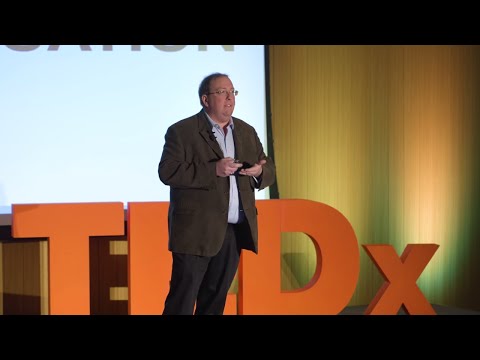
movement I’ve been doing that for about
20 you
trying to build unions around the
country as this chart will show I’ve
been incredibly successful in this
endeavor but when we do it right what we
do well as we build community and that’s
what I want to talk about tonight I want
to talk about how we can move past fake
news and embrace civility I want to talk
about how we could find ourselves some
hope in a divided world I want to talk
how we can make things better and one of
the things that I think is facing us
today is a challenge is a decline in
mediating Civic institutions let me say
a little bit what I mean about that to
be ridiculously simplistic the world as
it is and the world as we see it aren’t
the same thing right we look at the
world through lenses through mediums
that filter what is to get where we are
and these mediums and of course you know
the latin plural of medium is media are
no longer serving a shared civic purpose
like they used to they are no longer
serving a shared civic purpose that in
most of human history we’ve been able to
rely on if we can go back in time for
example in the Middle Ages talking about
the church the Pope and kings in the
Middle Ages and Middle Ages Europe used
to battle over who got to a point the
priests because the priest stood up in
front of congregation and told you how
to understand the world think of the
power of that in the Civil War Abraham
Lincoln who’s everybody’s favorite
president and rightly so nonetheless had
to shut down 300 different newspapers
because they weren’t mediating the story
of the civil war in a manner that
benefited national unity in Vietnam
after the Tet Offensive Lyndon Johnson
was heard to say if I’ve lost Walter
Cronkite I’ve lost America I’d ask you
for a moment is there anyone in America
today who has that kind of stature or a
president would say if I’ve lost this
person I’ve lost America I don’t think
there is I don’t think there is any more
and when President Obama stepped down
from office he said he wanted to see the
press curate the news
and this is what he was talking about
and I appreciate the sentiment but I say
good riddance I say good riddance we are
in a democratic society we are
individuals we should not be looking for
hierarchies we should not be looking for
more Cronkite’s we should not care
whether or not we’re all sitting down at
the same time in front of the same
television sets to figure out who shot
jr we are we are better than that as a
society and what we want to do if we
want to communicate with each other
through each other’s eyes it’s fall back
on the oldest means of communicating
that we have the oldest means of
creating mediating civic institutions
conversation and the challenge here is
that conversation is you and I practice
it is not well suited for this purpose
we’ve lost track of the art of
conversation in many ways but it is
possible to do things differently it is
possible to make conversation itself a
civic institution we in the labour
movement do this and this is why I’m
going to draw upon my experience as a
labor organizer to talk with you about
how we use conversation to build
institutions now some of my colleagues
called an individual meeting or a
one-on-one I like the term organizing
conversation an organizing conversation
is what I do when I knock on someone’s
door to ask them if they want to join a
union it’s what I do if someone is a
leader in an organization I want to ask
them to step up it’s what I do when
someone’s having trouble and I need to
sit down and figure out what’s going on
with them the American labor movement as
an institution is built on a foundation
and maintained on a foundation of
millions and millions of individual
organizing conversations so let me talk
a little bit about how a labor movements
organizing conversation is different
from the way you and I think about
regular conversation first it’s it’s
public and I don’t mean by that that
we’re airing dirty laundry or sharing
secrets but what I mean is we’re seeking
a public relationship with people we’re
seeking a public relationship with
people inviting them into civil society
through the media
of conversation a second element of an
organizing conversation is that it’s
intentional we go into a conversation
knowing what we’re going to say to whom
we’re going to say where and when we’re
going to say it and what our goals are
we don’t do that a lot with conversation
we do it in writing we do it with
speeches and we do it in conversations
where there’s a power dynamic right if
you’re going to ask your boss for a
raise you plan that when I asked my wife
to marry me I planned that out but when
there’s not a power dynamic winner is
not an urgency of personal gain we don’t
often out we often aren’t intentional in
having conversations a third element of
an organizing conversation is that it
involves exploration without argument as
everybody knows argument is the death
trap of conversation you all have been
in that place where you have started an
argument and you know even if you’re a
hundred percent right and there are a
hundred percent wrong they’re never
going to say it and if you’re a hundred
percent wrong and they’re one hundred
percent right you’re never going to say
it because you get your back up and once
you get your back up and once you stop
engaging and stop listening you’re not
going anywhere so how do we thread the
needle of having a purposeful
conversation that does something to
engage people without getting stuck into
an argument what we do what we teach as
organizers is identifying people
self-interest now don’t mistake this for
selfishness or self-centeredness those
are two very different things
self-interest is a natural state of
being we all have it it’s an answer to
the question what makes you you what
makes you tick that’s the answer to your
self-interest when you talk to someone
you ask them what they do for a living
you might ask them why did you get into
that and they’ll answer the question in
the labor movement we asked a step
deeper in an organizing conversation we
asked a step deeper what makes you the
kind of person who did that now that’s a
transgressive question right it pushes
someone to answer more than they might
want to it pushes them a little deeper
but that’s what we need to do to have
engagement in this society
we need to have engagement that goes
deeper right now the mediators that we
have in our society are mostly
manifestations of our self-interests but
don’t dig into it we might find a
Facebook meme that we really think is
funny and it may speak to our
self-interest but in no way tries to
address how we got that self-interest or
where that came from and so we ask we
ask questions a lot of the lines of how
did you get to be the way you got to be
what are you the kind of person who does
that that’s how we build deep
conversations in self interest in the
American labor movement the way I know
I’ve really gotten through to somebody
is when they say to me no one’s ever
asked me that before because once you
get to that point then that person
starts thinking and then that
conversation stops being a tactic and it
becomes something that has institutional
heft because at that moment a
conversation becomes mediating and once
people start media once it starts
mediating people start to think they
start to examine they start to
deliberate now the Center for
deliberative democracy in Stanford at
Stanford University has been working on
this for 20 years and I’m going to give
a really brief example of what they do
what they do is they’ll take a group of
people and the first half they’ll call
on the phone and ask a poll a polling
question on a public policy issue just
like any other poll that you get the
other half they’ll invite to a weekend
forum where they listen to experts
they’ll talk to each other they’ll read
the written materials they will
deliberate every time they do this every
time the Center for deliberative
democracy runs this experiment people
end up seeing the world on shared terms
in 2007 they did an experiment in Texas
Texas where they wanted to know people’s
responsiveness to whether or not they
would want pay more on their energy bill
for wind and solar energy so the people
that they just called on the phone and
asked fifty two percent said they would
put and pay more on their electric bill
for wind and solar energy but the group
that they put in a forum when they
deliberated with each other 80
four percent this is Texas we call oil
Texas T right this is what we think of
when we think of Texas in yet when they
had a chance when they had a chance to
shed themselves of the inhibiting
mediators that told them if your fort I
have to be against it when they allowed
their own rational minds to make the
decision they saw the world in shared
terms and this is the final piece of
what makes an organizing conversation
important a deep and abiding faith in
the basic decency rationality honesty
and humanity of all people you’ve
probably guessed which side of the
political spectrum I’m on many people on
my side of the political spectrum like
to think that people on the other side
must be stupid or must be conned in some
way there’s a whole book what’s the
matter with Kansas by thomas frank which
has as its premise that people on the
other side of the political aisle the
white working-class have been hoodwinked
and they don’t know what their own
self-interests are think of a
condescension that’s in that concept
think of the condescension behind saying
how can they think that instead of
thinking how can they think that and
asking that question and allowing them
to deliberate nothing in human history
has ever happened without purposeful
mediating conversation Malcolm Gladwell
rights of the four young men really boys
who led the first lunch counter sit-in
in greensboro north carolina in 1960
these were four friends they lived near
each other in college dorm rooms they
spent months talking with each other
about this they shared every interest
they had with each other they worked on
together they deliberated together they
talked together and then they joined
their self interest in a civic-minded
act of civil disobedience conversation
deliberation action idle chitchat isn’t
going to change the world but a
purposeful organizing conversation can
move people to see their own best selves
I encourage you to go out and practice
this and help other people see the best
selves they can be and build a better
society thank
you [Applause]