
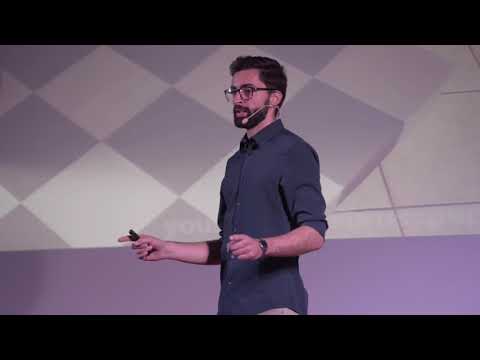
more than one of you out there is an
expert in pain aching disabling intense
neck shoulder back or maybe knee pain
and you have tried message acupuncture
crown therapy and even drugs but times
it seems not to completely disappear and
it could become chronic but its pain
itself the issue the short and shocking
answer is no if we can change the way we
consider pain we can decrease it and we
can increase the quality of our lives I
will show you that it’s not so difficult
true story
a careless worker nail it his foot and
immediately started screaming in agony
once he arrived at the hospital the
doctors weren’t able to remove the shoe
because the man was such in pain that no
one could even touch his foot so they
decided to scan him and this is what
they found a nail in the foot all right
what’s interesting about this story once
the doctors were able to remove the shoe
cutting it away they saw the nail had
passed precisely in the twin details
without any tissue damage
this story can help you understand that
pain is not directly correlated to
tissue or structural damage
if we compare visual system and pain
system we can see they are quite similar
peripheral receptors neurons conduct the
stimulus to the brain the brain
elaborate the information making sense
of these electrical signals leading to
conscious perception sight is a very
precise way of perceiving information
from the environment have a look at your
hand how many details could you
appreciate yet it is very easy to trick
the eye let’s have a look to this short
video
I want you to consider that sometimes
your brain is tricking you into thinking
you’re in pain but Bing is only
conscious expression of how your brain
perceives something dangerous or not and
that’s the reason why sometimes you can
feel pain without any tissue damage in a
study published in 2015 in the american
journal of naval radiology 3110
asymptomatic subjects underwent an MRI
scan of their back what researchers
found is very interesting they found a
lot of structural alteration even in
very young subjects and all these
alteration are irrelevant for the
production of pain for example if you
are 50 years old it’s more plausible
that you have a disc bulge than not even
if you have no pain many times I see
patients suffering from chronic pain
this is the case of a 19 years old girl
that underwent an MRI scan over back
because it started hurting what they
found is a herniated disc and even if
her symptoms were not relevant for that
kind of problem she had been told that
she was in danger that she needed
immediate care to prevent the worsening
of her discs she was really scared I
explained to her that you can have disc
bulge without no pain and that her
symptoms were justified by the complex
biology of pain after three session I
asked her to climb back on a 40
centimeter box and this is what she
answered me
you’re crazy I can ride my legs so high
because of my thing I was starting to
doubt my treatment because of the poor
result but then something happened while
I was explained to her once again how
wrong ideas could maintain her symptoms
she noticed her shoelace was loose and
without thinking she lifts up her foot
on the 40 centimeter box to fasten her
swing I continued talking but my mind
was already thinking what the heck is
happening I stopped talking she put down
her foot we stare each other for maybe
ten seconds and then she asked me so
what’s the next exercise you did it and
she realize it on the day she started
crying after three more session she was
back to her normal life I want you to
consider that pain has changed your way
of thinking your way of acting and the
quality of your life there are many
studies that demonstrate the linking
pain intensity the structural damage is
wrong in a study a symptomatic needs of
NCAA basketball athletes were scanned at
the beginning and at the end of the
season what they found is different kind
of alteration and different kind of
severity the only thing they had in
common was the complete absence of pain
what’s the most relevant thing is a
shift in mind what we call in Italian
come to the metalita regarding pain and
that it’s the most important thing I’m
asking you today to better understand it
scientists and
searchers have developed a
biopsychosocial model that underlines
the importance of taking into account
not only the bio physical aspects of
pain but also the psychosocial aspects
that are so relevant as well in the
production and in maintenance of pain
pain is very complex and very hard to
understand in general population and
even for clinicians so what I suggest
you is always seek out for a health
professionals but the good news is that
everyone can get better and treatment
are supported by strong scientific
evidence for example in the prevention
and the treatment of many
musculoskeletal condition walking has
reported to be more useful that than
many passive treatment such as message
or pain-killing drugs so stay active
avoid passive treatment and over
medication movement can replace any drug
no drug can replace movement in study
121 patients suffering from moderately
disabling pain under when just only one
session of pain
physiology education what they found is
that there was a strong relationship
between cognitive change and pain
intensity or physical activity even when
there was no opportunity to be physical
active such as you right now the author
of this study stated this anything that
change your brains evaluation of danger
will change your pain so a shift in mind
is the first step to a shift toward a
better quality of life I hope I’ve
mine thank you
[Applause]
Please follow and like us: