
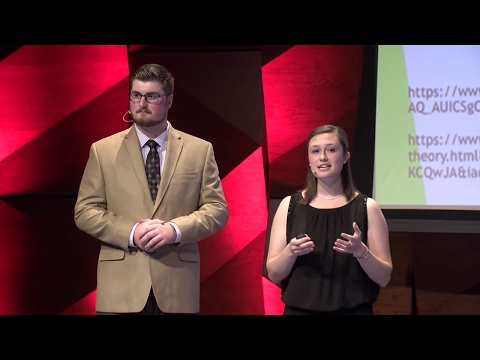
between the two of us we’ve had nine
brain injuries does anyone know what
that means it means that it took two of
us to remember that we had a TEDx
presentation today today we will be
talking about living with brain injuries
and we will be going into how life was
impacted afterward now brain injuries
have lots of long and complicated
definitions that we’re not going to go
into today but we are going to talk
about concussions a little bit most
simply a concussion is a brain injury
resulting from a blow to the head or
body it’s an extremely broad definition
but what we want you to understand is
that a single concussion has the ability
to create life life lasting impacts it
can cause severe brain damage and even
death it’s unfortunate that in our
society the word concussion is used very
nonchalantly that’s part of problem with
an invisible disability if you see
someone with two broken legs
you understand why they’re late for work
that day why they need some sort of
accommodations when you see someone with
a concussion most likely won’t know and
a lot of times when they ask for help
people don’t believe them concussions
are a big issue in our society here’s a
slide demonstrating the amount of
concussions that people sustained and
living with them afterward and you can
see the number two point three point two
million now these numbers are only based
on those people that were hospitalized
with traumatic brain injuries and
Brandon and eyes will go into a moment
have weren’t hospitalized so we fall
outside of this number so you can
imagine how fast this number grows with
people that are living with permanent
disabilities after brain injuries brain
injuries are finally getting more
recognition through the media with the
new NFL protocols and movies and all
sorts of other information it’s finally
becoming apparent just how common
concussions are and how dangerous they
can be
here’s a slide behind us that breaks
down the most common causes of brain
injuries both Brandon and I fall into
these categories Falls motor vehicle
accidents getting struck by or against
something etc I got my fourth and fifth
concussion
during the same football game my junior
year a high school they were about 30
minutes apart so qualified a second
impact syndrome second impact syndrome
is the rapid swelling of the brain and
that’s usually caused by two or more
concussions in a short period of time
the condition is often fatal and those
who don’t die from the condition are
severely disabled so when Brandon says
he has second impact syndrome what he
doesn’t say is that he’s lucky to be
standing here so I saw a doctor a day
after I got my concussions and not his
fault but they looked my eyes and said
oh you’ll be better in a week a few
weeks later I wasn’t better and they
moved it out to maybe a year maybe two
years then probably never my story isn’t
nearly as dramatic as Brandon’s in fact
I got my concussions and some of the
most common ways that you can a
horseback-riding accident a car accident
a bicycle accident and the most
ridiculous of all was walking in a ditch
and when she says walking in a ditch she
doesn’t mean like she fell down into a
ditch she means she was walking and
missed the step and sugar had just too
much but it is no second impact syndrome
Brandon but these seemingly small
concussions were still enough to
drastically alter the future of my life
it doesn’t take long to realize that yes
these concussions caused issues and all
brain injuries are vastly different the
two things brain injuries have in common
are everyone has cognitive issues and
then everyone has what’s called brain
energy issues we’ll go into that a
little later the cognitive issues at
least for me look like me having trouble
in a conversation if I’m having a
conversation with someone it’s hard for
me to remember words started where it’s
going what they said what I’m supposed
to say back I get mixed up and start to
stutter and it’s it’s not a fun
experience there’s a bit of a range
where on one hand people who have
concussions they might have very little
symptoms or they don’t really have any
issues and they rebound right away after
their injuries and on the other hand you
have severe disabilities changes that
last forever maybe their mental maybe
their physical it could be depression
anxiety you might have a limp a stutter
a twitch chronic fatigue or headaches
there’s a theory that we like to discuss
when talking about this and along with
cognition I struggled with reading
comprehension issues and memory but one
of the hardest things to work through is
energy
the spoon theory is by Christine mr. and
Dena and you can look up her theory it’s
a wonderful wonderful discussion about
invisible disabilities but basically it
equates spoons to energy and every day
every person starts with a certain
number of spoons and each activity that
you do through the day costs a certain
number of spoons so before my brain
injury’s I might have had 80 or 90 or
100 spoons to start with in the day and
after each activity in the day I would
lose a certain number of spoons but
after the brain injury I might start
with 15 or 20 or 10 spoons in a day and
if eating breakfast cost one spoon you
can quickly see how a tenth of my energy
is gone by the time I walk out the door
this is a major issue when we’re talking
about brain injuries it’s easy to see
how little changes like this would
vastly change our identities I mean we
all have gone through life our I didn’t
he’s change from things like growing up
or going to college or starting a new
job but for us it wasn’t a natural
progression one day we were forced to
change and ever since then we’ve just
been trying to catch up and figure out
who we are now it’s a little things
you’d never think makes a difference
when somebody hears about something I
might be going through a common thing I
hear is Oh happens to me all the time
you don’t have to have a brain injury to
experience that and while that it’s true
you don’t have to have a brain injury to
fail an exam or okay I’m in a TEDx
presentation it still is it’s the change
we don’t think we’re special or
different or that nobody else goes
through these things
it’s the difference from then to now
that we didn’t have these problems
before and now we do it’s weird to wake
up one day and realize you can’t do
something you’ve never thought about
even doing like walking or talking that
was just natural and now it’s not it’s
really hard to accept and advocate for
yourself that these are different and
you need something different the
acceptance piece is one of the slowest
and hardest parts parts of this program
are Pro progress
I had a really hard time with this
because I was told when I went to the ER
for my second concussion car accident
that I had post concussive syndrome and
I was given a note that said you may
have memory loss and problems taking
exams so I didn’t really think anything
of it and when I started failing classes
as a straight-a student before I you
know some red flags came up but I wasn’t
too concerned because I had had a really
hard semester so the next semester in
the fall when I went back to back to
school and I started failing again I
realized that something is really wrong
and I took the first step to tell my
parents about my poor grades which was
terrifying
and it was then in that moment that I
realized it wasn’t just my grades that
had changed it was my whole life my
personality had changed I didn’t laugh
at the same jokes I didn’t really like
hanging out with my friends it was
exhausting I didn’t want to be out in
society anymore for me the road to
understanding why I was having these
issues was a little simpler because they
started literally the day after I got
hit in the head I was able to put two
and two together and figure that one out
it was hard for me to accept though that
I was having these changes I kept being
told that if I just wait a little longer
I’ll be better so I didn’t really accept
that okay I have a brain injury I just
said next week maybe I’ll be better but
after a couple years doctor finally told
me that you know it it’s time to stop
treating the brain injury and start
learning to live with it
in that moment it was devastating to
hear but looking back it was so
important because I was able to finally
accept that I had a brain injury this
will affect me the rest of my life and I
started advocating for myself so what do
we do now we started to see these
changes and then we start to accept that
these changes might be permanent and
then what what’s the next step for those
of you who are wondering what the super
power is you cannot fly that does
nothing but you can advocate and it’s a
really uncomfortable thing to do at
first it’s not really exactly good
etiquette to walk up to someone and say
hey my name is Lauren and I love cows
and I got four brain injuries what’s
your name again and it’s it’s awkward
it’s really uncomfortable to kind of
adopt a new part of yourself and then
try to insert it into all these facets
of life and that’s there’s a point where
you realize that you have certain needs
that can’t be met in a traditional way
and that’s when you start the journey to
self-advocacy and self-advocacy is not
the funnest
no one looks forward to the first day
class or first day a new job going up to
your boss and saying hey I have a brain
injury and I need these accommodation to
be successful no one wants to be the
oddball most people at least in the
start of brain injuries at least me I
just pretend nothing’s wrong not
bringing up and it really hurt my
success I learned this I learned this
issue the hard way I was almost done
with college and my second to last
semester I was taking a neuro class and
among the normal college student
stresses I had post-traumatic stress
disorder depression anxiety a host of
sensory and stimulation issues and the
icing on the cake was I had just managed
to break my foot in five places now
brain injuries do cause motor skill
difficulties but Lauren’s just
accident-prone
so I crushed into my final exam and I
took it in a room by myself it was part
of my accommodations and about an hour
into the exam I had barely touched it I
was balling my foot was on the table
because it hurt I was covered in tissues
and my professor came up to me and she
checked on me and she did something that
I never expected
she sat with me she asked me how I was
doing she talked about my life and then
she asked me if I would like to have the
exam read to me that change was
monumental not only if I had just gone
up to her and asked her and told her
what my needs were not only what she had
been able to help me with that but she
would have given me tools to be my most
successful self that’s when I realized
that you can’t be complacent and I
started to change aspects in my life so
that I could advocate and then accept
the outcomes of advocacy with the help
from the CSU occupational therapy
department Laura and I developed a group
called the CSU brain injury community
now the goal of this group is to bring
students with brain injuries together
they show them that yes this can be
normal you are not alone and it’s okay
to ask for your needs you’re not the odd
man out here we all deserve the chance
to be the most successful as we can so
with a dream of bringing people together
and a whole lot of rescheduled meetings
we were able to start C
uh Brandon and I laugh a lot mostly
because we are hilarious uh but also
because it’s a way for us to cope we
realized that brain injury isn’t a
laughing matter and that not everybody
can laugh about it but unknowingly when
we started this organization we took a
deeply personal and hurtful experience
and we made a little room for laughter
it’s that laughing it’s the place where
we all come together and even though
none of our stories are the same we all
share paralleled experiences
it’s amazing how crazy and isolated you
feel having a disability that no one can
see and no one else you know has it you
just start to wonder if you’re making
this up is this really happening in your
life but then it took me four years to
meet Lauren who was the first person
that really had a similar situation to
mine and it was just I open
understanding that know I’m not alone
and other people go through this as well
just knowing one person that went
through it with me was it helped me open
up to everybody and be able to advocate
for all my needs when you look normal
it’s hard to accept that things really
aren’t normal up here and that’s part of
the process of growth and how we moved
from self advocacy to advocating for
others we realize that this process that
we’re not alone it’s not just brain
injuries that people struggle with this
so we’d like to do a little activity get
prepared to engage would you please
raise your hands and keep them raised if
you’ve ever had a concussion how about
if you know somebody with a brain injury
how about if you know someone with
post-traumatic stress disorder anxiety
depression fatigue asthma Crohn’s East
and Affleck esophagitis manures MS the
list goes on and on look around almost
all of you had your hands raised this is
a big issue and if you didn’t raise your
hand you’re lucky it’s estimated one in
five Americans live with an invisible
disability of some type and the hard
thing is is they live in shame or
they’re not they don’t know how to speak
up they don’t know how to tell people
what their needs are and they need an
audience
willing to hear what they have to say
unfortunately there’s no easy equation
for how to normalize advocacy around the
country but there are a few things that
we’ve learned over the years that at
least help get us started
first of all ours people need to look
willing to have a discussion about it if
everyone’s either too ashamed or too
uncomfortable to talk about it no ground
is going to be made whatsoever and
secondly people need to understand
advocacy isn’t about asking for charity
it’s a two how I will be most successful
in the given situation I don’t want to
be given free things at a job but I want
the job to give me data in the best way
possible so I can give the most back to
the company brain injuries may have
modified our dreams but it doesn’t make
us any less able to dream and we did
something a little bit sneaky there’s
actually a second superpower that you
all possess but we did not tell you
about it’s the power to see invisibility
not with your eyes but with your hearts
let’s embrace a childlike perspective
and give people the benefit of the doubt
in a world where we demand proof and
evidence so that we know things are the
way they’re supposed to be let’s accept
the fact that maybe we aren’t given an
apparent evidence for somebody’s
condition living with brain injuries not
only taught us the power of advocacy but
it’s opened our eyes to the invisible
world that we live in I know we got a
little serious so let’s end on a joke
how do people have brain injuries say
hello they say thank you
you [Music]