
you
you know I’m going to talk today about a
guild that has existed for ten thousand
years making it the oldest human guild
in the history of humanity for ten
thousand years the members of this guild
worked relentlessly passionately
they worked to give us a better life and
just in the past 50 years it was a very
understated guild it never came on the
headlines it was never in the media but
they just worked quietly for thousands
of years and just in the past 50 years
that guild has just about died out there
are so few of us left that you can
literally count us on your fingertips
I’m talking about the guild of the seed
keepers and it’s important it’s
imperative that we understand why this
has happened a guild that did its work
so beautifully flourished for 10,000
years in the last 50 years it’s gone
away it’s gone and we don’t even know
about it I mean this is the age of big
data the cloud computing and deep dive
how did we miss this so today’s talk
focuses and it’s a tribute to the golden
era of seed keepers it’s also a wake-up
call for us why we should revive this
why you should become a part of this so
to understand why this guild was so
important to us we need to understand
where we are today you know if I go to
the vegetable market today to buy
vegetables the list would read something
like this a kilo of cabbage a kilo of
cauliflower two kilos of tomato blah
blah because the default mode today is
for a variety of vegetable whether it’s
cabbage tomato cauliflower whatever
there will be one variety in the one
type of vegetable in the market
cauliflower means one one type of
cauliflower cabbage means one type of
cabbage so that’s the before so by and
large if you go and see four colors of
capsicum on the shelf that’s an
exception to the rule but just look at
this slide it was published in the July
edition of 2011 in the National
Geographic magazine and it succinctly
captures a research that was done by the
National Center for genetic resources
preservation in the US
who did a survey this was done in 1983
who did a survey of number of types of
vegetables that were available in 1983
for 10 common vegetables and compared it
with what was there in 1903 that was
eight years before that time what was
the variety that was available and in
1983 what was available
the shocking finding was that 93% of the
biodiversity of the vegetables was lost
in 80 years we lost 90 percent the fact
of the matter is like the theme of
today’s TED talk against all odds can we
make a change and that was the question
that was there in my mind in the 70s
when I was doing my doctoral studies in
agriculture I belong to the lineage of
people like dr. Norman Borlaug dr. MS
Swaminathan who ushered in the green
revolution into this country we were the
ones who championed the cause of
industrial agriculture we told the
farmers to adopt chemical agriculture we
told them to use b.a.p urea pesticides
and we were the ones who champion the
cause of using hybrid seeds at that time
to us the agriculture scientists of my
time
our dictate was to create national food
security that is what was our goal to
build to give due credit I think we
achieved that but there was a small
voice in me that kept asking me are we
doing the right thing
avi is this model that you are
propagating is that a sustainable model
for future agriculture this voice
wouldn’t go away it just kept getting
louder and louder and one day I decided
I said okay
to hell with this I’m gonna change my
field of study I’ve changed my field of
study and then for the rest of my
profession I practiced landscape
architecture so I went away from my
original qualification now the one
beautiful aspect about being a landscape
architect based outside the country was
that I had an opportunity to reach out
to very remote parts of the world and
during my travels I used to always go
and meet seed keepers the older
generation of farmers I used to go and
meet them talk to them ask them what
they used to grow in their days I
traveled to almost all the remote parts
of India many other countries and
because that seed keeping was still in
their DNA to my amazement I found that
they’d still have preserved some seeds
like this particular brinjal is a
brinjal that was so common in Bangladesh
just about 20 years ago today he will
not find it anywhere in Bangladesh I had
visited a old farmer in the border state
of Puglia and West Bengal and when I was
talking to him he shared with me a old
dried-up piece which still had few seeds
from it so I went I I kept collecting
seeds and in that I used to share it
with other seed keepers using common
platforms with dedicated like-minded
seed keepers around the world and
whatever biodiversity that we were able
to salvage I collected
that and in 2011 when I came back I had
the privilege of doing voluntary work
with the agriculture wing of the Art of
Living Foundation that gave me access to
our two million farmers across the
country to promote chemical-free farming
and when I started to work with these
farmers I realized how bad the situation
of indigenous seeds was in the country
and that’s when I decided to become a
full-time seed keeper I realized that I
had with me
about five hundred and forty varieties
of indigenous seeds and in the past six
years I tested them for genetic
stability environmental suitability and
purity viability and in the past six
years I’ve managed to actually stabilize
multiply and share a hundred and forty
two varieties of vegetable seeds with
friends farmers and urban gardeners such
as you if I show you some of the let me
first show you some of the pictures now
these are the kind of beans that you
would find in hariyali farms just
wrangler south just see the variety i
mean if you if you wanted even thought
of being a vegetarian a variety like
this will get your juices trickling just
look at these beautiful i’m on these
capsicums of beauty i mean they’re just
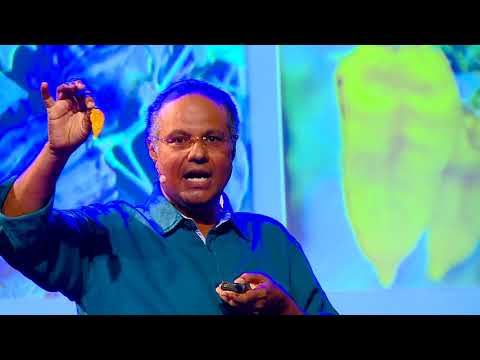
so beautiful this one I will hold it
just by the start because it’s the
world’s spiciest naturally occurring
pepper this I got this from the from our
natural in the Northeast the ordinary
chili in the market that’s about 17,000
Scoville units that’s degree of heat
this one is a hundred and seventy five
thousand one lakh 75 thousand Scoville
units so if I touched it with my hand
after some time it’ll burn my hand you
just look at these Tomatoes they look
like grapes though
they yeah you look at these peppers such
beautiful peppers yeah you look at I
mean there’s the end of the season
bindis have you seen a bindi that’s that
beautiful do you see the colors of corn
we have many many more colors you see
these cucumbers the one on the bottom
left this was called Osaka till about
30-40 years ago it was very freely
available in North Karnataka Andhra
drier parts of Andhra it is a crunchy
apple shaped cucumber with a lemon
flavor you have the one next to that and
the bottom row the middle bottom row
this they call al Luka curry in the
Northeast northeastern states it’s a
cucumber which has got a very subtle
flavor you have the other one which is
on the right hand top corner this was
called punakha curry it was very famous
these were very famous to be you will
not find these varieties in the market
and the beauty is if you just have one
seed you can make a thousand seeds and
share it with your friends in fact let
me just quickly show you some one just
look at the variety of tomatoes those
will be different kind of bindis purple
bindis pink bindis white bindis all
kinds of bindis look at the kinds of
squashes you want to have leaf in your
diet then you have we have got more than
23 varieties of lettuces and mustards
all indigenous they see farmers also use
this as a high revenue income stream in
fact I have one farmer right here Varun
very you yeah this techy boy took a
sabbatical from his IOT space for two
years to do hands-on Manini McGavock
hardcore agriculture and he sold us he
sold these Tomatoes at 300 rupees a kilo
because he was a man who knew how to
market it
he had a storyboard and he gave the
fullest nine yards spiel and he had
people lapping it out of his hand at
three hundred rupees a kilo a farmer if
he gets twenty rupees
kilo in the best of times he will
celebrate and you know you can make a
business model like that now the urban
enthusiasts were what another species
altogether women grew especially women
home gardeners they grew this vegetables
exotic vegetables and they found that it
had a huge social media potential women
started posting pictures of this is a
Japanese Comeau
brinjal one of the tastiest brinjals
that you can find imagine 1,000 likes on
Facebook that’s what you heard that he
will put it on Twitter and you put it on
Instagram I have had people hold Kitty
parties just for the lady of the house
to display these wonderful vegetables
which she has grown at home but beneath
all that take away that Twitter the
Instagram the the Flickr and whatever
there is a very deep service that the
urban population is doing because they
are ensuring somewhere on this planet
these varieties will not go extinct we
can’t do about the 540 we can’t do
anything about the 544 cabbages that
went away but at least we can save these
so it is important that you and I get
together and we somehow create another
new age of the seed keepers and we make
a statement that seeds belong to all
mankind no company no individual can
have a proprietary right on them so I
urge you just because you can experience
that wonderful consciousness of the seed
keepers let’s give each other a
wonderful round of applause thank you
Please follow and like us: