
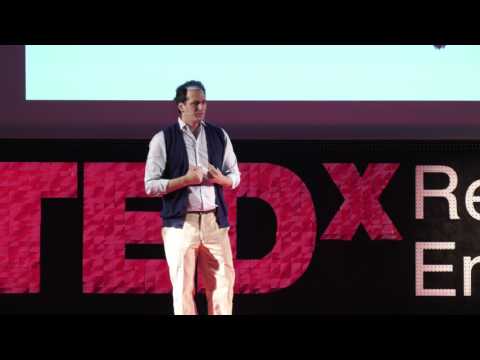
[Music]
[Music]
hello I would like to show you certainly
one of the most beautiful object ever
made by human beings and it’s in my
pocket it might be also in your pocket
so let me show you it’s this this is an
an axe and it is 100,000 years old at
least it is an object that has shaped
societies it has been adapted to the
environment and it is the result of
iterations to design it the subject is
the symbol of what we are going to try
to go through in this presentation which
is the fact that certain objects can
change society’s and the societies are
adapting to the object in which they are
made for the this is the end axe
iteration and it started by changing at
some point and it follows a certain a
certain trajectory and it ended up being
adapted to its own environment the
people who have been using those and axe
are now almost disappear this where
gatherer enter gatherers and those
societies have been living in in our
planet for most of the time much more
than our modern societies and these
groups had certain particularities the
main particularity is that they were
working somehow to three to four hours a
day compared to us were working more
than 10 hours sometimes more the other
element that is very important is that
they were changing their territory very
regularly compared to us were sedentary
and were using the resources of our
territory
and finally the main thing that they
were doing is that they were adding
minimum possessions they were not
accumulating and they were doing that
for they were constructing things for
the common good and this is something
very important there was a common
contributions to what they were doing
now we are going to jump in time again
and go to someplace that is more
familiar to you it’s in Siena
13:38 Lorenzetti painted an ideal
government this painting which is in the
Palazzo Comunale of Siena is divided in
two parts a part that is considered a
beautiful government which is on the on
the right side and the part that is the
consequence of bad government which is
the war what is also very important in
the center of the painting which is
describing what is the good government
it’s there is a rope that goes from the
redistribution to the people and then up
to the power and this link is very
important so I had if I can say it the
chance to be on that side I went to
Afghanistan and I’ve lived there for 10
years when I was in Afghanistan I
arrived in a country which suffered 40
years of war continues war the after
September 11 we have tried to there’s
been a massive intervention with a lot
of money spent the almost the equivalent
of the Marshall Plan has been spent in
Afghanistan the other element that we
could see is that the effect of that
spending has not been what we were
thinking lot of corruption lot of
inefficiency in the aid made the result
of these expenditures we say forced to
reconstruct the country useless so there
was something wrong and we needed to
find what it is so with a friend we
founded an organization called integrity
watch this organization helped and tried
to solve this problem we at integrity
watch try to observe what was left from
the war what was left from the war
was two main elements first it was still
possible to use the concept of social
accountability the fact that societies
when you have a public good the
societies are able to organize at the
local level and they’re able to all
themself accountable
each individual in a society in a small
group can be owned accountable one to
the other the second is the fact that
citizens like you like me and it’s the
same in Afghanistan are ready to share
their contributions to the public space
to the common space and you can use that
to rebuild the society the other element
that was also very important and that
was available at the time this was in
2007 it was you could collect elements
from the reconstruction elements that
were done buildings and other things
using cameras using questionnaires and
communicating them and now I’m going to
explain you how you can use these
elements as weapon of mass
accountability how can you reconstruct a
more efficient country using those
elements and what we did is that we went
to a countryside in a small village in
that village we gathered the population
of the village and we said you can
choose a project that is important for
you and you elect three monitors people
that are going to watch that the project
is actually constructed correctly they
started to do that so they went they
took pictures they use those weapons of
mass accountability to collect evidences
about the quality of the construction do
about the comparison between the
contracts that was given to them and the
realization of those infrastructure and
they found that there was huge
differences so they started to claim and
to say look we have differences we have
a problem and they started to protest
but very quickly they realized that
there was a problem because they had all
the proofs that things were not working
but they couldn’t change it so with a
friend a journalist I told her I
explained her the story and at the time
it was a school
by UNICEF and many of you in Europe are
giving money at Christmas for UNICEF
but then the result on the ground is not
always as good as you think so this
journalist went to that school and took
some pictures took the interview of the
children and of the people and realized
that there was effectively a big problem
but what she did is that this
transmission went live in France at 8 o
clock in the morning and at that point
UNICEF France called UNICEF Afghanistan
and told them look you better move to
that school and shake what is happening
there and resolve it and at that point
we avoid the frustration from the people
who are doing their job to monitor but
we’re not getting the response and the
people those villagers who did their job
in the community and the comments they
realized that it was possible to
actually change things by exerting
pressure exerting their civic rights and
the result of that has been this type of
things project that were problematic
have been solved and we did that over
more than a thousand three hundred
projects we’ve trained thousands of
local monitors across the country in
places where you have Taliban in places
that are more or less calm and the
result also has been that this project
of monitoring have been able to to be
adapted to other domain than just
infrastructure we applied it to the
trials justice we applied it to
extractive industry mining and we
applied it to social services and with
that we gave again a role to the
population things that the government
couldn’t do people could do now I’m back
from Afghanistan and I learned one thing
in Afghanistan that people can change
the world they can change their
environment but there was something new
and I’m French Italian but I’m French
and I thought ok now we have something
new compared to that period it’s this
and I’m sure you have it in your pocket
it’s the mobile phone and the mobile
phones this is a tool that you’re using
every day you’re using it for emails
for facebook for Twitter for other
things but do you think you really use
it for civic purposes this tool is an
extremely powerful tool for civic
purposes and this is the base of what we
call now a movement that is being
developed which is called civic tech and
with a lawyer and a developer we have
developed an application called Vox map
that is trying to recreate the link
between citizens and the government the
collectivity is where citizens makes
contributions those contributions are
sent to the collectivity
which can analyze them and they can find
solutions based on populations input now
there is a problem with that is that our
governments are not necessarily able to
receive those informations so you have
what you had in Afghanistan the same
thing a frustration is coming up because
you send your contributions but if they
don’t reach the government that is
applying them you cannot change things
it’s problematic but today there is a
possibility to actually make the
administration change evolve and adapt
to those new informations that every one
of you can send to the administration
there is a possibility and there is one
rule that needs to be applied in order
to make sure that civic tech is actually
resulting in something good there is
alliteration like the SIL X which is
coming from every one of you to define
what is beautiful and there is another
element is that you should feel that
you’re making a change if you don’t feel
that you will stop using it and in order
to fill that you need to also have new
rules and new government new
administrative elements that are going
to come into applications now we are
living in an environment where we are
actually living in too many virtual
spaces one is the virtual space created
by Facebook and all your connections
another one is a public space that is
created by Twitter and all the tweets
that you read they populate they
populate your environment Vox map is
another one but for this you need to
create really news new rule
new institutions to be able to digest
all this information it’s dense and
there now we are going out from a
society that was governed by capitalism
or neo capitalism where money was very
important the emergence of those type of
tools like Facebook and Twitter are
still or Google are still on the new
capitalist type of part where there is a
look to accumulate not necessarily only
money but data and they are not sharing
the data that they have those big
companies they are keeping them because
that’s their treasure and then they can
share that treasure for money in front
of that you have other movements like
Wikipedia like Vox map like others that
are trying to open the data where the
value the core value to move things is
not money it’s Commons and the value
that you will have is a redistributed
value you try to make sure that people
are we distributing their contributions
and this is going to move and this is
going to create a form of ideal beauty
now if you go a bit further you know you
all know that there is artificial
intelligence coming up it’s there it’s
existing you can apply artificial
intelligence to government’s with all
your inputs your artificial intelligence
is able to actually absorb those data
and use them so our work will change we
will certainly if you’re a lawyer if
you’re a doctor if you have those
professions artificial intelligence is
coming up and is potentially replacing
you and potentially I mean in the next
maybe ten years
so what will be our next job our next
work it will certainly be to contribute
to the Commons this is going to be the
next work that us as living humans in a
certain environment can do we are going
to use the combination of Commons plus
technology to actually change our world
and this is certainly the job of the
future where we will certainly work
hopefully less but for the comments
thank you
you
[Applause]
[Music]
[Music]
[Music]
hello I would like to show you certainly
one of the most beautiful object ever
made by human beings and it’s in my
pocket it might be also in your pocket
so let me show you it’s this this is an
an axe and it is 100,000 years old at
least it is an object that has shaped
societies it has been adapted to the
environment and it is the result of
iterations to design it the subject is
the symbol of what we are going to try
to go through in this presentation which
is the fact that certain objects can
change society’s and the societies are
adapting to the object in which they are
made for the this is the end axe
iteration and it started by changing at
some point and it follows a certain a
certain trajectory and it ended up being
adapted to its own environment the
people who have been using those and axe
are now almost disappear this where
gatherer enter gatherers and those
societies have been living in in our
planet for most of the time much more
than our modern societies and these
groups had certain particularities the
main particularity is that they were
working somehow to three to four hours a
day compared to us were working more
than 10 hours sometimes more the other
element that is very important is that
they were changing their territory very
regularly compared to us were sedentary
and were using the resources of our
territory
and finally the main thing that they
were doing is that they were adding
minimum possessions they were not
accumulating and they were doing that
for they were constructing things for
the common good and this is something
very important there was a common
contributions to what they were doing
now we are going to jump in time again
and go to someplace that is more
familiar to you it’s in Siena
13:38 Lorenzetti painted an ideal
government this painting which is in the
Palazzo Comunale of Siena is divided in
two parts a part that is considered a
beautiful government which is on the on
the right side and the part that is the
consequence of bad government which is
the war what is also very important in
the center of the painting which is
describing what is the good government
it’s there is a rope that goes from the
redistribution to the people and then up
to the power and this link is very
important so I had if I can say it the
chance to be on that side I went to
Afghanistan and I’ve lived there for 10
years when I was in Afghanistan I
arrived in a country which suffered 40
years of war continues war the after
September 11 we have tried to there’s
been a massive intervention with a lot
of money spent the almost the equivalent
of the Marshall Plan has been spent in
Afghanistan the other element that we
could see is that the effect of that
spending has not been what we were
thinking lot of corruption lot of
inefficiency in the aid made the result
of these expenditures we say forced to
reconstruct the country useless so there
was something wrong and we needed to
find what it is so with a friend we
founded an organization called integrity
watch this organization helped and tried
to solve this problem we at integrity
watch try to observe what was left from
the war what was left from the war
was two main elements first it was still
possible to use the concept of social
accountability the fact that societies
when you have a public good the
societies are able to organize at the
local level and they’re able to all
themself accountable
each individual in a society in a small
group can be owned accountable one to
the other the second is the fact that
citizens like you like me and it’s the
same in Afghanistan are ready to share
their contributions to the public space
to the common space and you can use that
to rebuild the society the other element
that was also very important and that
was available at the time this was in
2007 it was you could collect elements
from the reconstruction elements that
were done buildings and other things
using cameras using questionnaires and
communicating them and now I’m going to
explain you how you can use these
elements as weapon of mass
accountability how can you reconstruct a
more efficient country using those
elements and what we did is that we went
to a countryside in a small village in
that village we gathered the population
of the village and we said you can
choose a project that is important for
you and you elect three monitors people
that are going to watch that the project
is actually constructed correctly they
started to do that so they went they
took pictures they use those weapons of
mass accountability to collect evidences
about the quality of the construction do
about the comparison between the
contracts that was given to them and the
realization of those infrastructure and
they found that there was huge
differences so they started to claim and
to say look we have differences we have
a problem and they started to protest
but very quickly they realized that
there was a problem because they had all
the proofs that things were not working
but they couldn’t change it so with a
friend a journalist I told her I
explained her the story and at the time
it was a school
by UNICEF and many of you in Europe are
giving money at Christmas for UNICEF
but then the result on the ground is not
always as good as you think so this
journalist went to that school and took
some pictures took the interview of the
children and of the people and realized
that there was effectively a big problem
but what she did is that this
transmission went live in France at 8 o
clock in the morning and at that point
UNICEF France called UNICEF Afghanistan
and told them look you better move to
that school and shake what is happening
there and resolve it and at that point
we avoid the frustration from the people
who are doing their job to monitor but
we’re not getting the response and the
people those villagers who did their job
in the community and the comments they
realized that it was possible to
actually change things by exerting
pressure exerting their civic rights and
the result of that has been this type of
things project that were problematic
have been solved and we did that over
more than a thousand three hundred
projects we’ve trained thousands of
local monitors across the country in
places where you have Taliban in places
that are more or less calm and the
result also has been that this project
of monitoring have been able to to be
adapted to other domain than just
infrastructure we applied it to the
trials justice we applied it to
extractive industry mining and we
applied it to social services and with
that we gave again a role to the
population things that the government
couldn’t do people could do now I’m back
from Afghanistan and I learned one thing
in Afghanistan that people can change
the world they can change their
environment but there was something new
and I’m French Italian but I’m French
and I thought ok now we have something
new compared to that period it’s this
and I’m sure you have it in your pocket
it’s the mobile phone and the mobile
phones this is a tool that you’re using
every day you’re using it for emails
for facebook for Twitter for other
things but do you think you really use
it for civic purposes this tool is an
extremely powerful tool for civic
purposes and this is the base of what we
call now a movement that is being
developed which is called civic tech and
with a lawyer and a developer we have
developed an application called Vox map
that is trying to recreate the link
between citizens and the government the
collectivity is where citizens makes
contributions those contributions are
sent to the collectivity
which can analyze them and they can find
solutions based on populations input now
there is a problem with that is that our
governments are not necessarily able to
receive those informations so you have
what you had in Afghanistan the same
thing a frustration is coming up because
you send your contributions but if they
don’t reach the government that is
applying them you cannot change things
it’s problematic but today there is a
possibility to actually make the
administration change evolve and adapt
to those new informations that every one
of you can send to the administration
there is a possibility and there is one
rule that needs to be applied in order
to make sure that civic tech is actually
resulting in something good there is
alliteration like the SIL X which is
coming from every one of you to define
what is beautiful and there is another
element is that you should feel that
you’re making a change if you don’t feel
that you will stop using it and in order
to fill that you need to also have new
rules and new government new
administrative elements that are going
to come into applications now we are
living in an environment where we are
actually living in too many virtual
spaces one is the virtual space created
by Facebook and all your connections
another one is a public space that is
created by Twitter and all the tweets
that you read they populate they
populate your environment Vox map is
another one but for this you need to
create really news new rule
new institutions to be able to digest
all this information it’s dense and
there now we are going out from a
society that was governed by capitalism
or neo capitalism where money was very
important the emergence of those type of
tools like Facebook and Twitter are
still or Google are still on the new
capitalist type of part where there is a
look to accumulate not necessarily only
money but data and they are not sharing
the data that they have those big
companies they are keeping them because
that’s their treasure and then they can
share that treasure for money in front
of that you have other movements like
Wikipedia like Vox map like others that
are trying to open the data where the
value the core value to move things is
not money it’s Commons and the value
that you will have is a redistributed
value you try to make sure that people
are we distributing their contributions
and this is going to move and this is
going to create a form of ideal beauty
now if you go a bit further you know you
all know that there is artificial
intelligence coming up it’s there it’s
existing you can apply artificial
intelligence to government’s with all
your inputs your artificial intelligence
is able to actually absorb those data
and use them so our work will change we
will certainly if you’re a lawyer if
you’re a doctor if you have those
professions artificial intelligence is
coming up and is potentially replacing
you and potentially I mean in the next
maybe ten years
so what will be our next job our next
work it will certainly be to contribute
to the Commons this is going to be the
next work that us as living humans in a
certain environment can do we are going
to use the combination of Commons plus
technology to actually change our world
and this is certainly the job of the
future where we will certainly work
hopefully less but for the comments
thank you
you
[Applause]
[Music]
[Music]
Please follow and like us: