
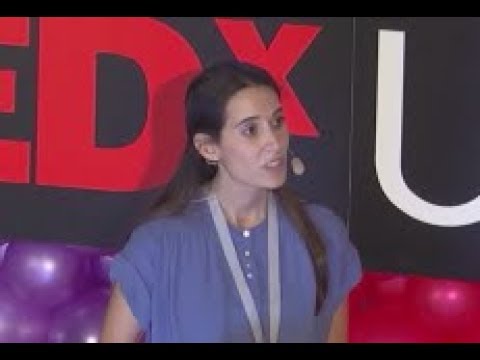
I invest into not-for-profits and I make
money out of it some of you may be
thinking this is unethical but that it
goes against the principles of
philanthropy and honestly I don’t blame
you when I first heard about social
investment I also had my doubts in the
past I had given money to charity I had
volunteered several times I had even
helped fundraise for them so how can now
make money out of them and more
importantly why would I want to do so
let me tell you a story every day when I
go out from work I pass by a Starbucks
and outside there’s a homeless man long
ginger beard big smile he’s very chatty
people give him change sometimes food
sometimes cigarettes and he’s always
very grateful but what makes him so
unique if he’s always got a book in his
lap it’s mostly adventure books I tend
to think they’re his favorites and
there’s a mix of sadness an empathy but
also hope in this picture he gets enough
coins to buy himself food he spends his
night on a hostel whenever it’s cold
outside but how could we make things
better I often think to myself how could
we empower him in terms of austerity
with over 20 million people unemployed
across Europe with youth unemployment as
high as 40 percent in some southern
European countries such as Spain with an
increasing aging population with 27% of
children at risk of poverty or social
exclusion the welfare state is failing
to work in the 1940s the welfare state
took on the responsibility to protect
society to build a safety net to protect
the most vulnerable individuals and
today
today it’s throwing its hands up
government cannot cope with the cap and
provision in social services
shifting demographics and changes in the
global economy have left insufficient
public funds to address today’s social
issues and less likely the ones in the
upcoming years the credential of
capitalism around steadily raising the
living standards of individuals is now
questionable the principles of socialism
around equal distribution of income and
wealth it’s also questionable
so forget ideology we need to stop
turning to government for magical
solutions instead we need to address the
capital market and seek how money can
leverage positive change so how can
money from the capital markets make
meaningful and impactful interventions
or let’s put it another way how can we
incorporate value into our investments
in an effective way and I’m not talking
about investing with impact because
we’re all in favor of a business that
creates jobs that improves lives but
that’s not really dealing with the issue
social investment supports organizations
whose main mission needs to address that
change to create that positive change to
generate greater outcomes let’s say
charity the runs hair care homes or
energy community company or a charity
supporting homeless people social
investment is there to channel the
necessary funds into these organizations
so they can deliver their services and
generate greater social outcomes but
social investment also seeks for a
financial return and there’s a
preconceived idea that anything social
does not need any accountability it’s
social therefore it’s good philanthropy
does good right but immediately for
questions for
in my head the first how do we ensure we
are consistently achieving greater
social outcomes the second how do we
maximize the value of our intervention
the third how does this promote greater
efficiencies and the fourth how does
this encourage social innovation the
social investment is not here to
substitute other programs it’s here to
complement them and grants and donations
have played a key role in the
development of the social sector but
charitable donations in government can
only take us this far so as a social
investor we request the financial return
in order to bring back that level of
accountability an interest therefore
represents three things first
sustainability because we invest into
organizations that have sustainable
business models therefore there is a
proven evidence of demand for their
services and products second improved
efficiencies because in times of
austerity organizations will want to
reduce costs to become more productive
and this is usually linked to innovation
and third impact we want to generate
greater outcomes we want to know what is
happening with our money so how many
homeless people have been supported into
stable accommodation or how many
families have now access to affordable
clean energy and what if we went one
step further and what if we said that
the returns will depend on the outcomes
achieved the greater the outcomes the
greater the returns this is called
payment by results and is very common in
the UK let’s take an example a charity
that works with homeless people
it supports them into stable
accommodation it’s
helps them find the job it trains them
to find a job and it reconnects them
with their families and relatives we
engage with a local authority which
after a five-year valuation will repay
investors based on the results achieved
based on the reduced number of rough
sleepers the number of homeless people
that have been supported into stable
accommodation and the number of homeless
people that have now a part-time or a
full-time job
I’m men do by doing so you are aligning
the interests of government whose
desperate for the outcomes the interest
of the social investor who seeks for
that financial and social return the
interest of the charity whose mission is
to support those individuals and the
beneficiaries themselves the homeless
the rough sleepers or in my case my
ginger beard homeless friend rather than
designing an intervention to meet a need
like most public interventions do we are
preventing escalation of a social issue
in an effective way because we are
working with organizations that
understand the problem and understand
the root cause of the problem because
they’re in the field and we’re paying
for the results so social investment is
reshaping the relationship between the
financial gain and the common good and
what’s really interesting about these
organizations is that they’re determined
and focused they believe in what they do
and they know why they’re doing what
they’re doing and that’s what makes them
really focused and effective they really
want to create that positive change let
me share with you some examples so this
is me say and me say is a hero rat she
works for a poco a poco is a Belgian
not-for-profit
that trains giant African poets rats to
search for landmines the founder of a
Popo wanted to address the global mind
problem so wires have transformed
thousands of square kilometers of land
into areas that nobody dares to enter in
some African countries they’re up to
nine mine related casualties per day a
pope would trains these rats to search
for the landmines they can search 200
square meters in 20 minutes it would
take a human twenty five hours to do the
same job in Mozambique a Popo has
destroyed over 13,000 landmines and
brought back over 1000 hectares of land
into safe and productive use Mozambique
has now been declared free of all
landmines and no rat died let’s see
another example this is Mark this is a
payment by result scheme and mark is
part of the teens and toddlers program
in the UK one out of eight 16 to 24 year
olds is neither working or training or
in education teams and toddlers well we
know basically the people young people
with low educational attainment with low
self-esteem and no role model to look up
to is less likely to successfully
transition into work training or
education teams and toddlers is a UK
charity that has developed a very
successful program and it’s very simple
what they do there is a teenager usually
was disruptive behavior that gets
assigned a toddler who needs extra care
in nursery so this janitor suddenly
becomes the toddler’s playmate and his
role model therefore the teenager has a
feeling of responsibility of belonging
and he feels respected and it’s also a
work placement opportunity for him
results have shown
that 97% of young people that have come
through the teens and toddlers program
are now either in education training or
working an 88% of them feel more
confident and these are just two
examples the sector is full of really
inspiring social entrepreneurs that
really want to make positive change but
in order to do so you need money you
need seed capital in order to develop an
idea you need an initial investment know
to train your rats you need capital to
roll out the teens and toddlers program
social innovation will not happen if
there’s no money to back it social
entrepreneurs will not thrive if there
is no money to back them let’s see one
last example of how social investment
can generate positive change
so Harry specters is a social enterprise
that employs people with autism to make
chocolates during its first two years of
operation it employed twelve people and
provided relief to 22 carers in the UK
unemployment amongst people with autism
is over 80% so Harry specters wanted to
continue to grow to support more people
with autism and was looking for
investment well this is what happened a
group of social investors and individual
investors decided to invest into a bond
with an 8% coupon investors receive
principal repayments and the interest
they can choose whether they receive it
in the form of cash chocolate or mix of
cash in chocolate when this intervention
is going to save 40,000 pounds per
individual per year just by shifting
these individuals from public support
into employment so the days of
government
providing welfare are gone and austerity
will only make things more challenging
social investment can filling the gap in
a new and effective way but it needs all
of us it needs all of us to challenge
convention it needs all of us to make
the right consumer choices let’s say you
had today the option of two companies
one a company simple business model no
impact another a company that reinvests
50% of its profits in two projects in
Africa which one would you choose let’s
invest into the change we all want to
see thank you
[Applause]
[Music]
Please follow and like us: