
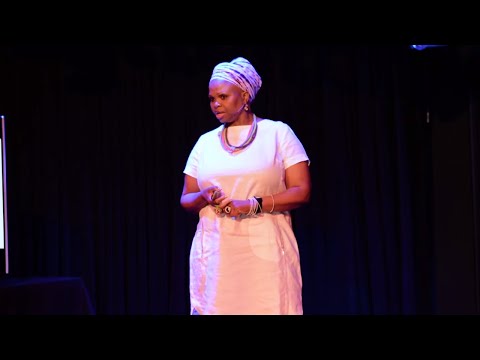
I was born in South Africa in a small
semi rural area called in Delaney in the
Midlands of kwazulu-natal but the time I
was born in 1919 in 1960 the Nationalist
Party had been in power for 12 years
when they got into power they instituted
their apartheid policy which was really
about white superiority so we’re going
to be segregated according to races
white people on top Indian colored like
African at the bottom they proceeded to
enact a litany of legislation to make
sure that this happens the resources
were taken from black people and given
to white people land is an example where
I grew up from time to time live the
stories we’re going to be moved you’re
going to be moved and then it would die
down a few years later to come up again
the upper gate government in the mid-60s
were spending 600 in the mid 70s were
spending 644 ends which is equivalent to
forty nine dollars on educating a white
child versus forty two Rand which is
equivalent to three R and three dollars
on educating a black child and files
like this with signs that we saw on a
daily basis growing up for exclusive use
of white persons as well as the other
signs the black only Indian talent so in
the little area where I grew up in
Delaney they were saying that you would
hear on a regular basis and without
anyone batting an eyelid so I’ll read
them to you I’ll read them to you just
now so you dial on luma the white person
is wise change em Lou you’re as
beautiful as a white person what about a
general ooh you think like a white
person who wouldn’t like a live white
person is hardworking
now as I said this was part of our
language no one bats an eyelid no one
said what are you saying it was part of
our language and actually I’ve got to
know that there are similar things in
other languages in South Africa in
different languages and then there’s one
which is like a shorthand it’s hardly
ever said in full it’s usually just said
and it ends there which in English is
the blacks but if you know the context
it’s usually in tomiyama we have that
black person is lazy in tomiyama and
hastag until that person is not
intelligent tomiyama govindy a black
person is not educated tomiyama got to
say he’s a black person is not civilized
so all these messages were about white
is good and superior and black is bad
and inferior and in fact everything in
our environment prove that so there was
no reason to doubt those messages we
live them on a daily basis so a life on
the upper date was hard for the struggle
struggling to kind of stare life because
if you did anything that’s against the
law
your life would be in danger so we were
told get an education an education is
the key to a better life
marginally better life because
segregation would still be there but
what I also realized when I was growing
up is I’ve grown up now is that part of
that process was assimilating us into
whiteness so we didn’t see ourselves in
the books as they were talking about
earlier you saw whiteness everywhere and
that was the standard that we were meant
to aspire to so the high school that I
went to which was an all-girls black
boarding school we’re not allowed to
speak indigenous languages during the
week we could only speak those on the
weekend and we had to speak English the
whole during the week so of course there
was pressure on the government to change
its policies and then we go to a point
where the worst transition was pressure
inside pressure outside the
international community everyone put
pressure on the government so that by
1991 the apartheid
deflation was repealed and I think the
whole world watched us as we got excited
and when we had our first democratic
elections and Nelson Mandela was elected
as the first president of a democratic
South Africa then there was the Truth
and Reconciliation Commission whose job
it was really to provide a space for
people who had suffered gross human
rights violations to be able to tell
their stories to be able to get to know
about what happened to their families so
that they could find closure and healing
and hopefully that South Africa we would
reconcile now there was an amazing
process and I think people who
participated in that to different
degrees found that really useful and
possibly healing but it wasn’t for
everyone so for regular people like me
there was nothing that was helping us to
transition so those messages that we
heard growing up
nothing had changed okay so we could
vote okay so maybe we could go to some
institutions we couldn’t before
but those messages were still very much
a part of our identity but then of
course we’re a rainbow nation we’re
excited we’re looking forward to this
the world was looking at as I’m thinking
we a South Africa did it without
violence so life went on and then in
2001 I had an opportunity to visit Ghana
to be trained as a trainer so let me
tell you a little bit about Ghana so
Ghana was colonized by the British but
it got its independence in 1957 so it
had been independent for as for long I
there I was alive so you can imagine my
excitement to go to Ghana to be in this
amazing African country to really just
like breathe the air of this free
country and also to mix with other
African women an opportunity that we
didn’t have before 1994 but I had an
experience in Ghana that was to change
the course of my career so I get to can
I’m really excited meeting everyone we
start the training and so on one of the
days our trainer says ok you’re going to
work in groups find a place to work and
working groups so the group that I was
part of they decided to leave the room
and find a place to work outside so as
we’re walking
my could never said okay let’s sit on
the porch there on the veranda of the
hotel so let me set the scene for you so
this was a beautiful beautiful huge big
hotel had a 50 meters away was the beach
so it’s picturesque it’s beautiful the
weather is amazing so that’s why they
proceeded to go and sit in my body it
was I can’t I can’t sit over there so I
did I do say to them I can’t and they
say what do you mean so they proceeded
to go and sit on the table so I am
feeling this being torn in my body I
finally see that no one is paying
attention to me so I go and I join them
at the table but I sit on the edge of my
seat I am anxious as anything I can’t
quite work out what’s happening to me
anyway a few minutes later a waiter
approaches the table in my head I was as
clear as day that he had come to tell us
that we can’t sit on the porch so I
promptly stood up I walked away no one
was going to tell me not to sit on the
porch that had happened too many times
for me so I walked away so the way that
I’d come to ask what people wanted to
drink right so I watched this and I
sheepishly go back to the table and I
sit down so of course everyone is
working I’m thinking what is happening
to me so I do I just do realize that
okay there’s something really important
happening here so as I’m thinking about
it now actually it was a blessing that
that happened and that it happened in
Ghana so if that happened in South
Africa or if it had happened in England
that I’d visit it for a short time
before or in America where I’d lived it
for a few years I would have thought
yeah make sense there’s racism in those
places so it makes sense for you to feel
like this but this was happening in an
African country that had been free for
decades there were hardly any white
people around the other black people
happily sat on the porch
it was just me and so it was clear to me
that I needed that message to hit home
clearly for me to get it because if it
had been anywhere else I wouldn’t have
got it so I finished the train I’m
thinking gosh
but whatever it is I need to work on it
but then because I studied psychology I
thought okay what it is is low
self-esteem you know I need to work on
my self-esteem but I still sort of
example it doesn’t quite click it’s it
but it’s more than it so I decided okay
so the Cheops you provided space for
others I need a space I’m gonna go home
and I’m gonna go start working on
finding each other with white people and
my determination why people need to
understand where we’ve come from because
I don’t think they have an understanding
so I came back home and I started
working like that so facilitating
diversity and being in conversation and
trying to see each other with white
people I feeling like is this something
healing what I felt but didn’t felt like
it was okay but it wasn’t quite hitting
home so in 2008 I was studying process
work at psychology and for the first
time I came across a term that describe
my experience internalized oppression so
that’s what’s happening but what I was
finding is that it was described as self
hate right so when you read up in
tonight’s opera she talks about self
loathing most of hateful right I don’t
hate myself but maybe so I was still
wrestling with it and as I think about
it and I was thinking about this coach
by Steve Biko that says the most potent
weapon in the hands of the oppressor is
the mind of the oppressed and I thought
oh gosh that’s what’s happened to me
right so if they don’t have to be anyway
it nearby I’m in Ghana and I’m thinking
those things about myself but as I read
more and more about internalized
oppression I was actually relieved to
find then it’s not just something that
afflicts black people right then it’s
something that people who’ve been
marginalized experienced people from
marginalized groups so I learned that
women some women might experience
internalized sexism or internalized
misogyny that some members of the
lgbtqia+ flash community might
experience in experience internalized
heterosexism there are some Jewish
people surprise surprise
my experience internalized Anderson
so there was something about this that
really freed me in the way that just
hearing the term hadn’t so it seemed to
be a definition that that was more
holistic that wasn’t just like I hate
myself so there’s something wrong with
my psychology but it was something about
we grow up in environments that give us
messages about ourselves we take those
messages on we believe them and then we
ask based upon those towards each other
with the beliefs perform about ourselves
how we relate to others and how we
relate to the dominant group in it Manby
it’s quite people whatever the case may
be so there was something about it there
was really liberating for me I felt like
for the first time I could talk about
this because it’s not just my fault
it’s just not my deficiency as this
black person in South Africa so when we
talk think about how does it manifest
what does it look like of course there’s
many ways but I don’t pick on the three
areas so we have negative attitudes
about ourselves and then we have
negative attitudes towards people who
are in our same group people like us and
then we have these positive attitudes
and actions towards people who are from
the dominant group be it men or you know
white people so just a few examples
around negative attitudes towards
ourselves so one of the big things that
I used to feel I still feel but not to
the same degree is self-doubt so not
just like low self countries but
crippling crippling self-doubt so when I
went to the investiture of Natal and
that for the first time I was in a class
with white students in a psychology
small psychology class 12 students are
only black student I was debilitated by
my self doubt now of course some of it
was in the environment so the
institution the lecturers the students
they’re all unconscious but some of
their I brought coming in I really
thought I’m not going to cut it I’m not
intelligent enough I’m gonna fail no one
will listen to me
so I brought that in coming in and just
lighting ourselves so the skin
lightening creams hazing our broad noses
hazing our broad our thick lips and
constantly striving to be like the white
people or the man and a lot of shame
that then
comes with that so if I’m not want I’m
not accepting Who I am
I’m wanting to the other it’s very
shameful right and then in terms of how
we relate with each other so people like
us the negative attitudes so the strange
thing is that there are all these
stereotypes about black people in this
case and I don’t believe that about me
but I believe it about you
so yeah black people I like it I’m just
the exception but yeah let people yeah
they are like that so unfortunately we
undermine each other we compete with
with each other not just in a healthy
way but in a very unhealthy way and we
also displace our anger towards people
like us so we can’t just direct that to
the people who are hurting us or
pressing us because of a power dynamic
but we do it amongst ourselves in fact I
really believe that the xenophobia
that’s plagued South Africa in the past
and has held its roots in internalized
oppression and how we relate to the
people above us the dominant group it
men or white people is that we defer to
them we value their opinions more than
we vary our own or our peers we
prioritize their needs I don’t know who
who’s had experience say of going to a
supermarket being attended by someone
like you and when a white person comes
or a man comes they leave you alone in
there attending to someone else and
that’s someone exactly who looks like
you that’s what happened and we’re
constantly trying to get as close to
white people as possible
proximity whiteness opens doors and we
do that to ourselves so for me one of
the things I was puzzling at is why
can’t we talk about it why is it a dirty
little secret and if I think about
myself for me the big thing was with
shame I was ashamed to admit to the fact
that I feel that about myself and
therefore about others so I had to keep
it under wraps and not talk about it but
this was when I really thought that it’s
it’s me it’s my psychology there’s
something wrong about me so the impact
of internalized oppression I think
there’s a lot of studies that talk about
the fact that in fact people from
groups disproportionately have more
mental health difficulties if your
constant is stressing constantly
competing constantly feeling self-doubt
there is no way you can live to your
fullest potential and the process then
keeps the structures of inequalities in
place unfortunately so if we’re thinking
about how we can heal from it how what
do we do to heal from it Carl Jung has
this code that I really like he says
until you make the unconscious conscious
it will direct your life and you will
call it fate right so the first thing is
name it let’s call it let’s say this is
what’s happening let’s talk about it let
it not be just a dirty little secret
that I admit to when I’m in myself you
know when I’m by myself in the bathroom
but let’s talk about let’s build
awareness about it so people know that
in fact it’s not your fault it’s not
just your problematic psychology that
there is an environment that’s created
this the social political economic
environment has given you these messages
about yourself and then I must notice
the tightness so every beginning of this
year I ran a series of focus groups with
black women trying to wrestle with us
what is this thing what does it look
like how do you experience it and the
first test was just to notice it so
notice when it happens notice when you
feel that about yourself notice when you
feel that about someone like you notice
how you’re feeling about the different
there people from the dominant group
because that’s where then you can begin
to interrupt those patterns and give
yourself different messages we need to
affirm the best in ourselves I think
that the messages that we’ve gotten
about ourselves that were not good
enough we need to communicate different
messages and also just have compassion
right so compassion for ourselves and
compassion for each other so as we
striving towards equality social justice
activism is really really important we
need to focus on the structures and try
and break them down but we also have to
do inner work because if we don’t do
that
should we get to acquire where we get
equality you will find that we’re still
unequal because of the messages that
we’ve ingested so I’ll leave you with a
question in what ways are you
contributing to inequality by not by
turning a blind eye to internalized
oppression thank you
[Applause]
[Music]
Please follow and like us: