
by
[Music]
so a couple of questions that I got oh
you want me over there now okay so I was
told by Harriet that I’m going to be
part of the part of her demonstration so
this good because this is my better side
to the audience hey it’s from Watlington
in the UK and she has set a record
well maybe tied with Manuela for the
longest distance traveled here so thank
you thank you for coming
now this sewing machine has been all
over the world and we’re gonna hear a
little bit more about that during your
time right we were just
we’ve been watching Ted videos all
morning and I was asked a little bit
earlier why do we play them is it just
filler and playing the Ted videos we
I’ll explain that we have to play 25% of
our content has to be a TEDx video or a
Ted or TEDx video and the reason for
that is to get the content out there
it’s to get the talks you know to spread
the word our speakers our videos will be
submitted to Ted and they’ll go into the
queue and they can be played all over
the world so there’s a reasonable chance
that any of our speakers today will get
picked up and played at any of the other
hundreds of Ted X’s around the world so
we do we are asked as part of our
license from Ted to play the videos as
well
we have to have a balanced budget and
some of the things that we put our money
towards is obviously advertising and you
know bringing in some of our speakers
and you know the facilities but the
speaker’s aren’t aren’t compensated for
their time so that’s why it’s very
important that if you have a few moments
and you see some of the speakers out in
the audience or out in the in the lobby
take a moment and just thank them for
their time because they
come here on their on their own volition
and I’m at their own expense there’s a
couple people who have books in maybe a
couple CDs out there so please if you
don’t have to buy anything but at least
think thank them for coming and making
making the trip how many doing
installing as best as I can so hi my
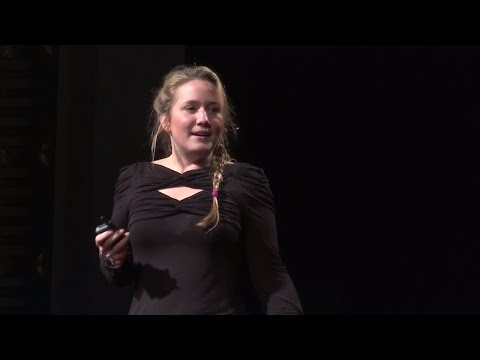
name is Harriet riddle and I am a
textile performance artist I travel
around the world with a sewing machine
and I interact with communities using my
art as a tool of communication so I
stitch on the streets portraits and
landscapes of people that I meet I
started off at heart 40 University five
years ago and I was doing mixed-media
degree where I was experimenting with
everything plastic metal glass banging
my head against a brick wall trying
trying and bathing until I started
messing around with a sewing machine my
grandmother is a textile artist over
here in Canada my family are Canadian I
have a citizenship and I had gone to an
exhibition which inspired me to start
messing around with the machine so I
started writing the words Lovelace
Lovelace and indoors outdoors indoors
outdoors because I always wanted to be
outdoors and and then I used to always
go to life during classes and my teacher
had seen these sketches that I’ve been
doing on the machine and suggested why
are you bringing a sewing machine
class so this was the drawing he saw
first that was I done with a pen and
that inspired him to ask me to bring my
sewing machine which I did and I’m not
sure of any of you who’ve done life
touring before but the classroom is
silent and there’s a naked person in the
middle of the room and there’s me of my
sewing machine like a rosy red because
this is kind of embarrassing to stand
out and make so much noise I really
found a voice and humor and narrative
and a style of drawing which I hadn’t
had before so he’s he nude but then I
went back to the textile room and I
stitched the textile room and then I
thought now what so I went down to the
corridor and stitched a vending machine
that gave me a free packet of crisps one
day and the head of school came down and
said why are you stitching in the
corridor and I said well I’m stitching
the vending machine clearly but I loved
the fact that she had to interact with
me and I was almost in trouble but
wasn’t and that my sewing machine I
could get away with going where we
wanted so I thought wareness well my
limitations at that time were a table a
chair and electricity so I was always
looking for a plug everywhere I went
what could stitch there there so I went
to a cafe where we used to go for our
greasy spoon on our Saturday morning and
Errol greeted me at the door and I had
my sewing machine said do you mind if I
come in here and Stitch the cafe and he
said well you must sit in the corner and
pay for the electricity and if anyone
complains about the noise I’m gonna
Chuck you out okay okay and sat in the
corner started stitching things I could
hear coming out the coffee cup this is
Errol here in the middle after I’d
stitched him frying chips he was
delighted gave me a lot of free food and
kind of welcomed me into his tribe of
employees and and that was really
amazing to see this or initially quite a
hostile response and then to be so
welcomed which I loved
so I experimented with that and would go
to pubs and more cafes I realized I got
free food and as a student that was
great she was good setup and restaurant
I also worked in a nursing home during
my studies so I took my sewing machine
in and stitched some of the elderly with
who had dementia and what I thought was
intriguing was the noise of the sewing
machine and just the sight of it evokes
so many stories from these older people
that reminded them of their war of the
war or their mothers or their life as a
tailor which later on I actually
discovered what happens around the world
people are so affiliated with the sewing
machine such a kind of peaceful object
so after graduating I was fortunate
enough to get a job with a shoe company
as an in-house artist where I was doing
portraits of their employees and one of
the projects they sent me over to Hong
Kong in China and I went I requested to
go to the shoe factory
so this stitch I did in a Chinese shoe
factory I was sat at the end of the line
of other men and women behind their
sewing machine and they were sort of all
working as a cogs of a wheel they didn’t
find me that funny I was kind of felt
like I felt very free and that’s kind of
the idea of my work is there’s no
boundaries and I’m free and these people
seemed like they weren’t so free so
definitely kind of the juxtaposition
between us was quite clear in that
circumstance and to make money after
eyes I worked with that company for six
months and then I started to went
self-employed I started stitching
portraits in the market in Greenwich so
these were I was in 15 minute portraits
so this was a 15 minute one of a guy
called Roy and as I sit and stitched
somebody I get them to tell me about
their life a little bit like what
happened with me and John so you can’t
quite see that but it says everybody has
a skill to offer which is something that
Roya told me which I thought was quite
prevalent anything
kind of sounds of me I’ll stick to that
in sometimes quite hidden and and used
scraps of fabric to match what they’re
wearing
here’s another lady so I often get
audiences as well while I work which I
quite enjoy because me and my subject
will be having a conversation and it can
become quite intimate or people tell me
such an extraordinary things and then
there’s this whole like audience behind
them which they’ve sort of forgotten
about listening in and sometimes they
time in and start talking to myself
didn’t right so it becomes a still a
very interactive way of working and I
try and let that feed into the artwork
as well as portraits I started stitching
weddings and recording events in the
stitch as part of my business to make
money and then I took my sewing machine
to India which had long been a dream of
mine since I was a child my bedroom
looked like a mini India growing up it’s
the textile capital of the world and I
initially lived with a Punjabi family in
Delhi for a month they taught me the
ropes how and when to haggle and bits of
the language and built my confidence to
go out there with my machine do any of
you have beamed to India is a amazing
place pretty busy and hectic and I
thought I’d take my snow machine to the
thick of it but I started off in little
parks and kind of took it easy and
worked my way in this is the stitch so
first one with Taj Mahal I got moved on
by a guard I was there at 6 a.m. to do
the sunrise often guards and police like
to create new rules that sewing is not
allowed so a young boy who is they’re
toting t-shirts said come to my village
you can see the taj across from the tree
treetops so I went along with him and
set up and stitched the Taj and which
was kind of extraordinary their houses
didn’t even have roofs over the top but
got this grandiose Taj Mahal overlooking
them so you’ve got the women and the men
working and cows chewing yeah
interesting that’s very much India lots
of
took suppositions so it’s hot in India
and that perhaps the Sun gets to your
head and I ended up on this cart there
was other men selling fruit and
vegetables pushing their cart through
the town so I wanted to stick to them
and so I asked this man if I could get
on top of his car and we could follow
the fruit and veg men so he did quite a
good job I’m not sure his cargo ordering
around and his route and but an
interesting workday because you kind of
create your own stage and open yourself
to a whole lot of responses from from
your audience so some people shut
shouted at me you’re destroying the
market which I loved I think they
thought I was selling the sewing machine
people would look at me and quiz doodly
like what are you doing my ss1 I’m
making art oh good and now it’s just I’m
just doing art that’s all similar to jr.
that guy who was last on he’s a cool
dude he’s always inspired me actually he
says quite cool to come on after his
talk this is the dancing Bubba you get
to meet extraordinary people he’d hike
up his skirt and knock his knees around
as a as a novel member of the community
I also met a man called a tuck and
he has won the best channel decorator
of the Year award ten years in a row he
now judges the competition so to give
everyone else a chance
tells me the little wink I were invited
to a wedding so I asked I shook if I
could borrow some of his clothes from
his lovely little antique Aladdin’s cave
textile shop and he let me and my
friends go and pick some clothes this is
the piece I did whilst on the truck
trade trailer thing so yes then
wearing these clothes and in return I
stitched his portrait to thank him for
lending us the garments is that ship
duck that’s his hat that’s typical
Rajasthani then I cycled across India
with my sewing machine why not
I started from the east and went into
the west coast an illustrated my journey
on a piece of silk
I found this man on the way he had a
sewing machine on the back of his bike
so I stopped my bike very excitedly like
I have a sewing machine too okay he’s a
tailor he goes from door to door fixing
clothes and I took my machine out and
did a portrait of him I he had to take a
break from his he wanted to get on but I
hadn’t quite finished it so I asked him
to hold hold his horses and which he
kindly did an in return I gave him a
spool of thread so it was quite nice
that we shared the same currency this is
a temple I love this picture just
because of the women and where the saris
and it’s quite easy to drum up an
audience in India especially of men but
it’s so nice to have an audience of
women because they’re often not so
prevalent in the towns it’s very unusual
for a girl to make such a scene on her
own in India they kind of make yourself
stand out so much so they were very
inquisitive of me it’s always good to
keep the police on your side no matter
what country you’re in so this was a
nice police lady there was two of them
they both wanted me to stitch my name
their name flowers England so it kept
going yes anything you want she doesn’t
look that happy but I think she was it’s
quite intimidating walking into a town
as well so I stitched these young girls
and that the lady here she must have
been the same age as me so she looked
after me i stitched these young children
who were sat in front of me and got them
to pick the color of thread and Colour
of fabrics that they wanted and I gave
that to the lady who had helped me and
in return she taught me how to teach
this sorry I came out of the little Hut
and the whole village was there waiting
made me feel like a right little Indian
princesses amazing that’s the piece on
silk so then I went to Kenya and did an
artist residency there which was quite
different to India it was a lot more I
got much more into the thick of things
working in the slum in this is in Kabira
which is the same Sun that today I was
working out with the eyes along the
train tracks and not everybody loved
what I was up to and it was slightly a
bit more hostile s but he’s due to
people not having anything and there’s
white privilege guard her sewing machine
you know who does she think she is so
these ladies here who are over stitching
they won’t they didn’t love me well
that’s fine and it was an interesting
experience for me too in the end I paid
them some money and they were okay but
it wasn’t really did make me challenge
like what am i doing and what’s the
purpose of my art but after doing this
piece I went and sat on a next to a
train track and a lady looked after me
she said sister come sit with me not
like those other ladies and I don’t know
how she knew about those other ladies
but she had heard what had happened so I
got looked after by her and actually
I’ve got so well looked after in my
whole time in Kenya despite it being a
challenging place to work it was
incredible and inspiring and the sense
of community there was amazing which is
which I feel like I lack a little bit in
my life in England so in that sense I
was very amazing place to work and be
this is the panoramic view here so I
think the message really is to go to
travel don’t be scared be brave and
share what you can do I find that
sharing what I could do and teaching
others as well as displaying
my work it was very inspiring for me and
what you can learn from others and I
hope to explore ways of exhibiting my
work and traveling and maybe making a
traveling gallery or other ways to
display the work perhaps on the street
and to a wider audience so it’s not just
for a niche gallery world and to finish
off these are just a few more pieces
from Kenya in the rural areas you don’t
really get attached and integrate with
so many different types of people so I
hope you feel inspired to go and travel
and share what you’ve got thank you
[Applause]
Please follow and like us: