
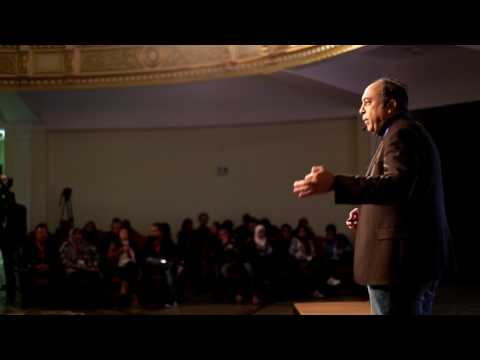
I’m passionate about and what I’m
passionate about is my profession or a
maxillofacial surgery and in particular
innovations in oral and maxillofacial
surgery
so what’s oral maxillofacial surgery or
a maxillofacial surgery it’s the surgery
that deals with the face and the jaws
but Joe bones and we deal with car
accidents we deal with the removing
tumors in the face we deal with
anomalies as cemetery’s facial cosmetics
all that within our profession so what’s
an innovation that I’m about to talk
about innovation is anything that’s new
it’s a new idea a novell device or even
if you come up with a better technique
in order to meet market demand to meet
any new requirements that’s an
innovation ever since ancient Egyptians
we have known innovations one of the
earliest known physician worldwide was a
motive which means who he comes in peace
and he had multiple profession who’s not
only a physician he was a high priest he
was an architect an engineer the first
known to mankind as far as being a
physician is hisy raha Syria was known
to be the chief of dentists and
physicians at the time of the Pharaohs
3,000 years BC almost since that time
they had innovations innovations such as
surgical techniques they knew something
called trephination traffic agen is
where we do small holes in the skull in
order to decrease intracranial pressure
that since the Pharaohs circumcision
closure of wounds like stitching all
that was known ever since the pharaohs
and
it was actually you can see that
inscribed over at the tomb of Colombo
and you’d find instruments that they
actually made themselves and devised and
for them at the time that’s innovation
from era to era we have developed
surgery we have developed surgery across
errors from the Egyptian ancient
Egyptians down to the Greeks the Romans
and you know in the last two centuries
but always innovations is challenged
we’re always having obstacles to
innovations and let me tell you a story
that dates back to World War two where
innovation was really challenged and
it’s about a god a doctor actually he
was an orthopedic surgeon his name is
Gavril Elizabeth Elizabeth is an
orthopedic surgeon that was from kurgan
Russia at the time of World War two
Russia was part of what’s known as the
Soviet Union and at the time of war they
used to get the surgeons in military
planes and have them fly and they would
drop them down with a parachute in order
to get to remote areas and treat
patients so eleazar over at the time
developed that external fixator that you
see and that external fixator he used to
treat you know fractures and bones at
the time of war but from hard times
innovations developed and he actually
the idea of this innovation came from
the parachute how it came from the
parachute look at the external rings in
the fixator and look at the parachutes
you’d find around the waist there is a
ring the parachute is the second ring
and the intersecting cords and
stabilizing ropes are actually the same
as the intersecting
were there the wires that are
stabilizing the bones and he came out
with that innovation while parachuting
and I was lucky enough to know that
story because I met his nephew while I
was studying in the USA I was giving a
lecture and I mentioned his name in his
techniques and there his nephew comes up
to me after we finished the talk and
tells me I’m his nephew
and he showed me his name is Lily zero
so he has the same family name and he
tells me the story of the parachute
which was not written in any article or
paper it was only written in Russian and
I was able to get to know that story but
is that the only thing about Elizabeth I
want to make know the story is just
starting it’s not about the external
fixator device no it’s much more than
that sometimes innovation come
accidentally not just by hard times or
anything so Elizabeth had a nurse that
nurse used to go to the patient where he
fixated the fractures and used to you
know you can see that around that device
there are screws bolts and nuts that you
have to tighten on a daily basis and you
kind of want to make sure that it’s
really tight so that the bones are
compressed and it heals well so what
happened is that that nurse instead of
turning it clockwise she started doing
it’s anti-clockwise and she did that for
several days in a row and when Elizabeth
came and saw what happened he was kind
of astonished actually compression that
was supposedly done would keep the
segments and the bone to heal together
but actually the tension on the bones
created new bone like you see here this
is the fracture and that new bone being
laid down by applying constant tension
to the bones and that phenomena came out
as distraction osteogenesis so while
distracting the segments of the bone
you’re getting new bone laid down in
between and
that story is the the base of any bone
lengthening procedure okay
so Elizabeth started working on that
those bone lengthening procedures and
all his results would not be accepted
and you know what would they call him
they would call him the magician from
Kurgan every time in history even in the
fare time they would raid things to
magic or something that wouldn’t be
accepted just because you’re getting
something out in you and it wasn’t until
he treated an Olympic high jumper by the
name of Valerie Brummell Valerie Brunel
was one of them more or less not very
well-known high jumpers and at the time
he suffered a motorcycle accident and he
had to go for about 14 surgeries just to
correct the deformity that he suffered
in his long bones
Valerie Brummell as a last resort and
unsuccessful surgeries 14 unsuccessful
surgeries he went to the magician from
kurgan and the magician from kurgan
treated him to operations and he was
able within six months to return him
back to training and to abet high
jumping again now let me talk to you
about a more recent innovation that
we’re using right now all the time and
it’s actually the highlight of the
fourth Industrial Revolution 3d printing
3d printing has come up out in the
nineties in 2000 industry of course and
then it started to have medical and
dental application and this is the first
case I was lucky enough in 2001 that I
had one of the earliest models and 3d
printing there were only two places in
the United entire United States that did
3d printing and these were among the
first models that were done at these
institutions
oceans and this is a case for a 34 year
old male who had Allegiant in his lower
jaw and that Legion had eaten up all his
mojo and we wanted to frame that 3d
model in order to help outline see where
we’re gonna make the cuts of the tumor
mass and help us like you see there’s a
plate here and that plate we wanted to
prevent that plate outside the patient
and go ready to put it inside the
patient as free bent plates at the time
that was an innovation now it’s
standards that’s standard procedure
nowadays but at the time we did that and
we reported it of course and you can see
how it can save in a lot of time in the
operating room how can that provide more
accuracy to us because we know exactly
where to cut and we’re getting it ready
preventing a plate such as this can take
us an hour an hour and a half in the war
so we’re actually decreasing the time
and operating room so what else can 3d
printing offers now with the new
technology 3d printing can actually you
can buy print tissues and organs like an
air cartridge or 3d printed hearts okay
still under research not out yet but
still under research ins being done we
can do a customized implantable device
like I cytanium mandible that we can do
and now there are expensive 3d printers
that can print those dishes in organs
this printers called a bio plotter and
it’s that big and $300,000 worth and
that can print on a variety of different
materials that are natural materials
where we can incorporate inside the body
and that’s a huge innovation and now
we’re moving on the last three years or
four years we’re moving on to in offer
3d printing so those models and those
templates I can do myself in my clinic I
myself today have two 3d printers that
I’m using on a weekly
at least they are getting more accurate
more affordable there are printers that
used to cost between two hundred
hundreds grand to two hundred thousand
dollars now you can have printer between
four thousand to ten thousand dollars
that are offering quite a good quality
to certain applications so it’s changing
you’re getting to have it on hand and
with you and this way you can develop
more and you can innovate more from then
after 3d printing we started realizing
that we need more accuracy on the
planning of the surgery itself so quema
there came out a huge leap in virtual
planning software what I mean by virtual
planning is we actually upload the comb
beam CTS or the CT scans the x-rays for
the patient onto the software then we
kind of segmental eyes the segment’s in
the mandible the maxilla or the
different parts of the face and you kind
of differentiate in segments and then we
start doing moves or maybe cuts virtual
cuts all in 3d space so we’re actually
doing this in a 3ds kind of space and
doing the final moves in 3d space on a
software after we do that we move on to
a device planning software where we want
the virtual plan to go with us into the
operating room so we need to 3d print
what you see here these devices that you
can see here we want to take them inside
though are to give us exactly what the
virtual plan has accomplished in order
to provide the highest accuracy for the
patient’s and now we can 3d print those
templates or re or plates customized we
can 3d print them and take them into the
war from there we planned the surgery
after we plant the surgery with 3d
printed what we needed but can we
navigate inside the surgery the
kein surgical navigation surgical
navigation started in the orthopedic
literature and neurosurgery and then
went into the cranial maxillofacial
surgery literature and now what’s
happening is actually you’re having
cameras and these instruments that the
doctor is moving around the patient’s
anatomy and you can track those
instruments inside on the screen and you
can see how far they are moving from the
patient so you’re actually navigating
the surgery itself so it’s similar to a
GPS the GPS you have the map the maps
here are the patient’s x-rays and the
instruments here the GPS system itself
is actually the instruments that we are
moving back and forth while you are in
your car you’re being tracked by
satellite okay and you have the GPS
system to be tracked and you’re moving
along the same thing the instruments
here as they move along round the
patients face we can see where is it
moving exactly so if we’re cutting we
can see on the monitor where exactly
we’re cutting and that’s called surgical
navigation it’s still very expensive but
it’s applying now and still going on
further so I just wanted to show you
here that for example if we have a
patient with like an injured orbital
floor orbital Flores the bone just
beneath the eyeball if it’s injured on
one side what we do is we mirror image
the injured side on the good side so you
have both mirror image the same way then
with the software we do a patient
specific device planning and with
surgical navigation we can put the
patient specific implant in the right
place as we virtually planned it so you
can see how innovation have blended
together so that was the current
innovation that we’re using so what’s
upcoming innovations in our fields
augmented reality
when the doctor is looking at the screen
he cannot really his he’s working on the
screen and working on the patient so
their lack of coordination or
correlation between his eyes and what
he’s doing on the patient himself so now
there’s a leap that’s coming it’s still
under study I’ve been with the group who
are actually doing a lot of studies they
are in bologna italy headed by dr.
Bianchi and they were doing fantastic
work on ADD mental reality yet it’s
still not out yet but what they’re
trying to do is the doctor would wear
those glasses similar to you know the
google glasses and you know and the
microsoft hololens and when he put the
glasses he would see the virtual plan
simulated on the patient himself so you
would actually have the planned surgery
over the patient so I can see where
exactly I will cut while the pain or or
you could have a tablet even there’s
another Institute in Basel in
Switzerland that instead of having an
augmented reality glasses you would
slide a tablet over the patient and you
see the virtual plan on the patient’s
head themselves so that’s a huge leap in
you know in in our fields lastly about
the upcoming innovation I want to talk
to you about tactics tactics holograms
sense of touch
haptics is a sense of touch what happens
is that the doctor has a hologram in
front of him and he start getting a
haptic device similar to that arm you
see here and he starts touching the
hologram and he starts moving the parts
on the hologram and what he can do for
example if you have a fracture here he
can come pick up that segment and with
the haptic put it in place it right
where it’s supposed to be on the
hologram not on even on the computer on
a simulated
the hologram and then he would feel a
snap a push back that will make him feel
that it went in in the right area like
you can see here you can see the guard
or the gloves the haptic gloves that
he’s wearing and he is manipulating the
3d hologram and he could get those
segments like a jigsaw puzzle and help
yourself to snap them into the right
Anatomy that’s what we’re talking about
in haptic technology and what’s coming
up very soon within the next three to
five years I’m not saying 10 years 20
years I’m talking three to five years
and now haptics together with augmented
reality are kind of getting together for
educational purposes getting together so
that you would be able to study anatomy
and you can actually divide the muscle
layer be able to look more closely
inside the heart and other organs so
actually the students of medicine or
dentistry can easy visualize in a 3d
level and in this university here were
actually doing that to help residents do
understand surgical and actually of the
head and neck and I have about four
students who are highly interested in
that part and working on the software to
develop that for our area in the head
so what’s the take-home message today
harbouring innovation rather than
challenging innovations we are much more
lucky than what the time of Elizabeth
where he had to take it took him 20
years in order for his own people to be
convinced of what he has to do and
another 20 years language barrier war
barrier and others
now we’re lucky we have all papers
translated that the touch of our fingers
I could get latest paper we have people
more interested in innovations and in
getting us the most recent innovations
how
we need organizations we need
organizations to partner with
entrepreneurs and actually provide the
funds provide right Network provide the
right tools for those entrepreneurs to
be able to take the innovation into the
markets so now I talked to you about
haptics I’ve talked to you about
augmented reality and that’s a
maxillofacial surgery aren’t you a
little bit curious what we will get in
twenty more years thank you for
listening [Applause]