
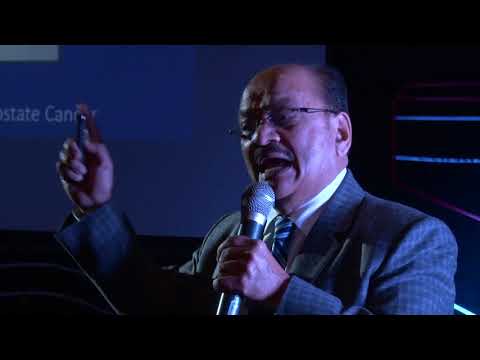
good morning I apologize like dosa like
usually I believe every life deserves
the world-class care and it should be it
is doorstep so it is available to every
person in our country I was the youngest
sibling of my mother and that was my
center of my love and affection one
afternoon in July
dark and rainy when we all were standing
outside the operation theater where my
mother was undergoing a real operation
what a horrible complication the door
open the surgeon came out he stated he
has done everything whatever is possible
to control the bleeding now it is up to
God and somebody asked why this
complication this is if it happened one
in vinegar
my mother died I couldn’t understand his
one in the year was my hundred percent
and that is the one which made me decide
that I am going to be a surgeon I am
going to be a doctor and I am going to
see if I can remove that I know
percentage and have something which can
give a person a most aqueous next 16
years I studied I did a Medical College
in putting I did my Ruby’s month MS and
then either going to England for six
years like specialized in urology I came
back in 97
six I couldn’t get a academic
appointment so I started a small clinic
which is known as your hospital if you
don’t name not my mother
and I started a practice school to the
first step and deep end of surgery I
project that there’s a qrp pursuit
realized that there is the reputation of
doing a private practice because you
have is you have a reputation of the
main power you have a reputation of
interest you have a limitation of
technology night join my senior talent
of permanent of the side who was
breaking this hospital in the yard
known as a graduate pertaining to
hospital of the Plymouth office and then
we started the hospital in 1978 we
started with the dialysis but that was
and then we thought of doing the
transplant but soon we realized there
was the technological explosion and
there was a paradigm shift from an open
from open to endoscopic open and see to
scope and see and from endoscopic it
came to laparoscopic in 90s and then
laparoscopic to the robotic-assisted
laparoscopic the Smoothie technology
exploded making our life much more
easier a bonding much more from us to
cure the patient the laparoscopy is the
well which stands on the shoulder of the
open surgical excellence when robotics
thoroughly stand on the corner of the
open lattice of in surgery then what is
robot the robot is a interface between
the surgeon and the diseases surgeon and
patient virtually same but Robert makes
if you operate remove that we see
such a way that it is painless it is
more reliable more precise and more
rewarding and here in the console when
the person sits with a hand and the foot
control he can control the arms of this
patient card while this is a video card
there you have the video you have the
light source you have the battery
machine all this is connected to the
arms and then that can go and near the
patient this console can be and then you
can do everything through the three DVDs
now does it
overcome six degrees of movement of
several degrees of freedom of movement
which is one more than Thank You murmurs
this is it is the articulated arm and
then movements of the instrument is a
Beeman of better than and the
particularly useful when operating
between the tight confines of the pelvis
now the movements in that movements are
counterintuitive in property the
movements are introduced and look at one
venue that all the control is done by
the finger you control the Cesar when
you do like this the needle goes up when
you come out you can pick up the other
one and this to figure you are doing the
whole surgery undefeated so we find
another important thing sometimes you
cannot play on any human being ever
swear words and men you tell us remember
when you’re operating it does interfere
with your surgery here even if you have
a timer that river is not transmitted
who does operating field and therefore
you have a very better way of doing it
now why the babies list to the patient
that is an obvious scientific reason
there is a poor and that in stupid rules
and after poor and it does not affect
the poor so there is no pressure around
the muscle so there is no pain
afterwards if any doing a laparoscopy
with a hand if the poor can move and it
goes it does have an effect on the
muscle and then you have a slight pain
for a few days talk more for a few days
but Robert you don’t have any pain in
the same evening patient can sit up and
start can start walking at all so why
the pain is left to the surgeon is
because we are done now more than 3,500
happens to be surgery but when you hold
the instrument like this your hands
start getting the fatigue and you
develop it either paid or you develop
your finger or if you are holding a
stupid then for two hours shoulder and
that’s the hazard to the surgeon and the
robot you are very comfortably sitting
here and looking inside and you are not
even washed in between you feel it will
bad you just come out and stretch
yourself maybe outside you can ask for a
cup of coffee and have a coffee before
you force it further and that’s so first
we do it in the lab we take food or any
move the set down the scheme that will
be sent out after descending a suture it
again so we do the package and then we
can use to the okay
it is a compulsory in our place to spend
20 hours on the dry lap
packing and suturing before you go to
the assess open surgery
and when you go to the science paper you
have it on phone which has been
connected and here you can sit here are
the mental states and when you are doing
it mental is already holding your hand
truly the training because this
propertied surgery requires a different
kind of skill it is not a same skill
either you it’s a different skill and
that skew is Ben Ben now over the past
40 years we have the paradigm shift from
open surgery because a poor standard for
laparoscopic surgery and nobody’s
surgery and now here we have seen that
some of the surgery that in the month
Mike shepherd difference between the
laparoscopy and the robotic because we
are also conscious about the
cost-effectiveness with the patient as
soon as to the hospital so some of the
afflictive says it can be done very very
easy by laparoscopy even the laparoscopy
is improving now you have a 3d in
laparoscopy you have a 4k in laparoscopy
you have articulated arms in laparoscopy
so you are improving but there’s the
same time there are two place where Roma
cannot be replaced one is a partial
nephrectomy when you are removing the
PDQ work from the kidney and another is
a radical prostatectomy when you are
doing the prostate cancer surgery and
that to surgery out beats any other way
of doing the surgery and here I give you
an example this man a young man had a
right
he had a solitary quickly because the
other kidney was removed by the tuber
and even this other kidney had an upper
Pole people which was removed by open
surgery so here is another one which is
the radical prosthetic is by heaven here
is the one which I used to do started
way back in 90s the hives to take both I
hours to do the surgery and the usually
when you do the surgery it takes about
two three blood transfusion
here this speech which I’m putting it
it’s so easily put my robe on and this
screech putting into open surgery was so
difficult and Here I am the setting up
that the prostate are the three
principles one is and self-control you
must remove the whole trend and then in
cancer second thing is a quality of life
that is controlling the urination and if
you control the you nation for that you
have exercise secondly you control the
nose rather present nose and you can
stick out nose from the capsule and if
it is a open can fine you can do that
you divide the to the top and then you
count the count of prostate and here
which has been reserved and then it’s
anastomosis between the mudra and the
bladder is the most purposely to open
surgery and laparoscopic surgery here
it’s so beautiful I finished within six
to seven minutes and it is continuous
suture and you have like anastomosis so
that I think I can see an understanding
it there is no leak and I can do better
to this my days previously I used to
remove it in after three weeks patients
to stay for that
Olmo and now this is main difference is
that the baby
the surgery is is quick second equation
is quite on the same page there is no
blood transfusion candidates out within
five days and a certain circle code is
better the preservation of the
urination is better in submission of
sexual function is better and here is
bye-bye series this is the largest
cities in India we have done about 300
cases I know more but this is a small
compared to the international standard
and here what is the five-year survival
but the Robert we do yes there is a
flexible robotic system and here you
have a flexible bit of smoke you can go
into the TV to remove the stone and
again you can see ad you move the table
you can go to the left go to the right
go anywhere you like why because the
kidney is such that it has gone up or
cut it this is the posterior column this
is the posture coming to the intellect
and that different releases are there
sport can be anywhere and here with a
flexible to go to school you can go into
any of the devices very nice without
sitting outside all the people and
controlling the example this is the
store in the lower Knesset no work
ethics of the fittings this is the good
functioning kidney and here is the stone
and this is contrast which denies the
electric system we pass the sheep and
then through the shield we pass the
rotoscope and this zero torque of the
stone is here look at the angle with an
angle 180 degree angle
they spoke moves and then you can see
the stone you can see the spoon and
there are the wires here which is known
as the basket and you step the stone in
the basket and then you get out from
that lower village go up in the upper
calyx and park it and pack it in a
beautiful position and then pass and
laser fiber and then with the laser
fiber you can be centigrade to store now
the awareness is there regarding the
stones we just receive large stone are
dissipating in our series now it is only
forty percent but eighty two percent of
the schools are less than this kind of
the curves and you can remove with the
rotors could be or a small different
technique and formerly in the back we
have normally between other such big
stones and then the this stone again was
difficult to remove eye and
or value not Rostova treatment because
it was a different type of density and
here we use a lot
robotic surgery the same auto-feed mean
open the pelvis of the kidney stone and
the stone is and you can see that the
last and the woman’s are either a mother
a wife or sister and for the benefit for
us we change that and in 1999 for the
first time in India in the pit you came
here and shown the laparoscopic robotic
surgery
kidneys without giving tell Scott this
is a freshman and moment it gives you
one Series in 2005 we we got another
technique which you could come over the
single port to the baby very would and
then the star would not be seen at all
and this is something we should do it
for the donor who is doing and most of
the donors are cremated and here now
starting to do a recipient also Robert
to take the advantage of the second
recipient has a scar here and then your
who get the artery anastomosis that
those are it means vein and artery and
here we have got the ring between the
two pull down and open up the wave and
then anastomosis now here you can zoom
in you can be as near to the anastomosis
as you’d like and your precision is I
think after looking at this my wife says
I may not it once is the anastomosis you
open up you didn’t come south and then
we immerse the most beautiful with
remember when you do this there is a CEO
who we have to inflate and make that
common pco2 no organism is the life if
it was oxygen so in this patient most of
them are navigating half-eaten suit and
there is people suit there is no
bacteria remains alive and it comes in
infection free this is the biggest
advantage different facility here to
bring the young generation and that’s
value young generation is much smarter
did you so that 17 year old old let’s
talk about whole online learning and
eating and playing but leather showed
the how you can be useful here is though
in which is most important is most
important is each spend as we are young
so there might be stimulated and once
they are – to be little when they grow
up they become
is awareness people are not aware they
have what the disease because only this
is does not have a symptoms to therefore
we we have made them to people about the
prostate and prostate cancer and we
diagnose them and that’s that gives you
the awareness and here train has left
the station is not going to stop and
here in last five years not the
averaging 10,000 robotic surgery and
that is changed this currently the
device atop the crane Sunday before did
that dream who owned a robot is going to
be manually not only till the time it is
converted to a general one by
summarizing
[Applause]
usually I believe every life deserves
the world-class care and it should be it
is doorstep so it is available to every
person in our country I was the youngest
sibling of my mother and that was my
center of my love and affection one
afternoon in July
dark and rainy when we all were standing
outside the operation theater where my
mother was undergoing a real operation
what a horrible complication the door
open the surgeon came out he stated he
has done everything whatever is possible
to control the bleeding now it is up to
God and somebody asked why this
complication this is if it happened one
in vinegar
my mother died I couldn’t understand his
one in the year was my hundred percent
and that is the one which made me decide
that I am going to be a surgeon I am
going to be a doctor and I am going to
see if I can remove that I know
percentage and have something which can
give a person a most aqueous next 16
years I studied I did a Medical College
in putting I did my Ruby’s month MS and
then either going to England for six
years like specialized in urology I came
back in 97
six I couldn’t get a academic
appointment so I started a small clinic
which is known as your hospital if you
don’t name not my mother
and I started a practice school to the
first step and deep end of surgery I
project that there’s a qrp pursuit
realized that there is the reputation of
doing a private practice because you
have is you have a reputation of the
main power you have a reputation of
interest you have a limitation of
technology night join my senior talent
of permanent of the side who was
breaking this hospital in the yard
known as a graduate pertaining to
hospital of the Plymouth office and then
we started the hospital in 1978 we
started with the dialysis but that was
and then we thought of doing the
transplant but soon we realized there
was the technological explosion and
there was a paradigm shift from an open
from open to endoscopic open and see to
scope and see and from endoscopic it
came to laparoscopic in 90s and then
laparoscopic to the robotic-assisted
laparoscopic the Smoothie technology
exploded making our life much more
easier a bonding much more from us to
cure the patient the laparoscopy is the
well which stands on the shoulder of the
open surgical excellence when robotics
thoroughly stand on the corner of the
open lattice of in surgery then what is
robot the robot is a interface between
the surgeon and the diseases surgeon and
patient virtually same but Robert makes
if you operate remove that we see
such a way that it is painless it is
more reliable more precise and more
rewarding and here in the console when
the person sits with a hand and the foot
control he can control the arms of this
patient card while this is a video card
there you have the video you have the
light source you have the battery
machine all this is connected to the
arms and then that can go and near the
patient this console can be and then you
can do everything through the three DVDs
now does it
overcome six degrees of movement of
several degrees of freedom of movement
which is one more than Thank You murmurs
this is it is the articulated arm and
then movements of the instrument is a
Beeman of better than and the
particularly useful when operating
between the tight confines of the pelvis
now the movements in that movements are
counterintuitive in property the
movements are introduced and look at one
venue that all the control is done by
the finger you control the Cesar when
you do like this the needle goes up when
you come out you can pick up the other
one and this to figure you are doing the
whole surgery undefeated so we find
another important thing sometimes you
cannot play on any human being ever
swear words and men you tell us remember
when you’re operating it does interfere
with your surgery here even if you have
a timer that river is not transmitted
who does operating field and therefore
you have a very better way of doing it
now why the babies list to the patient
that is an obvious scientific reason
there is a poor and that in stupid rules
and after poor and it does not affect
the poor so there is no pressure around
the muscle so there is no pain
afterwards if any doing a laparoscopy
with a hand if the poor can move and it
goes it does have an effect on the
muscle and then you have a slight pain
for a few days talk more for a few days
but Robert you don’t have any pain in
the same evening patient can sit up and
start can start walking at all so why
the pain is left to the surgeon is
because we are done now more than 3,500
happens to be surgery but when you hold
the instrument like this your hands
start getting the fatigue and you
develop it either paid or you develop
your finger or if you are holding a
stupid then for two hours shoulder and
that’s the hazard to the surgeon and the
robot you are very comfortably sitting
here and looking inside and you are not
even washed in between you feel it will
bad you just come out and stretch
yourself maybe outside you can ask for a
cup of coffee and have a coffee before
you force it further and that’s so first
we do it in the lab we take food or any
move the set down the scheme that will
be sent out after descending a suture it
again so we do the package and then we
can use to the okay
it is a compulsory in our place to spend
20 hours on the dry lap
packing and suturing before you go to
the assess open surgery
and when you go to the science paper you
have it on phone which has been
connected and here you can sit here are
the mental states and when you are doing
it mental is already holding your hand
truly the training because this
propertied surgery requires a different
kind of skill it is not a same skill
either you it’s a different skill and
that skew is Ben Ben now over the past
40 years we have the paradigm shift from
open surgery because a poor standard for
laparoscopic surgery and nobody’s
surgery and now here we have seen that
some of the surgery that in the month
Mike shepherd difference between the
laparoscopy and the robotic because we
are also conscious about the
cost-effectiveness with the patient as
soon as to the hospital so some of the
afflictive says it can be done very very
easy by laparoscopy even the laparoscopy
is improving now you have a 3d in
laparoscopy you have a 4k in laparoscopy
you have articulated arms in laparoscopy
so you are improving but there’s the
same time there are two place where Roma
cannot be replaced one is a partial
nephrectomy when you are removing the
PDQ work from the kidney and another is
a radical prostatectomy when you are
doing the prostate cancer surgery and
that to surgery out beats any other way
of doing the surgery and here I give you
an example this man a young man had a
right
he had a solitary quickly because the
other kidney was removed by the tuber
and even this other kidney had an upper
Pole people which was removed by open
surgery so here is another one which is
the radical prosthetic is by heaven here
is the one which I used to do started
way back in 90s the hives to take both I
hours to do the surgery and the usually
when you do the surgery it takes about
two three blood transfusion
here this speech which I’m putting it
it’s so easily put my robe on and this
screech putting into open surgery was so
difficult and Here I am the setting up
that the prostate are the three
principles one is and self-control you
must remove the whole trend and then in
cancer second thing is a quality of life
that is controlling the urination and if
you control the you nation for that you
have exercise secondly you control the
nose rather present nose and you can
stick out nose from the capsule and if
it is a open can fine you can do that
you divide the to the top and then you
count the count of prostate and here
which has been reserved and then it’s
anastomosis between the mudra and the
bladder is the most purposely to open
surgery and laparoscopic surgery here
it’s so beautiful I finished within six
to seven minutes and it is continuous
suture and you have like anastomosis so
that I think I can see an understanding
it there is no leak and I can do better
to this my days previously I used to
remove it in after three weeks patients
to stay for that
Olmo and now this is main difference is
that the baby
the surgery is is quick second equation
is quite on the same page there is no
blood transfusion candidates out within
five days and a certain circle code is
better the preservation of the
urination is better in submission of
sexual function is better and here is
bye-bye series this is the largest
cities in India we have done about 300
cases I know more but this is a small
compared to the international standard
and here what is the five-year survival
but the Robert we do yes there is a
flexible robotic system and here you
have a flexible bit of smoke you can go
into the TV to remove the stone and
again you can see ad you move the table
you can go to the left go to the right
go anywhere you like why because the
kidney is such that it has gone up or
cut it this is the posterior column this
is the posture coming to the intellect
and that different releases are there
sport can be anywhere and here with a
flexible to go to school you can go into
any of the devices very nice without
sitting outside all the people and
controlling the example this is the
store in the lower Knesset no work
ethics of the fittings this is the good
functioning kidney and here is the stone
and this is contrast which denies the
electric system we pass the sheep and
then through the shield we pass the
rotoscope and this zero torque of the
stone is here look at the angle with an
angle 180 degree angle
they spoke moves and then you can see
the stone you can see the spoon and
there are the wires here which is known
as the basket and you step the stone in
the basket and then you get out from
that lower village go up in the upper
calyx and park it and pack it in a
beautiful position and then pass and
laser fiber and then with the laser
fiber you can be centigrade to store now
the awareness is there regarding the
stones we just receive large stone are
dissipating in our series now it is only
forty percent but eighty two percent of
the schools are less than this kind of
the curves and you can remove with the
rotors could be or a small different
technique and formerly in the back we
have normally between other such big
stones and then the this stone again was
difficult to remove eye and
or value not Rostova treatment because
it was a different type of density and
here we use a lot
robotic surgery the same auto-feed mean
open the pelvis of the kidney stone and
the stone is and you can see that the
last and the woman’s are either a mother
a wife or sister and for the benefit for
us we change that and in 1999 for the
first time in India in the pit you came
here and shown the laparoscopic robotic
surgery
kidneys without giving tell Scott this
is a freshman and moment it gives you
one Series in 2005 we we got another
technique which you could come over the
single port to the baby very would and
then the star would not be seen at all
and this is something we should do it
for the donor who is doing and most of
the donors are cremated and here now
starting to do a recipient also Robert
to take the advantage of the second
recipient has a scar here and then your
who get the artery anastomosis that
those are it means vein and artery and
here we have got the ring between the
two pull down and open up the wave and
then anastomosis now here you can zoom
in you can be as near to the anastomosis
as you’d like and your precision is I
think after looking at this my wife says
I may not it once is the anastomosis you
open up you didn’t come south and then
we immerse the most beautiful with
remember when you do this there is a CEO
who we have to inflate and make that
common pco2 no organism is the life if
it was oxygen so in this patient most of
them are navigating half-eaten suit and
there is people suit there is no
bacteria remains alive and it comes in
infection free this is the biggest
advantage different facility here to
bring the young generation and that’s
value young generation is much smarter
did you so that 17 year old old let’s
talk about whole online learning and
eating and playing but leather showed
the how you can be useful here is though
in which is most important is most
important is each spend as we are young
so there might be stimulated and once
they are – to be little when they grow
up they become
is awareness people are not aware they
have what the disease because only this
is does not have a symptoms to therefore
we we have made them to people about the
prostate and prostate cancer and we
diagnose them and that’s that gives you
the awareness and here train has left
the station is not going to stop and
here in last five years not the
averaging 10,000 robotic surgery and
that is changed this currently the
device atop the crane Sunday before did
that dream who owned a robot is going to
be manually not only till the time it is
converted to a general one by
summarizing
[Applause]
Please follow and like us: