
TED talks are all about ideas and one of
the biggest ideas ever is world peace
everybody from preachers to political
leaders to beauty pageant winners seems
to be in favor of it but nobody knows
how to create it well I have made a
discovery there is a common factor
behind all not all but many of the
behaviors and beliefs that divide us so
deeply into us and them I believe this
insight is something that could help us
resolve prejudice racism sexism
religious extremism nationalist
extremism which might even lead to world
peace what is that wonderful insight at
the heart of all those isms the problem
is adjectives really specifically
adjectives being improperly used as
nouns
okay I’m an English major I can’t help
it now you all know what a noun is a
person place or thing and an adjective
is very simply a word that describes a
noun
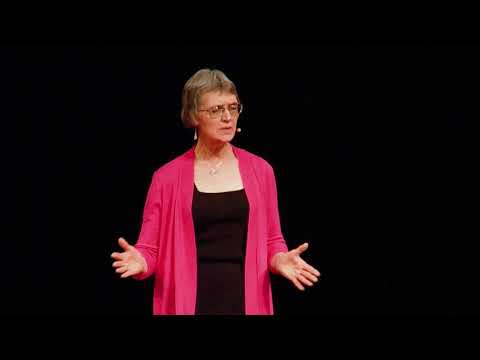
I’m wearing a pink jacket if you were
going to refer to it you wouldn’t stop
at the adjective and call it a pink you
would finish the sentence with the noun
jacket but all too often when we refer
to other people stopping at the
adjective is exactly what we do we fail
to finish the sentence with the noun the
person an example the word creative it
is a perfectly respectable responsible
adjective but increasingly I’m seeing it
misused as a noun as in describing
people who create interesting or
beautiful things not creative people or
people doing creative things but
creatives now I think actually this
usage is intended to be inclusive to
come up with a term that is broader than
artists but ironically it has the
opposite effect because using creative
as a noun arbitrarily divides people
into US and them by making that a label
that only applies to certain people now
I’m a writer
I guess I qualify I get to be a creative
if you make photographs or quilts or
paintings or music okay you’re creatives
– come on over here we’re us but what
about you scientists or engineers or
plumbers or accountants too bad so sorry
you’re not creative so you’re over there
you’re them
now this usage completely disregards all
of the creative problem-solving that
these people do and what it does is
create an arbitrary and artificial
us-and-them now I’m wondering if it
isn’t just as artificial and arbitrary
to use so many of the adjectives we use
as nouns to divide ourselves into US and
them words like white black Native
Christian Muslim rich poor liberal
conservative victim redneck elderly
handicapped homeless we use so many of
these words as nouns that even the
dictionary calls a lot of them nouns but
really if you take a closer look there
adjectives they describe the noun person
now when we misuse these adjectives as
nouns I’m sure most of the time there’s
no malicious intent whatsoever it’s just
a handy verbal shortcut but what it does
just as with the word creative it steals
an adjective a descriptor and turns it
into a label that can only apply to
certain people and there are several
problems with using labels for people
one of them is what are labels very
commonly attached to baggage we all have
prejudices and assumptions and
expectations and misconceptions about
other groups from our own experience we
bring that baggage in every time we use
an adjective as a noun
and it’s that baggage that leads us not
just to describe people with adjectives
but to label them with the ugly
adjectives the hateful ones the nasty
ones that are meant to increase that
distance between us and them the second
problem with labels they stick and what
happens when you stick on a label you
hide whatever is behind it so if I
categorize you with a label like redneck
or liberal or homeless I make that one
aspect of you the only thing I see or
the only thing that matters to me I see
you one dimensionally and I ignore or
miss all of the rest of the complex
things that make you the individual
human being you are and the other
problem with labels is that they limit
the way we see ourselves as well as the
way we see other people they give us
only one or two ways to define our
tribes now we as humans evolved to
belong to small groups family groups and
then larger tribal groups and
communities it’s even possible that
early on our survival depended on that
us and them thinking on our ability to
defend our people and our resources
against outsiders but I suspect in
today’s world it’s possible our survival
might depend on broadening the way we
define our tribes of expanding who we
see as us instead of them I would like
you to imagine with me that this room is
growing and growing and growing and it’s
expanding into the most enormous stadium
you have ever seen
filled with thousands of people from all
over the world people of all races all
nationalities religions all ages an
incredible diversity if you walked into
that gathering where might you fit who
might me like you how would you find
your tribe well if we started with the
obvious which we so often do because
it’s comfortable
I for example might see my tribe as
white people or women or Americans or
older people and all of those are
perfectly legitimate adjectives that
describe aspects of Who I am but if I
grab one of those and stop there
I overlook all the other potential
tribes in this diverse huge group that I
might belong to here are just a few of
them
people who write people who have
children people who have grandchildren
people who have been widowed or divorced
people in 12-step recovery programs
people who love to read people who can’t
recognize their own faces in the mirror
without their lenses in this vast and
diverse gathering of people there are
literally dozens and dozens of tribes
that I could belong to that each of us
could belong to and once we start
finding those commonalities and
connections it’s entirely possible that
every person in that group could become
us instead of them of course there’s
just one catch in order to make those
connections we have to be willing to
discover people instead of labeling them
with adjectives we have to have
conversations and it’s kind of difficult
to have a conversation with an adjective
now by now you may have decided that I
was
badly injured by an adjective at some
point and I have something against them
not true
I like adjectives I use them they’re
useful sometimes they aren’t very
important for example suppose I have
just robbed a convenience store and I am
running off down the street as fast as I
can go with a six-pack of beer in each
hand when the clerk calls the police I
would strongly recommend using
adjectives to describe my race and my
gender and my height and even my weight
and everything else about me
that’s what adjectives are for they’re
descriptors so I’m certainly not
suggesting that we stop using them I
just suggest that we use them more
carefully more consciously to remember
that they don’t define people they
describe aspects of who we are and I
don’t mean that we should ignore those
aspects either all of the things about
us like our race our religion where and
how we grow up our abilities our
experiences those certainly shape who we
are and how we are in the world and it
would be ridiculous to pretend none of
those matter but isn’t it just as
ridiculous to grab one or two of those
characteristics and pretend that they’re
the only thing that makes us who we are
organizations that support people with
special needs ask us to use phrases like
people with disabilities instead of
saying the disabled to always see the
person first and all I’m suggesting is
that we extend that same courtesy and
that same respect to everybody now if we
do that is that really going to bring
about world peace of course I was
exaggerating completely
but maybe not because that’s a small
change a small verbal shift something
that’s easy enough any of us can do it
but what happens when we make that
verbal shift we don’t just change our
language we change our thinking and that
has the potential to make a big
difference so why don’t we try it to
choose not to stop at that easy
adjective but to finish the sentence to
get to the person and to keep in mind
that the most important part of speech
is that essential human now thank you
Please follow and like us: