
how’s everyone doing good happen here
all right so what in the world is
virtual reality now
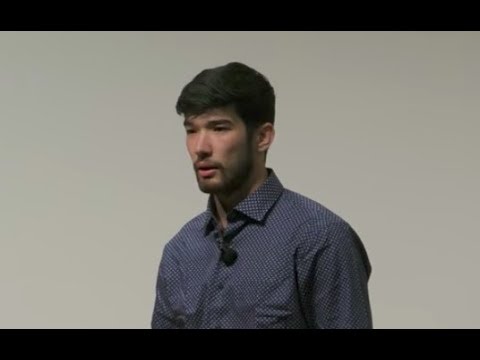
my name is musashi Schaffer and I’m a
computer engineering and computer
science student here at Seattle
University and – a lot of people
surprised I do more than just study
computers sometimes I build stuff with
them and in particular last summer I
could start being involved with what are
called hackathons and for those of you
who don’t know what a hackathon is it’s
basically where a bunch of nerds like
myself lock ourselves in a room for
entire weekend and survive on nothing
but sugar caffeine and free pizza
because as a college student free food
is basically what keeps me alive now
hackathons usually have a purpose it’s
where you’re trying to solve an issue
using normally technology or some sort
of innovative way and in particular this
hackathon focused on education and
virtual reality and how we can utilize
this new technology to help enhance our
education in the schools so my team and
I we decided to develop a sort of
experience they could actually step in
to become part of it was a story and as
you interacted with this story you had
this narration and we focused on third
grade Common Core standards and more
particularly verb tense and according to
Google which you know because who
remembers verb tense and what that means
it’s basically using language to tell
time so past present future and those
indications within language structure so
we had was we had the student step into
the story and as they interacted with
the story we had a narrator come on and
the narrator would then emphasize on
certain key words to indicate whether
what they’re doing is part of the
present or maybe something they had done
before in the past or something maybe
they should do in the future and through
this we had our auditory reinforcement
now on top of that we had a visual
reinforcement and this came in the form
of the sentence that the narrator was
sane
in front of them and from that we
highlighted the certain keywords with a
different color depending on whether it
was past present or future and from this
we now have the auditory and the visual
reinforcement in learning now lastly
I’ve already mentioned this one but you
don’t really realize it until you
pointed out it’s the physical
interaction because you’re there
interacting with the story around you
being a part of it
and from that we had our third
reinforcement learning so now we’re able
to have the auditory the visual and the
physical reinforcements are all engaging
the student at once and with this we
actually received the kind of winning
category for best integration of
virtuality technology and learning now
some of you may be seen virtuality but
some are also very unfamiliar with it
basically it’s that thing that goes
against all the times your parents said
you’re sitting too close to the TV
because now we’re strapping that screen
about an inch away from your eyes or you
see it as the viral video on Facebook of
Grandma freaking out in her chair
because she thinks she’s on a roller
coaster or maybe the last one where’s
the guy at the Best Buy stand who all of
a sudden is false smack face forward
into the display because he you know
lost track of where he was but what’s
common between all these interactions
why do we have such a high emotional
response to virtual reality and this
comes from the idea of presence and
presence is how much you feel like
you’re actually there in the moment an
example of what this is a good
comparison is imagine staring at a
picture of the pyramids in a textbook or
on a strain seeing a picture of it now
imagine standing there beneath the
pyramids looking up and its vastness
which is more engaging the picture or
being there and this is where virtual
reality really separates itself from
other forms of meteorite
is because you can actually stand there
in front of it you can look up at the
pyramids and feel as if you’re actually
there not just looking at it through a
book and what people have found is that
presence and emotion are highly
correlated and they come together so the
more presence you feel the higher of an
emotional response you have let’s put it
in this way imagine watching a protest
on the TV or re-invited in the newspaper
depending on who you are you may have an
emotional response it may incite some
feelings in you but now imagine actually
standing there in the middle of that
protest imagine being there surrounded
by the passion look into your riot and
see people full of just conviction to
your left the same it’s gonna affect you
differently you’re gonna be more
emotionally attached to what’s going on
because you’re there and this is where
the power of virtuality can come in is
because you have this high level of
presence which means you have this great
emotional connection to it it separates
itself from other forms of media it’s
not just reading pages of a book it’s
not just watching the video online
because no matter how engaging a video
may be no matter how much it draws you
in closer all of a sudden you hit
something there’s something separating
you from what you’re looking at and
yourself and in this case it’s a
physical barrier it’s called the screen
it’s a window that you have to look
through from the outside so there’s
always this last little bit of
disconnect between you and the subject
of what you’re trying to view but what’s
different is that with virtual reality
break through that you can stand there
in the middle of it be a part of it
interact with it to be more emotionally
connected to it now even with that
virtual reality still may be hard to
kind of picture right so how about we do
this
who wants to try going to space yeah
anyone okay how about this right there
come up so what we’re gonna do is we’re
gonna have a live demo what VR can
actually do so come up this way actually
because we have cords here again
computer I do computers that’s that so
okay so was it a sepia nice from you
alright so here’s what we gonna have you
do we are basically have you ever been
in space before okay um another
questions are you allergic to bees
peanut butter okay that really doesn’t
matter but I mean like good to check
okay so here’s this gonna happen I’m
gonna unstrap this and we’re gonna put
it on your head
you’re gonna come on I’m gonna tighten
it up and we’re gonna make it until it’s
nice and snug that way you can see and
with your right hand there’s a little
knob I’m gonna meet here what you can
use to adjust the ones with okay cool
go ahead and pull that down it’s just
easier and less awkward that way cool
alright so we begins
okay no just the lens with until it’s
nice and pretty clip
crisp image
alright how’s that looking is it pretty
good okay so in terms of like
interacting with this you can walk
around and if you see a blue fence don’t
run into it because you might fall stage
but actually no you will find you give
you lots of space okay so here’s what’s
gonna happen
walk for it very cool no look up to your
left and try and find the Sun now look
around you turn around that’s the
International Space Station and you’re
in the middle of space so we’re gonna
try one little thing extra I’m gonna
make let you try and move around a bit
so with your left hand I’m gonna hand
you a controller or say yes and right
here there’s gonna be a little joystick
so you’re gonna press for it on it I
know move your butt you’re gonna move in
the direction that you look so if you
want to go towards the space station
look towards it now move or you can
completely turn your body to it’ll help
with the orientation and then press
board on the joystick
you can start to fly around
so maybe go slow cuz momentum really
builds in space you’re gonna crash into
it so you’ll be okay don’t worry you’re
doing great
feel free to explore around look around
for a bit virtual reality you can
explore space you can go around and as
you can tell you kind of get lost in
your own world how is it all right now
let’s try this with your right hand I’m
gonna hand you this and the suppose if
you have the trigger so that’s this and
the grip which is on the side now if you
go towards the space station reach out
with your right hand you can see it
right and grab the space station you can
grab onto it so why towards it and then
try and grab onto the space station
Oh squeeze oh you almost got it all
right try it again round 2 maybe not so
fast going so fast
all right so try and grab with your
right hand just reach out so the trigger
and the grip so don’t not this and this
okay
don’t use your thumb don’t worry hey
there you go now you’re actually
interacting with this virtual world
you’re literally grabbing onto it and if
you want you can climb around or even
like launch yourself off by point and
letting go just have fun or you can go
back to the jetpack you know whatever is
more approachable
awesome alright as much fun two spaces
we have a limited time and imma have to
bring you back to earth sorry about that
alright so you can take over to take
that set off now thank you very much
alright so why does this matter so on
top of working with computers I also
work at a middle school every single
week and there I work either
individually in small groups or an after
school program with sixth seventh and
eighth graders mainly sixth seventh
eighth graders did everything but I
remember whenever I start my day I try
and have a nice interaction with the
student I try and ask him how’s your day
been how was your weekend or if there’s
some activity that I knew was happening
at the school I asked them about it and
that’s because I’m trying to build a
connection with the student because what
the connection it’s easier to engage
them and when you have the engagement
they can learn these are the steps that
I try and go through whenever I work
with them and I remember one week this
school had gone on a field trip to the
zoo and so I was working with the
student individually and I grabbed him
out of a sixth-grade math class and we
started heading to the library to go
work on her work on the math and I start
to do that trying to build the
connection so knowing that they’d gone
to an field trip I asked hey how is the
field trip to the zoo and I won’t forget
the response that I got because was sad
something Shorter’s she said I didn’t
get to go now this wasn’t because the
student got in trouble
it wasn’t because they’re a bad student
it wasn’t even is because of outside
factors that the student couldn’t
control those due to an outside force a
limitation due to what’s accessible for
them and this is something that we see
all too often in education a lack of
accessibility outside forces affecting
how their education and experiences in
the school system are
this can be not just a field trip but
maybe the schools funding maybe a lab
doesn’t have enough materials to do the
experiment that students have been
excited for all year
maybe it’s the disconnect between the
educators and the students therefore you
can’t have that connection
maybe it’s because you have an English
language learner who’s trying to juggle
both there at home life and culture and
the one that they’re forced to in the
school and the educators don’t
necessarily have that connection between
them how many of you work in education
and so how many of you experience any
sort of interaction with education let’s
leave all right all right so then you
understand education and its resources
are very limited so let’s go back to
that whole thing of why does virtual
reality matter it matters because of
that idea of presence and that idea of
emotion how if we can utilize that
emotional connection that you have to
something you’re building that
connection and as you have the three
different aspects of engagement you have
the engagement and from that you can
have the learning so I want to encourage
you to think about this for a second
imagine if a school had a lab full of VR
headsets that maybe once a week a
student could come into and have his
like a normal routine that they get to
do what if now instead of being limited
to field trips that are maybe twice a
year you have a lab where you can go and
explore the world what if for that
student who net doesn’t necessarily have
the at home support to get them onto
that field trip now we bring that to
that and instead of being limited to the
places you can drive to in a single day
you can literally go to space you can go
underwater you can explore different
planets different cultures go to the
pyramids even imaginary worlds that
someone else has created this is all
possible works reality what if we could
engage students who are English language
learners now let me ask you this if I
were to hold a water bottle right here
and you hold it in front of you you’re
gonna know that it’s water you know that
it’s a bottle full liquidy
drink from now imagine in virtual
reality being able to hold that up
interact with it and then having to text
pop up saying this is a water bottle but
both in the language you’re trying to
learn and the one that you’re familiar
with we’re bridging that gap we’re
connecting the students to the education
and we’re teaching them in a different
way this is why it matters it’s a new
form of engagement a new form of
learning we create the connection we
have the emotion we have the engagement
and from there we can learn imagine
being in a science lab and be able to J
giant’s catapult just the test physics I
don’t know about you but I’m pretty sure
if I don’t catapult at my school I would
get into a lot of trouble but in VR it
allows you to have opportunities like
that that level of engagement that’s
unique now unfortunately education is
never really an early adopter of
technology anyone who’s had experience
in education knows that funding is
limited and it’s hard to get the
resources that you need but let me
propose it to you in this way
how many of you in this audience have a
smartphone in their pocket image to show
hands right
nearly everyone how many of you knew
that as of June it will been a decade
since the first iPhone came out so
that’s 10 years in 10 years we went from
not even knowing the concept of what a
smart phone is and now every single
person pretty much in this room having
one in their pockets now let’s continue
this right now this is expensive it is
it’s for early adopters it’s for those
that can afford it and that’s not
education but imagine 10 years from now
where are we gonna be what’s gonna be
the new device that’s in our pocket what
is it gonna be capable of because right
now we already have VR on the phones
some of you may have even tried it out
there sure it’s not the same level this
but what it means is that we’re on our
way for it to be more accessible more
available to everyone and right now it’s
on us as the educators as the people
with ideas as the innovators as those
who care about the future of our
children to understand that VR is more
than just gaming it’s a way that we can
engage people in new meaningful ways to
get them emotionally connected to the
experiences that they’re trying to learn
from because we have the connection we
have the engagement and from that we
have a learning so I challenge you today
to try and help shape the direction that
we move to show that it’s more than just
gaming but instead we can use it to help
engage teach and shape our upcoming
generations thank you
you
Please follow and like us: