
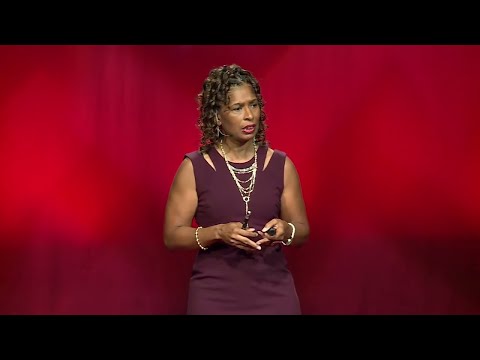
[Applause]
[Music]
[Applause]
[Music]
ice ice baby yeah that’s what I’m here
to talk about Ice Ice Baby it’s so
wonderful to be here at hu that’s right
feeling all the love for my community I
want to talk a little bit tonight about
the ice and how we’re seeing the ice
change I’m gonna talk a little bit about
the way that we’re able to address that
with the NASA missions and so let me
start off a little bit with the NASA
vision it’s to reach for new heights and
reveal the unknown so that we do and
learn will benefit all of humankind and
then of the mission I want you to focus
on that last line it says the
stewardship of Earth at the NASA Goddard
Space Flight Center which I just reached
my 25th year anniversary they’re
supporting awesome science and the
science we focus there is on Helios
physics or science astrophysics and
planetary science I’ve been very
fortunate that my career and training at
Howard University and MIT started off in
learning how to control spacecraft as
you see here and then going on to be a
headquarters program exec and then
finally being an instrument manager and
actually managing instruments for
spacecraft missions starting from 10
million dollars up to five hundred
million dollars and in this case
icesat-2 which you see here is a billion
dollar mission so when we’re able to
look at the changes in the environment
and particularly in Earth’s environment
we use a collaborative observing network
and that ultimately is to provide the
consumers our communities with
information on weather knowing things
like how a long-term
midterm climate is changing extreme
weather occurring and the way that our
electrical systems and the carbon cycle
as we see it are all interacting
together we’re going to focus mainly on
that ecosystem and carbon cycle and the
Sun and Earth interaction so ice plays
an extremely vital role in our global
environment I mean we we know about the
precipitation and condensation but
really we look at how is the weather
changing the water rising and ices
changing those things all affect our
communities in particular isit is as
being an enormous impact to the change
in our temperatures around the globe
Goddard leads that challenge by using
observing satellites as you see here so
I mentioned before there was a mission
there Lola it’s actually Lunar
Reconnaissance Orbiter and Lola is a
laser altimeter if you look at that
first photo of Apollo not much detail
1960s we are now able to create maps
that have a resolution of three
centimeters so I’m going to allow some
of our scientists here dr. Tom Newman
and Thor force in Markley will talk a
little bit about how we actually do the
concept of ice at
we can see the sea-ice can see a forest
but it’s much much harder to measure is
how hight things are on a global scale
almost impossible I said to adds the
third dimension the elevation repeating
measurements for my satu will allow us
to measure changes in the ice sheets or
in the ocean or in land I said to is
designed to measure the changes that are
going on in the cryosphere in the polar
regions all the change is at the edges
those are the steeply sloping parts of
the glacier that interact with the ocean
and that’s where all the action is
that’s where all the mass is being lost
in order to estimate the mass changes we
need to know the height of things the
mission ISO – carries a single
instrument is called Atlas the advanced
topographic laser altimeter system
analyst sends out small pulses of laser
light 10,000 times a second and by
measuring precisely how long it takes
that light to go from the spacecraft
down to the earth and back up to the
spacecraft allows us to figure out what
the height of the surface is beneath ice
a tube we need to measure the time of
flight of a single photon or single
laser pulse with a precision of a
billionth of a second NASA engineers had
to come up with entirely new ways of
measuring time very precisely a
billionth of a second translate to an
elevation change precision of just a few
centimeters climate change is amplified
in the polar regions ice a 2 is designed
to measure those areas and will help us
to understand what’s going on with our
planet
[Music]
we want to be able to look at things
that you can see the elevation the
crevices the cracks we want to be able
to look out well at the tree canopy
surfaces it takes us 10,000 photons per
second to be able to make these
measurements and we only capture a few
so this gives you a little bit of an
idea of what the life of an Atlas photon
is it shoots down from the surface of
the spacecraft attention photons prepare
to measure Earth’s changing ice laser
pulse 28 for
[Music]
[Music]
[Applause]
[Music]
[Music]
[Music]
[Music]
[Music]
excellent job though your travel time
has been recorded let’s add it to the
elevation data set
ready the next group insanely cool is
right so unfortunately it’s insanely
terrible what’s happening to our sheets
ice sheets and so some of the data that
we’ve been able to collect is shown that
this is the yeah copious Finn glacier
it’s melting one of the fastest melting
glaciers in Greenland in 10 years we’ve
lost more than we’ve lost in the
previous hundred years in terms of ice
I’m about to show you an actual cowling
event where the ice begins to break
apart this ice that broke apart is about
the size of Manhattan it’s one of the
largest razor cleaving events we’ve ever
seen we watched and recorded the largest
witness calving event ever caught on
tape so how big was this calving event
that we just looked at will resort to
some illustrations again to give you a
sense of scale it’s as if the entire
lower tip of Manhattan broke off except
that the thickness the height of it is
equivalent to buildings that are
two-and-a-half or three times higher
than they are
[Music]
that’s a magical miraculous horrible
scary thing I don’t know that anybody’s
really seeing the miracle and horror of
that it took a hundred years for it to
retreat eight miles from 1900 to 2000
from 2000 to 2010 it retreated nine
miles so in 10 years it retreated more
than it had in the previous 100
so we live in a very delicate balance
with the Sun we can’t alter its pattern
so we must be very mindful of what we
can alter in particular when we look at
things like the changing of the seasons
and ice we see that the ice is
decreasing and the sea ice is also
melting things are no longer coming back
as you say the growth periods they’re
shortened and why is that well we notice
effect of soot I just had a friend who
went to Alaska last week and she saw
black on the surface of ice where do you
think it comes from comes from pollution
from carbon so as a result I want you to
think about the things that you can do
to change that variability that we have
the ability to change which is carbon
cycle our carbon burning fuels and cars
the things that we actually do not think
about where we put fertilizer in the
ground all of these have an impact on an
environment and it’s been told by many
scientists that this is the thing that
they think we can actually change so
what are we doing in the United States
it’s not all completely bad we’ve
actually son said that we’re doing about
30% of recycling and think about
recycling something as simple as a
luminol can because many times people
say oh this doesn’t have an impact but
it does an aluminum can to make a new
one that takes 95% more energy than just
recycling one you can save the energy on
the order of say running your TV for
three hours we are also being very
creative and innovative by creating new
technologies like hybrid cars and being
able to use old blue jeans to make
insulation but I want you to know that
it takes all of us the diversity that
ideas are afforded the ability to
collide and spark innovation is
important things like the International
Space Station don’t happen without your
ability to be involved and engaged we
see no boundaries from space
Gene Roddenberry believed that space was
for everyone like the Star Trek crew
and it is the children here in this
audience the students at Howard you are
part of that vision of diversity be
impactful remember to aim high as I say
shoot for the moon and even if you miss
you’ll still be amongst the stars I
always say peace because I believe in
peace and not war but positive energy
activates continuous elevation thank you
for having me tonight
[Applause]
[Music]
[Applause]
[Music]
[Applause]
[Music]
ice ice baby yeah that’s what I’m here
to talk about Ice Ice Baby it’s so
wonderful to be here at hu that’s right
feeling all the love for my community I
want to talk a little bit tonight about
the ice and how we’re seeing the ice
change I’m gonna talk a little bit about
the way that we’re able to address that
with the NASA missions and so let me
start off a little bit with the NASA
vision it’s to reach for new heights and
reveal the unknown so that we do and
learn will benefit all of humankind and
then of the mission I want you to focus
on that last line it says the
stewardship of Earth at the NASA Goddard
Space Flight Center which I just reached
my 25th year anniversary they’re
supporting awesome science and the
science we focus there is on Helios
physics or science astrophysics and
planetary science I’ve been very
fortunate that my career and training at
Howard University and MIT started off in
learning how to control spacecraft as
you see here and then going on to be a
headquarters program exec and then
finally being an instrument manager and
actually managing instruments for
spacecraft missions starting from 10
million dollars up to five hundred
million dollars and in this case
icesat-2 which you see here is a billion
dollar mission so when we’re able to
look at the changes in the environment
and particularly in Earth’s environment
we use a collaborative observing network
and that ultimately is to provide the
consumers our communities with
information on weather knowing things
like how a long-term
midterm climate is changing extreme
weather occurring and the way that our
electrical systems and the carbon cycle
as we see it are all interacting
together we’re going to focus mainly on
that ecosystem and carbon cycle and the
Sun and Earth interaction so ice plays
an extremely vital role in our global
environment I mean we we know about the
precipitation and condensation but
really we look at how is the weather
changing the water rising and ices
changing those things all affect our
communities in particular isit is as
being an enormous impact to the change
in our temperatures around the globe
Goddard leads that challenge by using
observing satellites as you see here so
I mentioned before there was a mission
there Lola it’s actually Lunar
Reconnaissance Orbiter and Lola is a
laser altimeter if you look at that
first photo of Apollo not much detail
1960s we are now able to create maps
that have a resolution of three
centimeters so I’m going to allow some
of our scientists here dr. Tom Newman
and Thor force in Markley will talk a
little bit about how we actually do the
concept of ice at
we can see the sea-ice can see a forest
but it’s much much harder to measure is
how hight things are on a global scale
almost impossible I said to adds the
third dimension the elevation repeating
measurements for my satu will allow us
to measure changes in the ice sheets or
in the ocean or in land I said to is
designed to measure the changes that are
going on in the cryosphere in the polar
regions all the change is at the edges
those are the steeply sloping parts of
the glacier that interact with the ocean
and that’s where all the action is
that’s where all the mass is being lost
in order to estimate the mass changes we
need to know the height of things the
mission ISO – carries a single
instrument is called Atlas the advanced
topographic laser altimeter system
analyst sends out small pulses of laser
light 10,000 times a second and by
measuring precisely how long it takes
that light to go from the spacecraft
down to the earth and back up to the
spacecraft allows us to figure out what
the height of the surface is beneath ice
a tube we need to measure the time of
flight of a single photon or single
laser pulse with a precision of a
billionth of a second NASA engineers had
to come up with entirely new ways of
measuring time very precisely a
billionth of a second translate to an
elevation change precision of just a few
centimeters climate change is amplified
in the polar regions ice a 2 is designed
to measure those areas and will help us
to understand what’s going on with our
planet
[Music]
we want to be able to look at things
that you can see the elevation the
crevices the cracks we want to be able
to look out well at the tree canopy
surfaces it takes us 10,000 photons per
second to be able to make these
measurements and we only capture a few
so this gives you a little bit of an
idea of what the life of an Atlas photon
is it shoots down from the surface of
the spacecraft attention photons prepare
to measure Earth’s changing ice laser
pulse 28 for
[Music]
[Music]
[Applause]
[Music]
[Music]
[Music]
[Music]
[Music]
excellent job though your travel time
has been recorded let’s add it to the
elevation data set
ready the next group insanely cool is
right so unfortunately it’s insanely
terrible what’s happening to our sheets
ice sheets and so some of the data that
we’ve been able to collect is shown that
this is the yeah copious Finn glacier
it’s melting one of the fastest melting
glaciers in Greenland in 10 years we’ve
lost more than we’ve lost in the
previous hundred years in terms of ice
I’m about to show you an actual cowling
event where the ice begins to break
apart this ice that broke apart is about
the size of Manhattan it’s one of the
largest razor cleaving events we’ve ever
seen we watched and recorded the largest
witness calving event ever caught on
tape so how big was this calving event
that we just looked at will resort to
some illustrations again to give you a
sense of scale it’s as if the entire
lower tip of Manhattan broke off except
that the thickness the height of it is
equivalent to buildings that are
two-and-a-half or three times higher
than they are
[Music]
that’s a magical miraculous horrible
scary thing I don’t know that anybody’s
really seeing the miracle and horror of
that it took a hundred years for it to
retreat eight miles from 1900 to 2000
from 2000 to 2010 it retreated nine
miles so in 10 years it retreated more
than it had in the previous 100
so we live in a very delicate balance
with the Sun we can’t alter its pattern
so we must be very mindful of what we
can alter in particular when we look at
things like the changing of the seasons
and ice we see that the ice is
decreasing and the sea ice is also
melting things are no longer coming back
as you say the growth periods they’re
shortened and why is that well we notice
effect of soot I just had a friend who
went to Alaska last week and she saw
black on the surface of ice where do you
think it comes from comes from pollution
from carbon so as a result I want you to
think about the things that you can do
to change that variability that we have
the ability to change which is carbon
cycle our carbon burning fuels and cars
the things that we actually do not think
about where we put fertilizer in the
ground all of these have an impact on an
environment and it’s been told by many
scientists that this is the thing that
they think we can actually change so
what are we doing in the United States
it’s not all completely bad we’ve
actually son said that we’re doing about
30% of recycling and think about
recycling something as simple as a
luminol can because many times people
say oh this doesn’t have an impact but
it does an aluminum can to make a new
one that takes 95% more energy than just
recycling one you can save the energy on
the order of say running your TV for
three hours we are also being very
creative and innovative by creating new
technologies like hybrid cars and being
able to use old blue jeans to make
insulation but I want you to know that
it takes all of us the diversity that
ideas are afforded the ability to
collide and spark innovation is
important things like the International
Space Station don’t happen without your
ability to be involved and engaged we
see no boundaries from space
Gene Roddenberry believed that space was
for everyone like the Star Trek crew
and it is the children here in this
audience the students at Howard you are
part of that vision of diversity be
impactful remember to aim high as I say
shoot for the moon and even if you miss
you’ll still be amongst the stars I
always say peace because I believe in
peace and not war but positive energy
activates continuous elevation thank you
for having me tonight
[Applause]
[Music]
[Applause]
Please follow and like us: