
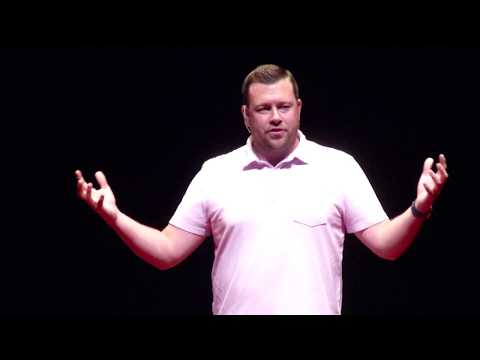
why would a police officer stand up here
and say no matter who you are where you
work or where you live we should all
take the time to go to therapy why do so
many of us have fear-based thoughts when
we talk about therapy our mental health
I’m a police officer
possibly quite different than most and
while I understand I’m in a helping
profession one thing I wasn’t prepared
for was the day I received a call to go
help a brother police officer in crisis
My partner and I worked with this
officer for a good year of coordinating
his services referring him into
treatment and hospitalizing him when
needed and yet we had this eerie feeling
that no matter what we did something
terrible was gonna happen one day I was
driving home from work and just before I
got home I received a call informing me
that he had hung himself in a parking
garage right here downtown I turned
around because I just had to go see for
myself
and once I got on scene and saw him
hanging from a steel pipe what I
realized was he was no longer anxious he
was no longer sad he was no longer
years ago there was a blockbuster movie
avatar and they had this simple three
word greeting they would use when they
would see each other and it really
resonated with me I see you I see you I
think of how different this is from our
try seemingly rehearsed responses to
greetings today oftentimes will ask or
will be asked hey how you doing and
without hesitation the mostly
standardized and empty reply is
something like I’m good thanks
everything’s great living the dream you
and we pipe possibly missed an
opportunity to connect connect and
that’s when it hit me if we’re able to
take connection and empathy and combine
the two we can move mountains and have a
significant impact in society and
potentially change the culture of our
organizations some of defined empathy as
a universal trait in language for me
empathy is the ability to see beyond the
external behavior being expressed and
see the truth of the person in front of
you but it requires a willingness not
only to see but to be seen in return and
law enforcement many of the most complex
societal issues in this country fall on
the shoulders of mostly under-equipped
police officers namely the mental health
crisis insufficient mental health care
lack lack of necessary funding adequate
resources proper case management
medication compliance transportation
issues individuals with a dual diagnosis
to name a few are likely reasons why
people are going to police officers are
going to continue to interact with
people on a behavioral health crisis on
a daily basis people with a mental
illness over-represented in every aspect
of the criminal justice system so I work
on a specialized Union in law
enforcement I work on a mental health
unit and the only calls we respond to
our people in a mental health crisis but
everything about how we respond to calls
goes against what most would expect for
starters I wear plain clothes this is my
uniform I Drive an unmarked car and my
weapon is concealed in fact over the
last nine years the only weapon I’ve
relied on is my ability to communicate
effectively my ability to listen and
express empathy in order to make that
connection and in my career I’ve been
hit slapped pushed had things thrown at
me all of which qualify for a felony
charge for assault on a peace officer
but do you think I arrest them no I tell
them how sorry I am that I showed up
uninvited I tell them how sorry I am
that they have to live with their
difficult diagnosis and what I do know
is that if I were to use force on them
or make them go into treatment before
they were ready or willing there’s
almost zero chance they’re going to
engage in services according to the
National Alliance on Mental Illness we
live in a country where twenty twenty to
twenty-five percent of the adults in our
country have a diagnosable mental
illness four percent of those have a
serious mental illness and less than
half of these individuals will engage in
treatment throughout the year for those
who do engage in treatment there’s been
great debates about who should provide
services and at which point many groups
both in law enforcement and not believe
police officers should be as far removed
as possible from dealing with people in
a mental health crisis and not only is
it difficult for me to imagine what that
would even look like selfishly I think
about all the people that I’ve met and
helped over the last nine years that I
wouldn’t have been able to if this
privilege were taken away from me but
one of the biggest issues surrounding
all things mental health is stigma but
there’s power and humanity none of us
are our professions we are in our job
titles we are in our degrees I lied
earlier when I said I am a police
officer law enforcement is what I do for
a job but I am Joe and you are Jessica
and Danielle and Jesse and Jennifer and
Emily and so your name so a little more
about me I told you earlier I work on a
specialized unit in law enforcement but
like you I’m a person I’m a father I’m a
business owner
I’m the United States Marine Corps
combat veteran I’m a survivor of
childhood physical abuse I’m a survivor
of childhood sexual abuse and I have a
mental illness I’ve been diagnosed with
post-traumatic stress disorder and
depression yes I have a mental illness
and in my work
learn to look at another person and say
though perhaps not explicitly with my
words but I see you that is you don’t
have to pretend with me you don’t have
to hide from me and you certainly don’t
have to fear me because I can relate to
you I see you I’ve countless experiences
where because of this approach I’ve been
able to help people not only identify
and rediscover their higher self but to
remember that they are worthy to
remember that they’re worthy and capable
of love you know law enforcement leaders
throughout this country are starting to
realize that mental health training
isn’t just about serving the public it’s
also about us the officers as well
according to Psychology Today nineteen
to thirty four percent of law
enforcement officers in this country
qualify for a diagnosis of
post-traumatic stress or post-traumatic
stress disorder there are many facets of
a daily life of a first responder that
most would never go home and talk about
with their families they work hard to
shield their families from even having
to hear about the unthinkable which has
sadly become their norm so where do they
go who do they talk to are we really
expecting them to reach out on their own
and ask for help we talked earlier about
some of the barriers to treatment so how
do we improve things how do we make them
better I think by doing what I and many
others have been doing let’s be honest
let’s be transparent let’s admit when
enough is enough and we can no longer
handle what’s going on and ask for help
and because I work in a profession that
holds tightly to this idea that we’re a
paramilitary organization there’s never
been room for emotions or
vulnerabilities are moments of perceived
weakness but is this fair doing what we
do having to see what we see criminal
justice scholars have listed cynicism as
the staple personality trait for law
enforcement officers this has to change
this has to change and if we can begin
to shift the culture in a cynical tough
show no weakness type of organization
why can’t it happen everywhere I argue
it absolutely can now well some of my
law enforcement colleagues block it when
I’m up here sharing publicly today of
course they will
we haven’t perfected the culture there’s
still plenty of work to do but we can no
longer sit silently and pretend that we
have it all figured out now sometimes
what ifs fueling xiety so let’s spend a
moment exploring some hopeful what-ifs
what if it was okay not to be okay what
if it was okay to be seen not being okay
what if he was okay to express our
emotional vulnerabilities to our
employers what if it were absolutely the
expectation and completely acceptable to
not only feel the feels but express the
fields and the overwhelming response and
return was something to the effect of
it’s okay I see you I can see you’re
hurting I can see you’re scared or
you’re sad and I want to help think
about how this approach in masses can
help reduce stigma think about how this
approach will actually encourage someone
to maybe engage in treatment services
I’m very fortunate to work on a pretty
progressive Police Department that gets
it and provides the type of support that
I’m talking about today but I don’t want
this idea of empathy and connection and
seeing each other to get stuck in this
small circle of law enforcement our
first responders it’s applicable no
matter where you are or at least it
should be it can absolutely change the
culture of an organization
I love how simon Sinek says the most
I’ve shared a lot about myself with you
today and consider the risk and courage
associated with my openness especially
in my line of work some of the things
I’ve shared with some of you may have
good
I choose to speak openly about these
experiences in hopes that it will
inspire someone if even one to take
necessary risks for their own mental
health I’ve engaged in therapy services
throughout most of my life learning ways
to process trauma and retrain my brain
overcome the symptoms overcome the
consequences of my symptoms rather it is
okay not to be okay
it’s just not okay to stay that way how
about instead of perpetuating the deeply
ingrained stigma surrounding mental
health that have plagued our communities
generation after generation what if we
took the great words of Arthur Ashe when
you said start where you are use what
you have and do what you can maybe then
we can all connect and move forward in
the right direction and finally let’s
agree to stop being so afraid
let’s stop hiding I see you thank you [Applause]
Please follow and like us: