
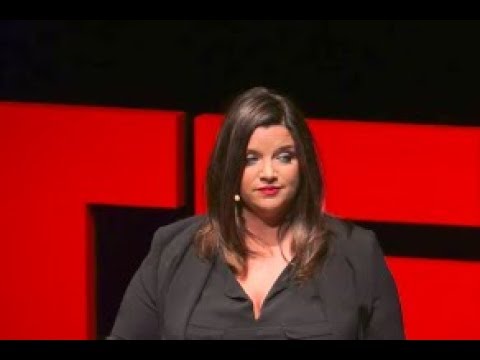
when I was 26 my husband and I bought
our first
it had a big open floor plan a formal
dining room a soaking tub it was in the
new neighborhood where all my friends
are moving I had a three year old son
and a baby on the way
it was mostly a stay-at-home mom money
was tight sometimes but I had never
known hunger it looked an awful lot like
the American Dream and yet somehow
within two years my marriage had ended I
was emotionally and physically broken
left with only minimum wage income from
a part-time job in retail I had sole
custody of my two kids no child support
I was losing my house my car and thanks
to stress and poor nutrition my hair my
family didn’t know this but many times
in our beautiful suburban house we were
without electricity when the water would
get shut off we’d stay with my parents
when I gone too many days only eating
what was left over all my kids plates
would eat with friends or family now my
church group bought me groceries and a
new coffee pot when mine broke when I
ate ate I ate cheaply
I knew hunger and I gained weight I
developed an autoimmune disease I got
another job and worked nights I was
working hard sometimes multiple jobs but
even with all that support things were
still so hard now I had had a great
upbringing I never used drugs never
abused alcohol grew up in a beautiful
house in a safe neighborhood through all
this my kids never did without they were
never dirty they were healthy they had
clothes and toys and a network of people
who loved them we were some of the lucky
ones
we had a support system and a way out
but in the worst times my family still
didn’t fit the narrative the meaningless
harmful narrative we cling to about what
food insecurity looks like that stands
in the way of actually making a
difference because in America hunger
doesn’t always look like hunger but that
doesn’t mean we aren’t suffering just a
few miraculous years later I found
myself on the other side of things
running a local nonprofit with a food
pantry now this was entirely new
territory for me and I spent the first
few months
wrapping my mind around pretty much
everything once I’d gotten my head
around the magnitude of the issues and
all the things we were doing about them
I started doing what I’d learned and
doing my best and doing everything the
way I thought it was supposed to be done
only I was starting to sense that it
really wasn’t working
not my efforts none of it when I broke
it down I could only think of two major
problems one we were doing absolutely
everything wrong and two nobody cared
now when I say nobody cares I know you
get this gut reaction that says of
course somebody cares because I care and
maybe you really really do but how often
do you think about the fact that some of
your neighbors are struggling to feed
their families because statistically
that is an unavoidable truth but it’s
not your fault that it’s so hard to
connect to there’s a pretty significant
mass of reasons why people don’t care
about hunger and some of them are
political and some are cultural and many
are beyond the scope of this discussion
but from where I sit some of them are
pretty straightforward for instance when
I was as green as Green could be in the
nonprofit world and that was Green
I attended a fundraising seminar about
marketing in a way that was really
supposed to get people to open up their
wallets for a cause I could distill this
entire hour long seminar into one point
this expert panel recommended we use
something called poverty porn poverty
porn unfortunately that’s a real term
that exists and basically it just means
using sad evocative imagery on our
website and our materials to you evoke
this this emotional response
specifically though we were told that
using pictures of diverse sad children
outperformed any other category of image
in terms of raising money now certainly
this is exploitative underhanded cynical
but the panel reasoned that the ends
justified the means and the room seemed
to agree now if you’re appalled I’m with
you but I also have to admit to you that
I’ve done this myself because it can be
so hard to make people care because of
this we have cultivated a very specific
image of poverty and
hunger and here’s where I’m gonna break
a rule and ask you to get out your
phones keep them on silent but get them
out I’m really serious about that
I’m gonna keep talking but I want you to
do a Google image search of the word
hunger so if you don’t know what that
means just type in the word hunger in
your search bar find where it says
images and look at those have a look at
what that looks like you’re gonna see
that some of these are stock photos many
are journalistic and grainy and they
seem authentic and in their way they’re
beautiful and heart-wrenching tell me if
I’m wrong but I’m pretty sure it’s gonna
be exposed ribs distended bellies big
sad eyes children sitting in the dirt
hands outstretched reaching for that
single bowl of rice now this is reality
in many places and I don’t want to
undermine or make light of that but in
America that’s not what it looks like
hunger doesn’t even look like its own
Google search now probably a good time
to put your phone away our collective
efforts to fight hunger have curated an
image so particular so familiar and yet
for most Americans so unrealistic that
it is completely unrelated now just for
a moment close your eyes and try to
conjure an image of one hunger might
really look like here you don’t actually
have to close your eyes but do contour
that image or try how many of you found
that difficult
yeah thank you good it should be it is
and the reason is that hunger looks like
young adults coming out of foster care
it looks like young families single
parents the elderly the disabled
veterans people who’ve lost their jobs
or face bankruptcy or divorce or student
loans or accidents or medical bills and
get the idea unfortunately it’s the
pictures of children in third-world
poverty that move us that may not be
reality but it’s a heck of a lot more
intriguing than a picture of me the
thing is there’s no one race gender size
ability that hunger picks on exclusively
but if I can’t inundate you with backlit
mobile-optimized images that tell got
your heartstrings how am I supposed to
tell you that I need you to care about
this I’m seriously asking if you have an
answer find me
I think another another reason it’s hard
to make people care about this is that
frankly it’s really difficult to give
you good data and I’m gonna catch heck
for telling you that but right now we
are so hot for data and rightly so we
want to see proof that what we’re doing
what we’re giving our money to is
working but the nature of this work
makes it difficult to collect the kind
of meaningful data you’re looking for
for local food pantries we aren’t
talking about month long or year long
sustenance we’re talking about providing
food in emergency circumstances those
times when there’s more month than money
who hasn’t been their health outcomes
would be interesting if we could track
them right but on a local scale that
would be prohibitively expensive and
complex but what about quality of life
factors like crime rates you’ve got to
know that at best we could imply
correlation and I’m just not interested
in that what we can and should do is
tell you how many people we serve how
much food we give away and what kind of
food we give away and offer you some
window into what life looks like for
those facing hunger I know that’s not
sexy data I know it’s not information
that is conspicuously leading towards
you a solution for this problem and
that’s what we really want right but the
greater socio-political economic and
cultural issues that allow poverty to
exist in a first world nation aren’t
that simple and they aren’t going away
anytime soon and if we focus solely on
sorting them out while ignoring the
physiological need for good food we’re
going to keep seeing people suffering
and dying from poor nutrition the last
reason and the hardest one for me to
talk about is the fact that the people
suffering the most aren’t necessarily
emaciated or exceptionally thin in many
cases quite the opposite as a culture we
find it a lot more difficult to
empathize with someone who appears to be
obese we blame the individual we
associate obesity with poverty and
laziness while we’re in undated with a
message that thinness equals health
equals wealth equals intelligence equals
success you get the idea so if we bother
to care at all
we might be tempted to think that the
solution is to fight obesity instead of
fighting food insecurity it’s like we
keep wanting to put hunger on a diet
never mind the fact that 95% of diets
fail now those of us who consider
ourselves enlightened about things like
food access and food deserts wring our
hands and we hope for policy changes we
seek these high-level solutions for the
fact that Mountain Dew and Funyuns are
cheaper than an apple if you’re lucky
enough to find one here and we should we
are but while we wade through those
swamps of bureaucracy our research shows
that 75% of our clients have recently
had to choose between keeping their
power on and buying food of the 25% who
hadn’t most answered that it was never a
choice that they got food assistance
because they knew once their power was
turned off the fees would cause an
avalanche of expenses that would set
them back even further now last year my
husband and I did a fitness boot camp
you know about those we were given
shopping lists for each week and for
just one week we spent about 400 dollars
on food in a month that’s it’s right
it’s really healthy in a month that’s
$1,200 not to mention the cost of the
boot camp so to make this positive
health change it would cost a couple
roughly fifteen hundred dollars a month
now no matter who you are that’s a lot
of money but the average family we serve
has a monthly income of less than $1,200
and yet we mock and shame and shake our
heads at the results of hunger well we
spend twenty billion dollars a year on
weight loss as a nation maybe it’s
because we have to work so hard to lose
a pound that we find it hard to feel bad
about people facing hunger which
candidly brings me to what we as an
industry we’re doing wrong the fact that
folks who are stretching a miniscule
amount of money have to settle for
purchasing cheap unhealthy food I can
understand but food pantries
traditionally have served food that is
just as bad shelf-stable processed foods
we’re talking shelves of instant ramen
marshmallow fluff nuclear orange cheese
puffs I wish I was kidding
I wish I was kidding but that’s what I
found when I came into the industry a
few years ago when we decided that for
the five days a month when we provide
food for our clients we wanted to
contribute to their lives and not their
deaths we set reasonable nutritional
guidelines we quadrupled the fresh food
we served we created a free mobile
farmers market to take produce into
neighborhoods with low access and low
income
we thought the community would come out
in droves to support this health is such
a part of the conversation these days
but aside from a few notable exceptions
we were wrong in the same era when fat
is the enemy we are also encouraged to
believe that healthy delicious food is a
luxury I get asked will they even know
what to do with it do they even want
healthy food isn’t that expensive first
of all we all have the same internet and
you can google an eggplant recipe just
like I can and no the community didn’t
rain down dollars and yes it was
expensive but it’s making a difference I
can see it’s exposing children to
healthy food it’s filling nutritional
gaps it’s creating cultural capital so
that our clients and their families can
know the way you or I do that we belong
at a farmers market that we have a right
to delicious fresh food and that we are
worth caring for
now we’re working with the community
towards bringing exercise that’s
accessible to folks who can’t afford the
gym who feel outside the fitness culture
we’re reading support groups for body
acceptance and intuitive eating to
places we’re carrying one for oneself
has long been an out of reach luxury
when we made that surprisingly
controversial switch to fresher foods a
few years ago we learned that our
clients weren’t eating terrible food
because that’s what they wanted but
rather because that’s what we were
offering cooking classes and education
can help anyone develop a healthier
relationship with food and themselves
but healthy food wasn’t something we had
to force on anyone our clients were
literally starving for it all we had to
do is make it available hunger doesn’t
look like a stock photo fighting obesity
is not the same as fighting hunger data
isn’t reality it’s an important tool but
there are things that we just know and
you and I know that we need nutritious
food to do our best thinking and
learning and performing the food pantry
in your local church school or that
rundown business in the part of town you
never visit is doing just that in the
long run this thing we do facing hunger
and the tedious day-to-day ways we do
it’s making a difference in people’s
lives it enables people to focus on the
daily work of being human of learning of
growing of improving their own lives of
living out their golden years without
the pangs of starvation health is a gift
we may only be able to offer one grocery
sack at a time but fortunately for us
it’s a cumulative effort that creates an
environment for health please also give
your money to think tanks and
initiatives that are working to solve
world hunger run for office open a
grocery store in a food desert I pray
for the day when my job becomes obsolete
but keep in mind that in a universe with
world-class physicians and no emergency
rooms people will die of bug bites and
broken bones local food pantries are the
emergency rooms of food security to
truly eradicate hunger in America it
will take nothing nothing less than
systemic wholesale change but while
people in white hats argue about numbers
and initiatives and collaborative forces
small food pantries have an important
job to do
we can’t stop treating the symptoms
while we look for a cure but we can’t do
it the way it’s always been done we must
ignore the conventional wisdom that says
we serve whatever is cheap and
shelf-stable and never turn away a
donation of food and provide food
instead that we would feed our own
families we must restore dignity by
eliminating red tape and bureaucracy by
allowing grassroots efforts to become
entangled with our status quo by working
on the assumption that our clients are
intelligent to know how their to know
how their bodies want to be fueled we
must acknowledge that access matters
then until grocery stores return to poor
neighborhoods or convenience stores that
accept EBT also sell vegetables that we
must provide the access we must consider
that our neighbors are thinking feeling
spiritual beings whose needs for
pleasure and joy and respect are as real
as our own
we must innovate ways to bring health at
every size intuitive eating mindful
movement and delicious nurturing food to
our neighborhoods food insecurity
affects 12 million people in America and
that means that if you leave your house
you look it in the face every single day
it’s not some disembodied ethereal
threat facing only sad-eyed children in
remote villages it’s hiding in plain
sight it looks like me it may look like
you
you can’t fat shame it into submission
you can’t bootstrap it into compliance
you can’t measure the breadth of its
effects on your neighbors with a
questionaire hunger isn’t a romantic
notion it’s not a sexy cause it’s
insidious and secretive urgent and
persistent I am living proof that it
doesn’t fit the narrative we’ve
constructed we have to stop trying to
define it in a way that makes it more
palatable more solvable and do the hard
things to mean it where it is because if
while we play political and intellectual
chess with solutions we abandon the
urgent work at the frontlines we will
sacrifice an entire generation to
suffering in the process now give to
your local food pantry
you
you
Please follow and like us: