
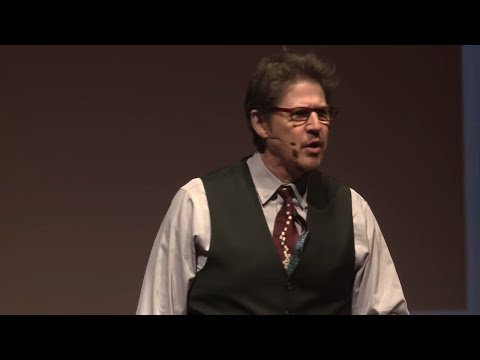
hi there everybody I see and he said I’m
I’m a professor
computer science at Northwestern and
actually a co-founder and chief
scientist for company called narrative
science and the important thing about
that is that you have to understand I
care deeply about the world of ideas and
I care equally as deeply about making
sure that those ideas become real and
have impact in the world so I’m going to
talk today about computers and language
the relationship that we have with them
and the language they use to talk with
us but before I do that I’m gonna tell
you a tiny story now the point of this
story is not the point of the story the
point of this story is going to be that
it is a story and it’s a story about my
father and it’s a very simple story he
was an orphan and he became an
archeologist now if you think about that
for a moment that means that what we’re
looking at is someone who had no notion
of his own personal past and he turned
that into an obsession with uncovering
the past digging up literally speaking
the past of others the short story is
very short but you now have a fairly
deep understanding of some aspect of my
father an understanding of where his
pain was what drove him and actually why
he became what he became now you get
that not because I told you all that you
get that because you know about the
world and how people work and with a few
pieces of information a few facts you
can pull those facts together and turn
them into a story in your head but I can
do that because I know what those facts
are in your head I know what those
connections are in your head and I can
provide you with the facts that I know
that you will now connect together to
make a story so language languages more
than words language is our ability to
tell stories to explain and connect and
it allows us to communicate ideas to
talk about the past to project into the
future and
to share information about ourselves
with with others and it is astounding it
is actually miraculous it is amazing
that we are able to do this and it is no
surprise that this skill is uniquely
human you can teach a dog to fetch crows
and otters use tools beavers build dams
and they’re really not all that bright
but humans humans we can tell each other
stories about the world we can actually
look at the world figure things out and
express it to others but we have a new
partner a partner that we are going to
have to deal with because every day it
is getting smarter and smarter and
that’s the machine now my guess is that
almost everyone in this room either has
touched something like Siri or something
like Alexa but the reality is that the
machine still struggles with language
and these systems as wonderful as they
are our systems that don’t use language
that use words and it’s really not
surprising the model that everybody has
is oh I want a computer that’s just like
the computer on Star Trek I want to be
able to talk to it and tell it things
and interact with it it’ll be great just
like Star Trek and then if you think
about Star Trek for a moment but the
next generation and jean-luc Picard he’s
had a really horrible day he goes in
there was a stateroom
and what does he do he’s not very hot he
asks for tea tea Earl Grey hot every
time I see that I just want the computer
to say why are you talking to me that
way who talks to people that way I’ve
been watching you wander through the
ship all day I know we’re in the middle
of a battle you’ve lost five crewmen as
you got closer and closer to here I made
you tea already and of course I know you
want Earl Grey tea you always want our
gray tea and you
actually tell me it was hot that’s no
way to talk to anyone I Love You Man and
that should be the interaction but no
tea Earl Grey hot those are words but
they’re not language uh we have to see
what language is language is a window
onto the world it allows us to describe
a chunk of the world to each other
that’s what we use it for and the
machine the machine is only going to
have language it’s only gonna have
language when we teach it how to
articulate what it knows to us and
that’s gonna be important because it
knows a lot right now it knows a
tremendous amount right now and it can
say very very very little I mean it
would be nice to think that there’s a
chunk of things that it knows and then
there are things that it can say and
there’s an overlap and you know and that
overlap will get bigger but what has
been happening is not that is that the
machine is no it knows more and more and
more every single day and we have not
been teaching it we have not been
teaching it how to tell us about this I
think about what it knows I mean in the
early days the machine knew about itself
it knew how often you know how it was on
it knew about you know router traffic
and knew what applications were being
run and knew a little bit about the
network and knew about sort of its CPU
utilization it new things about itself
but then we had a tiny change and that
is we opened up the world of search we
opened up the world of things that we
could find and then it started knowing
about our searches our searches in
particular and then started knowing
about everything absolutely everything
that it knows about our home it knows
about our car you wear Fitbit it knows
about your it knows about how many steps
you’ve taken it knows about our
mortgages it knows about crime and knows
about traffic it knows about every
single finance
financial interaction that has happened
the world it knows about everything you
buy if you buy online it knows all of
this and in particular and this includes
I have to admit this is cheating this
includes video in particular we generate
2.5 Zeta bytes of data every day and you
look at that you go what the hell is it
is data byte what is he talking about
this is the equivalent of a quarter of a
million libraries of Congress generated
every day every single day so what does
it know it knows everything that can be
metered and monitored and what are we
doing we’re making sure that we can meet
her and monitor everything because we
want to know what’s going on in the
world and if we can figure out how to
find out what’s going on the world we
want to do it we want to have sensors
and and data flow from every single
device we ever touch our refrigerators
Dammann our toasters are the the HVAC
system in our homes certainly our cars
we want all this information and we want
information about ourselves our bodies
what we do because we want to be able to
make great decisions there’s a problem
here though and that is we would like to
think that the data is pretty and clean
and wonderful and we can easily figure
out what’s going on in the world in the
basis of it and in fact if you go to
Google and you type in data and you go
look for images you get images like this
that are so clean and matrix like but
this is really what data looks like I
know this is on a good day data looks
like rows and columns or tree structures
of numbers and symbols over and over and
over again these are often exposed to
spreadsheets I’m gonna ask a question
now I’m gonna hope I can see the answer
how many people actually give me a round
of applause for the font if the answer
to this following question is yes how
many people in the last month have
looked at a spreadsheet
yes the spreadsheet that is a table of
data rows and columns of data that you
look for insight from your doing to
gather insight from them but it’s just
data that means that you are going to be
looking for correlations you’re gonna be
looking for matches between things
you’re going to be looking for trends
you are going to have to interpret the
data we have given you and I think one
of the great sins of the technologist is
that we gave you spreadsheets and we
told you this was the right thing to
give you and you are gonna have to
figure stuff out on the basis of that
thing that we just gave you but
spreadsheets are the tiniest version we
have tables now we have tables now that
are thousands of columns and millions
upon millions of rows you can’t even
look at that data anymore you can’t even
understand – let alone understand that
data so we’re struggling now so what do
we do with this data all of this
information all of this stuff that could
be very helpful to us but we can’t get
to it we can’t quite figure it out
fortunately we have AI and I really do
mean fortunately that is systems that
actually by their nature can look at
things like data at scale but the issue
is making sure the AI can talk to us and
tell us things so imagine for a moment
that we start thinking about AI and we
think well what are we gonna do in terms
of having it talk to us well what we’re
gonna have to do is give it something
and we’re gonna give it as natural
language generation the ability to
generate language and when I say
language here I don’t mean words
I mean language I mean the stories and
explanations and the connections that we
give each other so imagine this or
actually don’t even have to imagine it
it’s right in front of you the tiniest
of spreadsheets two tables one that has
a list of lists on a quarterly basis of
the sales for the sales for either the
large widget or small widget that’s all
it is and then
the table that tells you given that
we’ve got a nice we’ve got a nicely
designed table that tells you the names
of these things now almost anyone in
this room given a few minutes could look
at this suss it out and figure out what
was going on in the world not what’s
going on the data but what’s going on
the world on the basis this this is a
product this is sales as quarters you’ve
got two products you’ve got a year but
what would be much more interesting
would be to do this now that little
circle on the left every time you see
that circle from now on that means a
machine generated what you’re looking at
a machine generated not a human being
but a machine generated it and what you
get here is a description of the fact
that the large widget is still doing
better than the small widget but it’s on
the decline while the small widget is on
the rise a very simple observation that
you could make but a machine can make it
a machine can make this observation on
instantaneously and you don’t have to
wrestle with that anymore instead you
just have to read it so this is the
notion of automatically generating
language from facts from information
machine knows from things that the
Machine understands but let’s look at
that spreadsheet again where are the
facts there are no facts here it’s
columns and rows of data in order to
make this into facts you actually do
what you did with my earlier story you
look at this and you could figure out oh
it’s quarter that means oh that’s that’s
sometime
um product actually that’s some just you
know thing that is indentify or and some
entity in the world sales well that’s a
metric I care about I care about how
well things sell and then this other tab
you go oh that’s the name of the thing I
know that and you pull that together and
in order for a machine to tell you
what’s going on it is to do the same
thing it has to look at that in order to
get to a single even a single sentence
describing what’s happening in the world
not just in the data and so the notion
here is that language actually requires
that you understand the data and you’ll
have to understand what
the data mean that is you have to have a
model of the world in your head and when
I say your head I mean your head and
then the machine has to have the same
thing and this isn’t just natural
language generation this is the idea of
advanced natural language generation the
idea that what you’ve got to do is build
systems that understand enough of the
world the world that we care about so
they can actually generate they can
actually generate information for us
generate language for us generate the
stories that we care about as I said
that’s a nice idea this is a nice
implementation of that idea this is what
quill does quill looks at the world of
data and turns it into the world of
language again not just words but the
stories explanations connections that we
need to understand what’s going on in
the world and it does so using three
very straightforward steps the first
thing it does is when it’s trying to
connect that world of data with the
world of us the first thing it does is
something that is very very very that’s
very very very machine-like it does some
analysis of what’s going on and
generates a set of facts then it looks
at those facts and it figures out what’s
more or less important what am I going
to tell you and then once it figures out
that and organizes it it turns it into a
story that is in language form and it
informs you and this whole notion of
data facts and language data because
that’s the lens under the world facts
because that’s a characterization of
what’s happening and then language is
the way in which we and the machine can
tell us things that is what opens the
world for us and that is what allows the
system quill to look at the world of
data and tell us about it so what does
this mean it means that everyone in this
room who raised their hand for
spreadsheet there’s gonna be able to put
their hand down in a few years because I
managing that you’ve got a spreadsheet
that describes everything that’s going
on in your grocery store but you’re
running a deli or you’re running a
bakery or you’re running the dairy
you’re not gonna want to spend your time
looking at all that data and restful
with it it’s not what you do you run a
bakery you’re not a data analyst so
instead of doing that why not take that
data and hand it to a system like well
and have it tell you just tell you
what’s happening and in fact not only
tell you what happened it’s happening
but suggest to you that you might have
some waste in some area and there’s a
lot of waste over here but then there’s
less waste over here but the waste over
here it doesn’t really matter that much
these aren’t expensive things you don’t
sell a lot of them but there’s the waste
over here that you can actually fix and
actually use so you can sell things of
course we don’t all work in grocery
stores but a lot of us go to the beach
and it would be nice to know how how
healthy our beaches are and one way to
do that would be what’s Chicago does
Chicago has sensors all up and down the
lakefront that really actually allow you
to figure out the the how are the
quality of the beach itself the quality
the beachfront front on this day the
problem is it’s in a massive table and
at any given day my guess is there are
five people in the city of Chicago who
look at the table and figure out what’s
going along with the beaches maybe five
but you can take that and you can turn
it into something else you can turn it
into something that actually tells you
what the best Beach is that right now
this is the best beach and much more
important often is it’ll tell you where
the worst beach is and if you were gonna
go to the worst beach what do you want
what do you need you need to know the
best alternative the one that’s closest
to you and so you can take data that
five people can understand and you can
turn into language that anyone who can
read can understand that every single
parent who’s thinking about going to the
beach can understand and you turn the
world of data into the world of
information and finally there’s testing
again quick round of applause who has
either had a child taking a standardized
test or has taken a standardized test in
the last I’ll give you six months six
months standardized tests are all about
the past about looking backwards the
problem is that there’s data there
that’s useful but there’s nobody who’s
going to be able to manage it and turn
into something effective it’s fabulous
data it’s wonderful data but it’s all
about the past and it all is about a
number you got a 97 great what am I
supposed to do with that well that puts
you in this 90 second 92nd percentile
great what am I supposed to do with that
and instead you can do something else
and that is you can turn that data into
information that can actually reshape
the way we think about education and
sure you start off with retrospective
here’s how you did and maybe you did
something you did badly in an area what
other people’s our people are doing well
but much more important because I know
what you did wrong I can tell you how to
fix it and the data is there the
information is there but it has to be
understood by the Machine and then
turned into language and as I said that
little circle means the machine
generated it that is a machine taking
care of business for us
in a way that we cannot at scale we
cannot do in brick-and-mortar world so
it’s really all about this notion of
inform of analyze infer and inform it’s
this notion of moving data to facts
facts into stories stories into the
language and it’s the language it’s this
language capability that will allow the
machine to take everything it knows and
tell us about it to share its stories
it’s how we can humanize the machine and
in reality it’s how we can turn the
machine into a partner and that’s what
quill does
thank you
[Applause]
Please follow and like us: